 Follow Us on Google News



 Follow Us on Google Discover
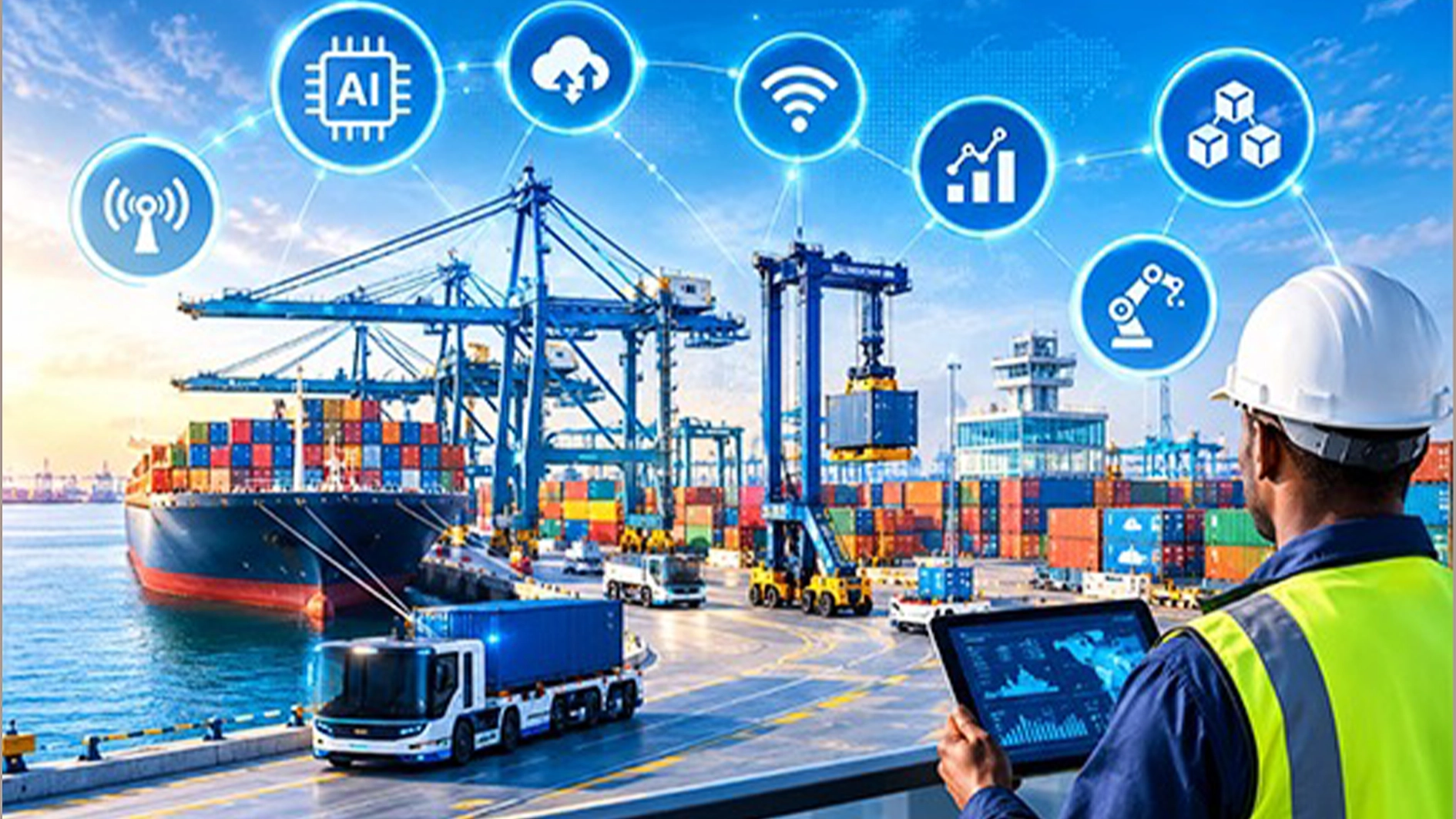
As ports globally embrace digital systems and greener transport to boost trade efficiency, Nigerian docks remain behind. They are held up by multiple paperworks, fragmented processes, overlapping regulations, and poor coordination among agencies and operators. The result is costly delays in cargo clearance, longer dwell times for vessels and trucks, port congestion, rising logistics expenses, and worsening environmental pollution, ADAKU ONYENUCHEYA reports.
Globally, port systems are transitioning from traditional analogue operations to digital platforms, integrating modern technologies into their daily activities to improve efficiency and transform into smart ports.
Several maritime nations have deployed advanced digital tools such as Artificial Intelligence (AI), Internet of Things (IoT), big data, blockchain technology and automation, among others to drive port processes swiftly, accelerate cargo handling, reduce energy consumption, eliminate unnecessary physical examination processes, reduce dwell times, simplify trade procedures, and lower the cost of doing business at the ports.
Providing insights, the Managing Director of Kamany Marine Services Limited, Dr Charles Okorefe, explained that with Artificial Intelligence, algorithms determine the most suitable times for vessels to dock at ports, for cargo loading and unloading, and for containers to be moved around port terminals or facilities.
He said IoT involves installing sensors on cranes, trucks, Mafis, and other equipment to enable real-time operations in the port.
Automation, Okorefe explained, occurs when self-driven electric vehicles, such as trucks, and automated container-stacking cranes communicate instantly, with zero human interference, on the dock floors in the port.

Unfortunately, Nigerian ports have yet to achieve the level of automation and technological integration, as it still operates analogue systems; difficulties with data migration, ageing port infrastructure, poor integration of transport modes such as road, rail, inland waterways and pipelines, excessive human intervention, disruptions along port access roads and illegal extortion points continue to impede the efficient movement of cargo from the nation’s ports.
For years, port users and other stakeholders have raised concerns about the multiple layers of documentation, fragmented processes, duplication of regulatory functions, delays in cargo clearance, congestion, high logistics costs, and insufficient coordination among agencies and private-sector operators.
These challenges have had a direct impact on the competitiveness of Nigerian products, government revenue, investment decisions, employment and, ultimately, the welfare of ordinary Nigerians.
Despite the introduction of the National Single Window (NSW), current practices at the nation’s ports still subject approximately 95 per cent of cargo to intrusive physical examination
At the Primetime Reporters’ fifth yearly lecture held in Lagos, the National Coordinator, NSW Secretariat, Tola Fakolade, who was represented by a Deputy Director, Jude Oboh, said the current practice was excessive, attributing the high rate of physical examination partly to the absence of a centralised risk management system and the overlapping responsibilities of regulatory agencies operating at the ports.
He said cargo clearance at the nation’s ports currently takes about three weeks, noting that the Secretariat aims to reduce the clearance time to one day and the rate of physical examination to below 10 per cent, in line with international best practices.
Fakolade, however, noted that the Federal Government had also directed that cargo clearance costs should, at worst, be comparable to those of other West African countries, where some Nigerian-bound cargo had been diverted in recent years.
Also, Nigeria’s dependence on conventional energy sources in its port system and transport infrastructure has contributed to the terrible situation, with the transition to greener port logistics requiring deliberate investment, innovation and forward-looking policies.
Stakeholders said Nigeria should adopt cleaner energy sources in port operations by exploring opportunities to convert agricultural resources, including sugarcane, into biofuels for transportation and logistics.
The International Maritime Organisation’s 2023 greenhouse gas strategy targets a reduction of at least 40 per cent in carbon intensity in the global maritime sector by 2030, compared with 2008 levels, alongside the ambition of achieving net zero greenhouse gas emissions by around 2050.
Director-General, Nigerian Ports Economic Regulatory Agency (NPERA), Dr Pius Akutah, who was represented by the Director, Regulatory Services, Adaora Nwonu, said a smarter port system must also be a greener one, noting that congestion, prolonged vessel waiting times, inefficient truck movements and excessive cargo handling consume energy, increase emissions and raise the cost of doing business.
He said green logistics should not be treated simply as an environmental obligation, but also an economic opportunity to reduce waste, improve productivity and strengthen Nigeria’s position in international trade.
According to him, Nigeria must begin positioning its port system for this transition through improved cargo evacuation, energy-efficient port equipment, cleaner transport options, appropriate digital traffic management and investment in sustainable infrastructure.
Former Director-General, Nigerian Maritime Administration and Safety Agency (NIMASA), Temisan Omatseye, stressed that the development of smarter ports would accommodate larger vessels, accelerating cargo operations and reducing greenhouse gas emissions.
He said modern ports should provide facilities that enable vessels to connect to cleaner shore-based power instead of relying continuously on onboard generators while berthed.
Omatseye also emphasised that the development of modern ports should involve comprehensive planning for cargo movement, cleaner energy, efficient vessel turnaround and environmental sustainability.
Omatseye, however, stressed that Nigeria’s maritime industry was facing significant challenges that required sustained engagement among policymakers, regulators, industry operators and the media.
He called for stronger environmental protection, improved regulatory coordination and deliberate investment in smart port infrastructure.
The former NIMASA boss argued that government agencies needed to clearly understand the legal foundations of their respective mandates and engage one another before implementing policies that could create jurisdictional conflicts.
According to him, the existence of international maritime conventions ratified and domesticated by Nigeria makes it necessary for regulators to ensure that their actions are consistent with the country’s legal obligations.
He said environmental protection and sustainable maritime development required a clear understanding of the laws governing the sector and the responsibilities assigned to different agencies.
Lessons from countries with smart ports
Several developed countries have moved from analogue systems to smart ports and also operate green logistics, making cargo clearance seamless and fast, reducing vessel waiting time and the cost of doing business at the ports.
Port of Rotterdam, one of the first-generation ports to attain the status of a Smart Port, deploys a full digital twin virtual model of the port, using IoT sensors to track real-time weather, water data, ship movements, autonomous vehicles and remote-controlled cranes, which move cargo around the port both day and night.
The port opened the first-ever automated container terminal in 1993. Port of Singapore, a strategic hub port in South-East Asia, operates massive sections with driverless automated guided vehicles (AGVs), intelligent cranes and a central AI system running on 5G technology.
Similarly, the Yangshan Deep-Water Port in Shanghai, China, and the Port of Houston in Texas, United States, have deployed smart technologies to improve cargo delivery efficiency and reduce vessel turnaround times.
Okorefe stated that ports worldwide are striving to become fully smart-oriented, noting that Nigerian ports are no exception to this rule.
He said that although the Nigerian Ports Authority (NPA) reported increases in cargo throughput and container and vessel traffic in the second quarter of 2026, the data indicated improved berth utilisation and cargo handling, but not smart ports or lower trade costs.
Okorefe said the African Continental Free Trade Area (AfCFTA) currently represents the largest market opportunity on the continent, noting that Nigeria must develop a smart and green logistics system capable of moving locally produced goods predictably and competitively to benefit fully from this pool.
He said it also requires that regulatory agencies resolve overlapping mandates, with data moving seamlessly across institutions and operational friction drastically reduced in ports.
Okorefe urged government agencies to harmonise their responsibilities and improve collaboration, stressing that the effectiveness of digital platforms would depend on institutions’ willingness to work together.
Practical way forward
Stakeholders insist Nigeria must begin positioning its port system for this digital transition through improved cargo evacuation, energy-efficient port equipment, cleaner transport options, appropriate digital traffic management and investment in sustainable infrastructure.
According to them, green logistics should not be treated simply as an environmental obligation, but also as an economic opportunity to reduce waste, improve productivity and strengthen Nigeria’s position in international trade.
While the NPA Consolidated Management Report has shown a persistent, year-on-year rise in cargo throughput, ship calls, container throughput, and export-loaded containers, the figures, according to stakeholders, point to a substantial expansion in port activity and an opportunity to strengthen Nigeria’s role in regional and international trade.
Akutah said the figures also make the next challenge clear, noting that volume growth must be matched by improvements in productivity and service quality.
He said a port can handle more cargo and still impose avoidable costs on the economy if vessels wait too long, documentation is repeatedly submitted, cargo evacuation is unreliable, empty containers are not returned promptly, or charges are unclear and unpredictable.
“Nigeria does not merely need busier ports. We need smarter, faster, more transparent and environmentally responsible gateways that serve the wider economy. The National Single Window can simplify trade, but modern port infrastructure can improve capacity, greener logistics can reduce waste and emissions, and effective economic regulation can ensure that the benefits of these improvements are fairly distributed and economically meaningful,” he stated.
Akutah said the task before stakeholders is to integrate these reforms into a single, coherent system that makes Nigerian trade more efficient and businesses more competitive.
Special Adviser to the Lagos State Governor on Blue Economy and General Manager of the Lagos State Waterways Authority, LASWA, Oluwadamilola Emmanuel, stressed that port digitalisation must extend beyond cargo clearance to improve connectivity between seaports, roads, railways, inland waterways and other logistics infrastructure.
Emmanuel also highlighted the potential of climate finance as an additional source of funding for the maritime and logistics sectors, noting that verifiable reductions in carbon emissions could help attract financial resources to support sustainable initiatives.
“If we can prove, indeed, that this is how much emissions we are saving, we can even generate some funds there to support the sector,” he said.
To translate these objectives into action, the LASWA Chief proposed three practical measures for consideration, which include the establishment of a joint port-to-city logistics integration working group involving critical stakeholders.
He also proposed identifying a pilot project to promote greener cargo movement through inland waterways and introducing a shared performance scorecard to measure logistics efficiency and emissions reductions.
Emmanuel explained that these measures would help stakeholders assess progress, identify operational gaps and ensure that investments in digitalisation and sustainable transport deliver tangible economic and environmental benefits.
He concluded that the future of the maritime sector should not be defined solely by the construction of larger ports, but by the development of smarter connections among ports, cities, and the wider economy.

