 Follow Us on Google News



 Follow Us on Google Discover
Behind the daily movement of passengers between Nigeria and Ghana lies a disturbing reality: trafficking of young women and girls for ‘sexploitation’. While traffickers recruit and control victims, transporters allegedly help them navigate border checkpoints, bypass document checks and reach their destinations writes GBENGA SALAU.
Everyday, buses and other vehicles move Nigerians across the Nigeria-Ghana corridor in a flow largely associated with legitimate trade, work, and family ties. However, beneath this movement is buried a darker shade of crime: people recruited, transported, and ultimately exploited for forced labour, sexual exploitation, cybercrime and other forms of illegal activities
The scale of this crime is becoming increasingly hard to ignore. In fact, the Ghanaian authorities identified 794 trafficking victims in 2024, including 493 foreign nationals. Nigerians accounted for 358 of those foreign victims, about 73 per cent. The figure was the number of victims identified by authorities, not the total number of Nigerians trafficked into Ghana.
Nigeria’s own data provided another disturbing snapshot. Between July and November 2024, 163 Nigerians were rescued from trafficking in Ghana, while another 200 were rescued between April and May 2025, the Nigerians in Diaspora Commission (NiDCOM) said.
The commission said it rescued and repatriated more than 360 people during that period, many of them young women and teenagers. For instance, in July 2024, Nigerian immigration received 66 trafficked Nigerians who were returned from Ghana through the Seme border, mostly women and children.
About the same period, NiDCOM announced that 58 additional Nigerian women and children were rescued in Ghana, while another operation rescued eight Nigerian girls between the ages of 15 and 22 from sexual exploitation.

In 2025, Nigerian authorities said 288 Nigerian trafficking victims were rescued in Ghana during anti-trafficking operations. Additionally, in February 2026, 13 suspected commercial sex workers, 12 Nigerians and one Ghanaian, were rescued during a special operation targeting prostitution and human trafficking.
Similarly, in April 2026, 42 Nigerian teenage girls were rescued from forced prostitution in the Western North Region of Ghana.
Behind these figures lie a question that has received considerably less attention: who transports these victims from Nigeria to Ghana? What checks do transport operators make when young people travel under suspicious circumstances or with recruiters? And how many transporters recognise the warning signs but look the other way?
To answer these questions and more, this reporter travelled from Nigeria to Ghana and back to understand how these traffickers operate. The objective was to see, firsthand, the incidence of cross-border human trafficking between two nations facilitated by faceless groups with support from private transport officers across the two nations.
The journey between Nigeria and Ghana is completed mostly by road. The journey is no walk in the park. It is about 450 to 500 kilometres long and takes between 9 and 14 hours, depending on the route taken, traffic, and border checks. The corridor also has three official border posts meant to control migration.
The journey usually involves a combination of bus rides, motorcycles or short walks, mostly around the border post corridors.
Transporters play a key role in completing the trip successfully, whether for legal or illegal migrants and trafficked persons.
This is more so because traffickers, unlike in the past, no longer travel with their victims, preferring a transporter to help facilitate their movement.
It was also gathered that many of those who completed the trip illegally, some of whom are trafficked persons, were aided by transporters who executed the job for an extra fee on the transport fare or paid a separate fee altogether.
Travel documents and the ‘Fake ID’
According to travel experts, the requirements for a trip between Nigeria and Ghana include a valid international passport or ECOWAS passport, a Yellow fever card, and evidence of accommodation.
The Nigeria Immigration Service website states that landing and exit cards are mandatory travel documents for all passengers entering or departing Nigeria.
“These cards must be completed upon arrival at or departure from Nigerian borders and serve as a critical instrument for immigration control and border management,”it said.
But what happens at the different parks is completely different from what the law and convention provide.
Checks at almost five parks across Lagos where passengers usually travel to Ghana by bus pointed to a startling development.
At each point, the transporters or their representatives are ready to help complete the trip without the required documents. However, they tell you it will require an extra fee, especially compared to those with international passport.
They also pledged to make the trip smooth, without any hiccups at the border posts or immigration checkpoints, once the extra payment is made.
At two of the parks, they insisted an identification card was required to board the bus and they were willing to assist with the procurement for N10,000 through a third party, some others added with the extra fare paid, the reporter could travel on the trip with no international passport or any identity card.
The reporter later learnt that the ID card that is being produced is usually a fake National Identification Number (NIN) slip.
Whether by plot or by accident, many young women who set off on account of illegality with a ‘fake ID’ usually end up in hubs known for Accra’s dirtiest sex trade.
In Accra, this reporter interacted with one of the ladies who had travelled to Ghana without any travel documents. Lizzy [full name withheld] was around Kwame Nkrumah Circle, popularly called Circle, a major transport and commercial centre in Accra.
She provided some insight into how transporters could be unknowingly aiding human trafficking. Lizzy, who is one of the sex workers in Circle, where many of the commercial sex worhers (CSW) live in makeshift structures and kiosks built with planks, revealed that her journey to Ghana had no hiccups because of the roles transporters played.
She said her friend brought her to Ghana, so, she did not serve any madam. She added that if a madam engaged her, she would have had to work for her before securing her freedom, which would require settling the madam with N1m and N1.5 million, money made from the sex trade.
Narrating her journey, she said her friend asked her to meet a man called Ob in Badagry, who put her in a car that took her to the Seme-Krake border. She further said the driver handed her over to a bike man who ferried her through the border post into the Republic of Benin, then handed her over to a driver who drove her and other passengers through Togo to the Aflao border corridor in Ghana.
She said, however, it was not the border post. According to her, they walked past a barricade, though she observed the driver give an officer money as they navigated the place.
Lizzy added that after passing the barricade, the driver handed her over to a bike man, who took her to a park, where he handed her over to a commercial bus driver.
She said the bus, when fully loaded and set out, ended the journey in a place she later knew as Circle, where her friend came to pick her up.
Similarly, another lady, who identified herself as Juliet, who was one of the sex workers at Madina, disclosed that she was brought to Ghana over a year ago by a madam, though she had finished serving the woman, which was why she relocated to Madina.
According to her, she remitted, on average, about 5000 Ghana cedis monthly for about a year. She added that sometimes it was more, especially when she was made to serve a high clientele while doing home service.
Juliet further said her madam arranged her trip to Ghana, including paying the transport fare. According to her, she came to Ghana without any documents, and the bus driver ensured no immigration officer disturbed her during the trip.
She recalled vividly how she was made to sit at the back of the bus and was told not to get off except when she was told to.
She said the only place she got off the bus was probably the Aflao border post, where the driver held her hand to cross the border post.
Juliet also said that the driver told her to say she was heading to Cote d’ Ivoire at the Aflao border post and the last checkpoint they encountered on the journey.
She said it was her first time travelling outside Nigeria, so, she was not only naïve but also afraid.
In digging deep into how transporters deliberately or unknowingly aid human trafficking, the reporter was connected to a madam in Ghana, who was ready to ferry a lady to Ghana for prostitution.
I got the permission of a young lady whose picture I shared with the madam. After reviewing the picture, the madam, who seemed satisfied with the lady’s appearance, asked her driver, who moves passengers to Ghana daily from Lagos, to supervise the journey. She, therefore, shared the driver’s contact and asked that the driver be contacted.
Afraid there might be hiccups on the road, the lady asked whether she would face any challenges during the journey.
“Hope nobody go disturb me for road as I no get passport and ID card o,” the lady asked in faltering English.
The madam, however, assured her that the journey to Ghana would be smooth.
When the driver was contacted, he denied knowing about the arrangement and asked the madam to contact him.
After a series of back-and-forth, the driver was contacted again; he asked the lady to call him a day before the scheduled trip and meet him at Mile 2, the exit port.
In a recent trip to Ghana from Lagos, the reporter confirmed some of the revelations by Juliet and Lizzy about the role of transporters in facilitating illegal migrants and trafficked persons to Ghana.
On the day of the trip, the reporter paid the transport fare for a passenger with no international passport or ID card. The transport company’s representative said the driver would be informed of the case to ensure there were no issues along the way.
Of the 13 passengers on the trip, only four travelled with international passports; five had NIN slips as identity cards; two had Ghana cards as identity cards; and two, including this reporter, had no form of identity card or international passport.
The driver had a passenger manifest listing those on the trip. However, no one thoroughly checked whether the information provided, especially by those without international passport, was true.
The pictures on the NIN slips were blurred, so they could not be easily verified as belonging to the owners. However, it was not confirmed whether they were fake.
As the bus was about to leave the park, the driver collected the international passports and Identity cards from the passengers. The first immigration check was at Agbara.
The driver parked off the road and went to the immigration post. He carried only his manifest. He came back about five minutes later, and the journey continued without any checks by the immigration officers.
One National Drug Law Enforcement Agency (NDLEA) officer, who shared the post with the immigration officers, opened the vehicle for scrutiny. After looking around the bus, they closed the door, and the movement continued.
Between the Agbara and Seme border, there were only two posts for checks and scrutiny. Interestingly, the scrutiny was not to verify the details of the passengers; it was not done in a way any serious security officer interested in fighting human trafficking would.
The immigration officer only questioned the passengers at random. In one instance, the immigration officer wanted to understand why a 22-year-old lady was travelling with her younger brother. But the driver quickly intervened, and the probing stopped.
At one spot between Badagry Bridge and Seme, the driver told the immigration officer, without alighting from the bus, that he had run out of photocopies of the bus manifest containing the passengers’ list and details. He only handed the officer a gift, and the journey continued.
At the Seme border post, there were points for different security agencies. The driver asked all passengers to alight, while those with international passports were directed to the immigration point, even though they did not have their passports.
The driver handed the passports to an officer and marched those with ID cards to one office and those without ID cards to another, where there was little interrogation and verification of the particulars submitted.
Thereafter, the driver moved from one point to another, and exchanged pleasantries with officers of different security agencies at the border post. As he did so, he asked all the passengers to get into the bus.
Thereafter, the bus moved to the Benin Republic immigration point. The driver handed the bus manifest and the four passports to someone who helped complete the verification process, but none of the passengers got off the bus.
Between the Seme border post and the Benin-Togo Republic joint border (Hilacondji), there were two major checks, but nothing serious was done to verify the passengers’ documents, especially matching passengers to their documents.
However, just metres from the Hilacondji border post, the driver went off the road into a street into an office to give the manifest and passports to a man. They both came out later, and the man rode ahead of the bus on a motorcycle to the border post.
There was no single check, just a little wait to probably get the passports stamped, as all the passengers sat in the bus. The bus drove past the Republic’s immigration points into Togo, and the journey continued.
The driver, however, did not enter Ghana using the Aflao Border Post. He used the Segbe. He said it was less busy, which made things a lot easier for him.
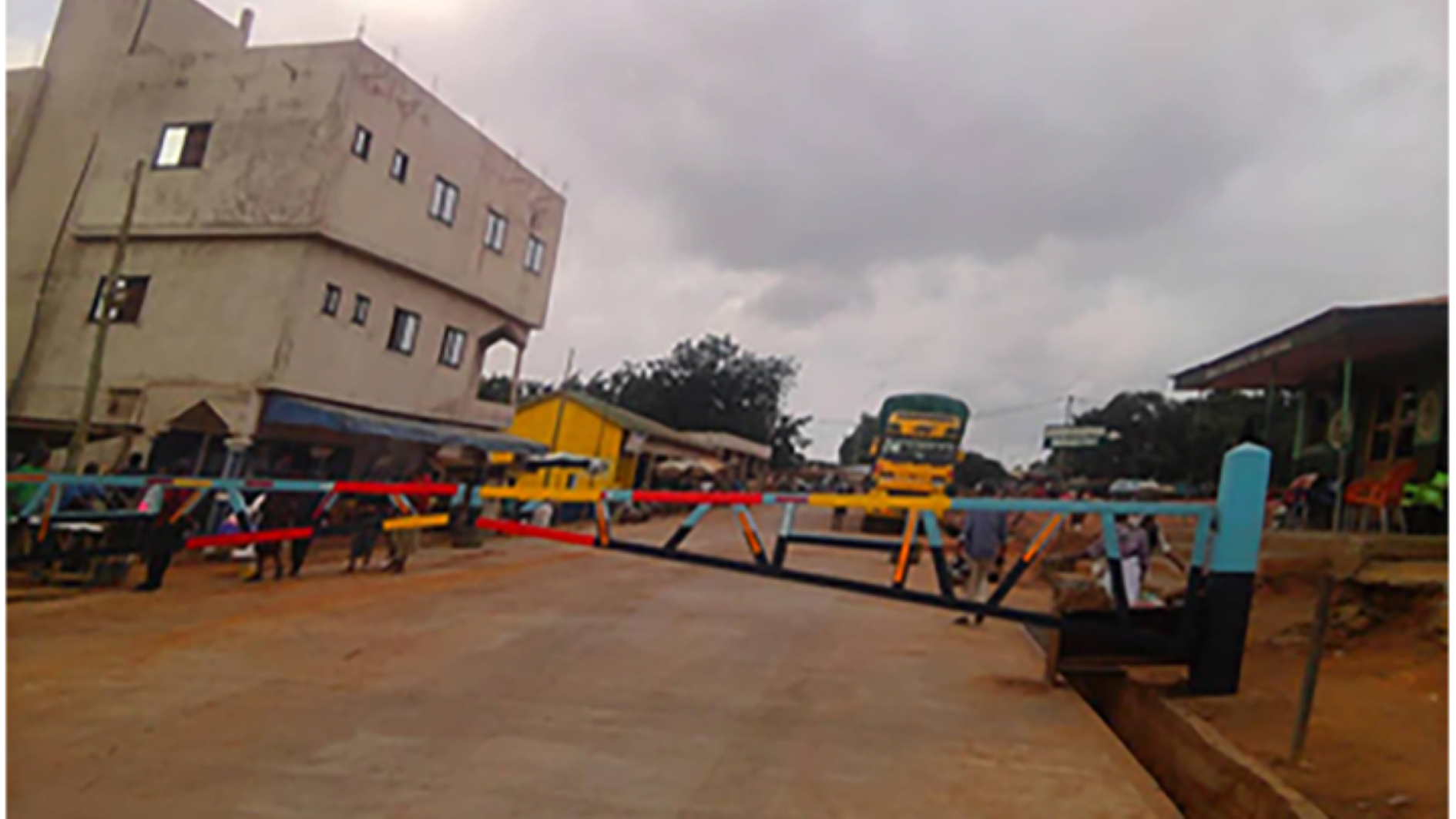
Upon arriving at the Segbe Border Post, he parked the vehicle near the iron barrier on the entry road. He asked all passengers to alight from the bus and told those with passports to follow him to immigration. He marched them to where their passports would be stamped. He handed over the passports to an immigration officer.
Afterwards, he returned to introduce those without international passports to a female immigration officer, who casually did the checks.
She interacted with only two of the passengers, without looking closely or matching their names to the copy of the bus manifest she had.
That is why one passenger, without an international passport and Identity card, crossed the border post on foot without her knowledge.
The second passenger, who also had no international passport and Identity card, crossed after the driver collected 100 cedis from him, saying the officer demanded it. He was told to wait until the driver, who was moving around different offices such as Customs and health, got clearance.
After crossing into Ghana through the Segbe Border corridor, the next checkpoint was at Dabala. Although all passengers were asked to alight from the bus and walk through the checkpoint corridor, no one verified the passengers’ documents.
However, I later learnt that it was a Customs checkpoint, not for immigration services.
The last checkpoint we encountered was at Sogakope. There, the officer (it was unclear whether he was a policeman or an immigration officer) questioned passengers at random; he did not interrogate everyone.
One passenger with neither an ID card nor an international passport was among those he interrogated.
After the officer left, the driver informed the two passengers without ID cards and international passports that the officer was demanding compensation.
The driver asked each passenger for 50 Ghanaian cedis, which we paid, and the journey continued into Ghana’s inner town.
After passing the Sogaokpe checkpoint, the driver handed over the international passports and other documents collected from the passengers to the owners.
The return trip had similar patterns moving through the different border posts. However, instead of the Segbe border post, the driver rode through Aflao in the Ghana-Togo border corridor. Although the Aflao border post was much busier than the Segbe Border post, the crossing process was not cumbersome.
Unlike the entry bus, the exit bus driver had an intermediary who facilitated the passengers’ movement. The intermediary collected the passports from the driver and did all the documentation. He led the passengers to cross the border post, including those without international passports and ID cards.
At the Ghana immigration post, many people were crossing the border, walking through a passage. This included some locals.
At one point, the officer mounting the gate blocked the path, and as a result the whole place became rowdy, but immediately the driver’s consultant signalled to the officer; he was asked to point out his human cargo, and we were all allowed to pass, though one or two other persons forced their way through to cross the border with us.
None of the passengers faced scrutiny; those with international passports were not made to appear one after the other to get their passports stamped.
At the immigration stand, the consultant presented the passports to the immigration officer and, after pointing to the owners, who were meters away, the officer stamped them.
Also, at the Benin-Nigeria border post, the driver engaged an intermediary, unlike at the entry bus, where the driver moved around the different points to facilitate the process.
However, a driver working with one of the transport companies told the reporter that for each trip of their minibuses entering Ghana from Lagos, the consultant at the Nigeria border post is paid between N80,000 and N100,000; 4500 and 5000 CFA each at the Benin and Togo points and 400 to 500 Cedis at the Ghana point.
Speaking with the Head, Press and Public Relations Unit (PPRU) for the National Agency for the Prohibition of Trafficking in Persons (NAPTIP), Vincent Adekoye, he said transporters play a role in facilitating human trafficking along the corridor, though some of them do it unknowingly. “They helped to traffic these victims from one point to the other. Don’t forget, part of the offence of trafficking is transportation. If there is no transportation, it is not trafficking.”
Adekoye disclosed that in the past, traffickers travelled with the victims, but now, they courier victims.
“They have a point where they will put the victims, and they know the drivers that will bribe their way across the borders without being caught. It is the same driver that will conceal the identity of the victim inside the vehicle.”
He insisted, however, that not all drivers commit these acts. “There are some of them that are good; when they see things like that, they report to us. This is because we have had the opportunity to train some of them; we had engagement with the transporters. We went to their park in Mile 2. We have been there to sensitise them.
“So because of that, some of them have been giving us information. And we have intercepted a whole lot of victims of trafficking through the help of road transport operators, while some of them are working with the traffickers, helping to move these victims from one point to the other, from one country to the other, around the West African corridor, even the entire African corridor. We have a whole lot of them that are working with the traffickers.”
Adekoye also said some transporters have been arrested in the past, though they are often used as prosecution witnesses.
Attempts to get the International Organisation for Migration (IOM) to comment on transporters’ role in facilitating illegal migration and human trafficking and what steps could be taken to curb it were unsuccessful.

