 Follow Us on Google News
 Follow Us on Google Discover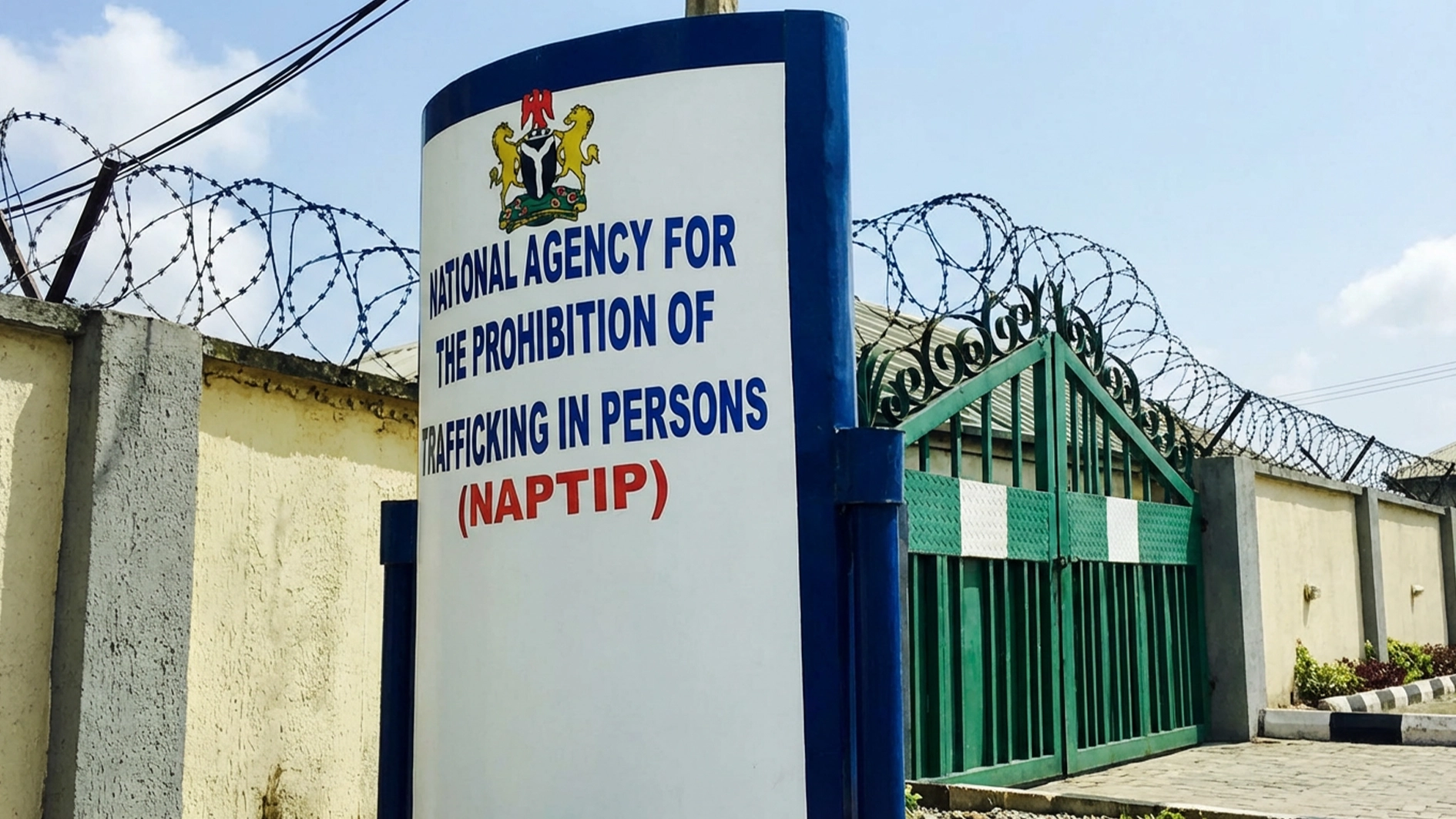
The National Agency for the Prohibition of Trafficking in Persons (NAPTIP) has identified Oyo State as both a source and transit route for human trafficking, warning that deceptive overseas employment, education and travel offers continue to expose Nigerians to exploitation.
The Oyo State Commander of NAPTIP, Kayode Alfred, disclosed this at the monthly general meeting of the International Federation of Women Lawyers (FIDA), Oyo State branch, during a knowledge-sharing session at the Aare Afe Babalola Bar, Iyaganku, Ibadan.
Speaking on the theme, “Combating Modern Slavery: Establishment, Mandate and Functions of NAPTIP,” Alfred said human trafficking remained a modern form of slavery that required sustained collaboration among government agencies, legal practitioners, civil society organisations and members of the public.
He also said Nigeria remained on Tier 2 of the global human trafficking ranking, describing the country’s position as one that required continued efforts to tackle the crime.
“Years ago, Europeans came and enslaved our people. They put chains on their hands, their legs and their mouths. But slavery has evolved. It is no longer in that form, but we still have it in a modernised form. That is human trafficking, or trafficking in persons,” he said.
Alfred described trafficking as a transnational organised crime involving networks in which individuals perform different roles across locations and, sometimes, international borders.

He said Oyo’s position as a source and transit route made vigilance and cooperation among stakeholders particularly important in identifying victims and disrupting trafficking networks.
The NAPTIP commander traced the international framework for combating trafficking to the United Nations Convention Against Transnational Organized Crime, adopted in Palermo, Italy, in 2000.
He explained that the convention produced protocols addressing trafficking in persons, migrant smuggling and illicit firearms, with the trafficking protocol providing a framework for countries to strengthen prevention and enforcement.
According to him, Nigeria established NAPTIP on July 14, 2003, under the Trafficking in Persons Prohibition, Enforcement and Administration Act, 2003, to investigate and prosecute trafficking offences, rescue victims and provide protection and rehabilitation for survivors.
He said the agency’s responsibilities extended beyond arrests and prosecution to include public enlightenment, counselling, rehabilitation, reintegration and empowerment of victims.
Alfred warned that traffickers often deceived victims with promises of employment, education, marriage, travel opportunities and better living conditions.
“Deception is common in trafficking cases today. Victims may be deceived with promises of employment, education, marriage, travel opportunities or a better life,” he said.
He urged Nigerians to verify overseas job offers, recruitment arrangements and educational opportunities before committing themselves, particularly where documentation was inadequate or the terms appeared suspicious.
The commander said trafficking networks could exploit travel agencies, recruitment processes, cultural events, sporting activities, music competitions and school excursions to facilitate the movement and exploitation of victims.
He also raised concern about Nigerians trafficked to destinations including Libya, Egypt and some Middle Eastern countries, where they could face different forms of exploitation.
Alfred added that trafficking could involve the illegal removal and sale of human organs and tissues, urging individuals and organisations facilitating international travel or employment to comply with relevant procedures.
He called on members of the public to report suspected trafficking cases to NAPTIP, stressing that timely information could help authorities rescue victims and disrupt criminal networks.
He also urged lawyers to support the fight through the prosecution of suspected traffickers and the protection of victims’ rights.
Earlier, the Chairperson of FIDA Nigeria, Oyo State branch, Ademubowale Adelabu, lauded NAPTIP for its efforts to combat human trafficking and sexual and gender-based violence.
Adelabu praised Alfred for his commitment to the agency’s mandate and urged female legal practitioners to pay attention to emerging trends in trafficking and related offences to strengthen their handling of such cases.

