
 Get Guardian on Google
• ActionAid demands transparency in FG’s N50,000 cash support scheme
• Oye laments rising hardship, poverty despite higher revenue for govts
PRESIDENTIAL candidate of the Nigeria Democratic Congress (NDC), Peter Obi, has accused President Bola Tinubu’s administration of piling up debts without delivering meaningful improvements in the living conditions of Nigerians.
Similarly, ActionAid Nigeria called on the Federal Government to provide details of the funding, beneficiary selection criteria and disbursement mechanisms for its proposed N50,000 cash support programme for poor and vulnerable Nigerians.
Meanwhile, the Chairman of the Alliance for Economic Research and Ethics, Dele Oye, called on the federal and state governments to ensure that increased public revenues translate to better living conditions for Nigerians, noting that Nigeria’s fiscal position has improved but has yet to produce a level of citizen satisfaction that reflects the gains.
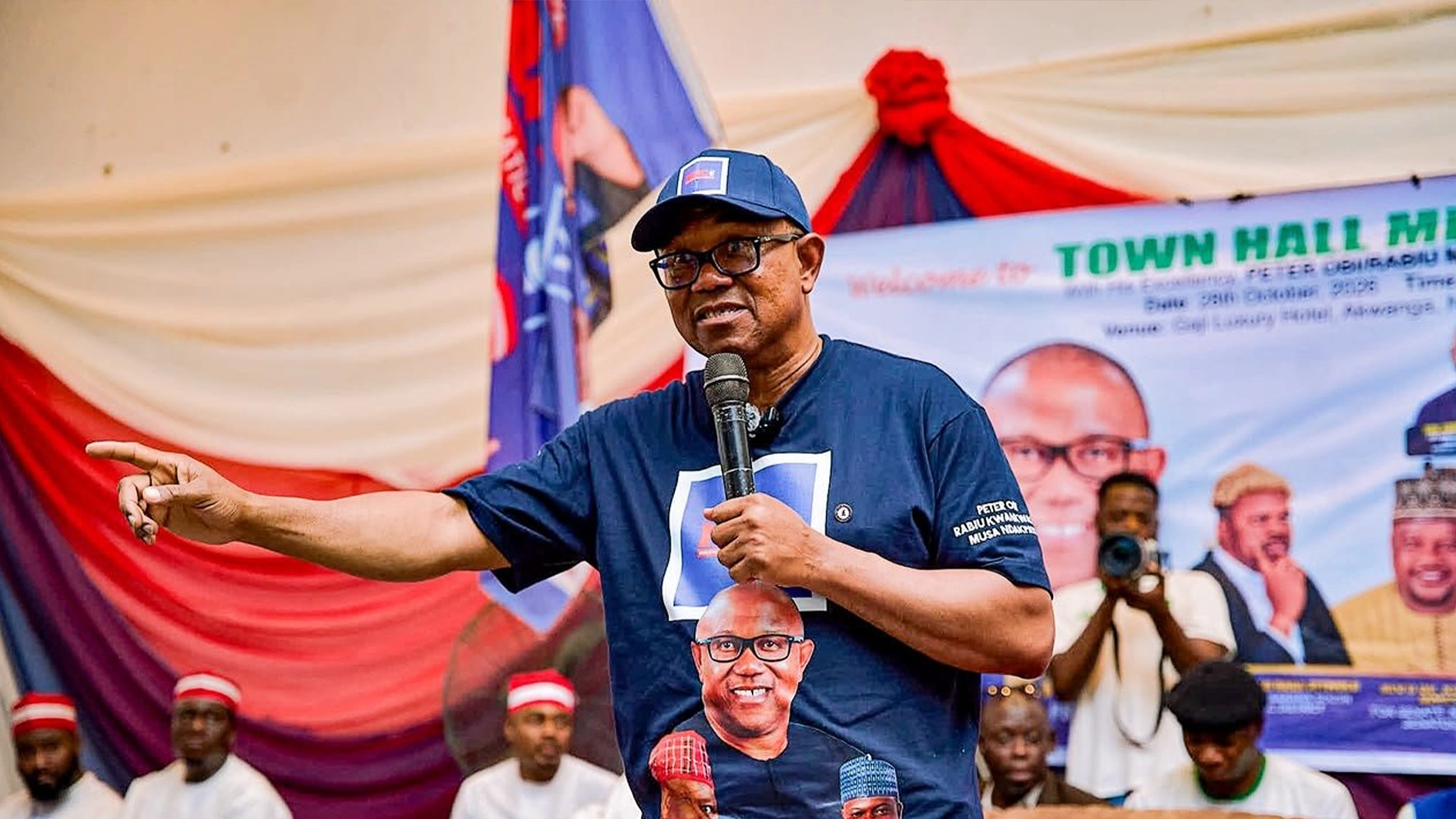
Obi made the remarks on Saturday at a town hall in Owerri, Imo State, during his nationwide consultations with citizens ahead of the 2027 general elections.
Before the meeting, the former Anambra governor had visited a market in Owerri, engaging with traders, buyers, and other residents on the economic realities facing households and businesses.
He said the conversations offered a glimpse into the hardship Nigerians were facing, particularly under the present economic policies.
Taking a swipe at Tinubu, Obi questioned the President’s absence from Imo, claiming that he had not spent a night in the state since assuming office more than three years ago, despite spending over 260 days outside the country.
He also faulted the administration’s record of borrowing, arguing that the mounting national debt had not produced corresponding improvements in citizens’ welfare.
Obi painted a troubling picture of the country’s situation, citing widespread hunger, multidimensional poverty, insecurity and the growing number of children out of school.
He said Nigeria needed a different development approach that would prioritisecitizens’ welfare rather than allow economic growth and government spending to remain disconnected from everyday realities.

The NDC candidate pledged that he and his running mate, Senator Rabiu Kwankwaso, would focus on national security, healthcare, education, national unity and poverty reduction if elected in 2027.
ActionAid said the government must clarify whether the intervention under the National Emergency Relief and Stabilisation Intervention (NERSI) was a one-off grant or a monthly payment, noting that conflicting information had emerged from official sources.
The Country Director of ActionAid Nigeria, Andrew Mamedu, made the demand in a statement following the announcement of the intervention by the Minister of Humanitarian Affairs and Poverty Reduction, Dr Bernard Doro, on October 30, 2026.
Mamedu said although direct cash assistance could provide immediate relief to households facing rising living costs, the government must ensure transparency, equity and accountability in its implementation.
He urged the government to disclose the total amount committed to the programme, its funding sources, actual releases and mechanisms for ensuring that the funds reached intended beneficiaries.
According to him, the government must explain whether the intervention is being financed through existing budgetary allocations, supplementary appropriations, savings from economic reforms or development financing.
He said the absence of a publicly disclosed programme budget, beneficiary targets and implementation timeline raised questions about the scale and sustainability of the intervention.
Mamedu noted that providing N50,000 monthly to one million households would require N50 billion, while providing N50,000 monthly to five million households would require N250 billion; figures, he said, underscored the need for transparent budgeting, legislative oversight and regular public reporting.
The organisation also expressed concern over discrepancies in the description of the payment, saying while the minister reportedly described it as a monthly intervention, the programme’s official website identified it as a one-off grant.
It urged the Federal Government to resolve the contradiction and specify how long beneficiaries would receive the support.
ActionAid further called for the disclosure of payment providers, administrative costs, and procedures for independently verifying disbursements.
OYE said governments must move beyond revenue generation and focus on delivering measurable improvements in public services, infrastructure and economic opportunities.
He made the call while commenting on the revised 2026 State Performance Index (pSPI) by Phillips Consulting, which showed that despite improved fiscal conditions across parts of the federation, citizens’ experience of government performance remained only marginally positive.
The report recorded a national composite citizen satisfaction score of 3.01 out of five, barely above the neutral midpoint of 3.00.
Oye said the findings underscored the need for governments to demonstrate how increased revenues were improving citizens’ lives, rather than relying solely on budget figures and financial performance indicators.
He noted that higher revenues should create room for governments to repair roads, improve water systems, equip health facilities, support businesses and strengthen education, adding that revenue was only a resource for development, not development itself.
According to the report, finding employment recorded the lowest citizen rating at 2.31, placing it in the critical category. Clean water scored 2.67, government support for businesses 2.71, security 2.84, while law-enforcement conduct recorded 2.85.
Oye said the figures reflected the everyday challenges confronting Nigerians and highlighted the gap between fiscal performance and the quality of public services.
He cautioned that higher revenue could fail to produce meaningful development where funds were poorly allocated, released late, lost through weak procurement or spent on projects that were never completed or maintained.
The Alliance for Ethics chairman proposed that every state, the Federal Capital Territory, and local councils publish a 90-day public delivery plan focused on no more than three of their weakest service areas.
“Nigeria does not lack revenue headlines, plans or project announcements. What it needs is a more rigorous public ethic: money must be allocated well, released on time, spent transparently, converted into functioning services and measured by the change it produces in people’s lives.
“The pSPI’s score of 3.01 is not a reason for despair. It is a reason for discipline. Higher nominal receipts create an opportunity; only effective utilisation and measurable outcomes create development. A government should be judged not only by the size of its budget, but by the quality of life its budget makes possible,” he stated.