
 Get Guardian on Google
The Lagos Chamber of Commerce and Industry (LCCI) has disclosed that transporters and logistics operators in Nigeria lose more than N15 trillion yearly to insecurity, cargo diversion and unsafe transport corridors across the country’s highways.
The chamber also called on the Federal and State governments to formulate a 10-year transit plan to curb all the challenges in the transport sector.
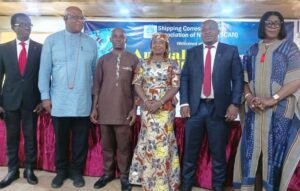
Presenting a paper as a keynote speaker at the 30th anniversary of On The Highway and Road Annual Lecture with the theme: ’30 years on the Highways: Safety, Security and Sustainability – From Bad Roads to CNG Revolution,’ the Chairman of the LCCI Auto and Automotive Components Sectoral Group, Dr Femi Eguaikhide, called for urgent investment in integrated public transportation infrastructure and secure road networks.
Eguaikhide, who is also the Deputy Managing Director of RT Briscoe Nigeria Plc, said insecurity had become a major threat to the country’s transportation and logistics businesses across the country.
He maintained that sustainable mobility could not be achieved when drivers were afraid to travel at night and passengers felt unsafe at bus stops.
He noted that Nigeria’s transportation challenge went beyond road construction, noting that without an integrated public transportation system, the country would continue to play a catch up.

He insisted that Nigeria needed more than isolated investments in highways, Bus Rapid Transit (BRT) lanes and motor parks.
According to him, Nigeria had continued to import fairly-used buses and repair potholes three decades after On The Highway commenced operations, without making sufficient progress in developing an interconnected transportation system.
He declared that the absence of proper integration among Federal, State and Local government transportation projects had continued to undermine efficiency, road safety and passenger convenience.
To address the challenge, Eguaikhide called on government at all levels to approve a 10-year dedicated public transit infrastructure plan and proposed the construction of 1,000 kilometres of dedicated transit lanes and 50 modern interchange hubs across Lagos, Abuja, Kano, Port Harcourt and Enugu, with private sector participation.
He said: “An integrated system will enable commuters to move seamlessly between buses, rail services and last-mile transportation through interconnected terminals and a unified payment platform.
“Also, a shift from the traditional reliance on police checkpoints to technology-driven security arrangements, will improve the safety of passengers, drivers and cargo operators without unnecessarily disrupting commercial activities.”
Besides, he proposed the installation of Closed-Circuit Television (CCTV) cameras and adequate lighting at terminals, mandatory GPS tracking and panic buttons in commercial buses, as well as cashless fare collection to reduce the risks associated with carrying cash.
He also recommended the establishment of a National Secure Corridor Command that would link the Federal Road Safety Corps (FRSC), the police and private fleet operators to improve surveillance and emergency response along major highways.
He further called for tax incentives to encourage transport operators to adopt cashless ticketing systems.
He pointed out that Nigeria’s public transportation future depended on the adoption of Compressed Natural Gas (CNG) and electric-powered vehicles, stressing that the transition was necessary to reduce operating costs, conserve foreign exchange and stimulate local automotive manufacturing.
Also, the former Commissioner for Transportation, Lagos State, Prof. Bamidele Badejo in his contribution, advocated re-orientation of motorists and road users.
Badejo regretted that over the years, the country had continued to record avoided hazards on the highways, noting that without re-orientation, the menace would continue on the road.
Badejo expressed that survey conducted across the South West of the country indicated that most of the drivers behind the wheels drive under pressure to meet daily allowance.
He canvassed suitable financial structures from financial institutions to motorists, noting that this would go a long way in reducing stress and accidents on the highways.