
 Get Guardian on Google
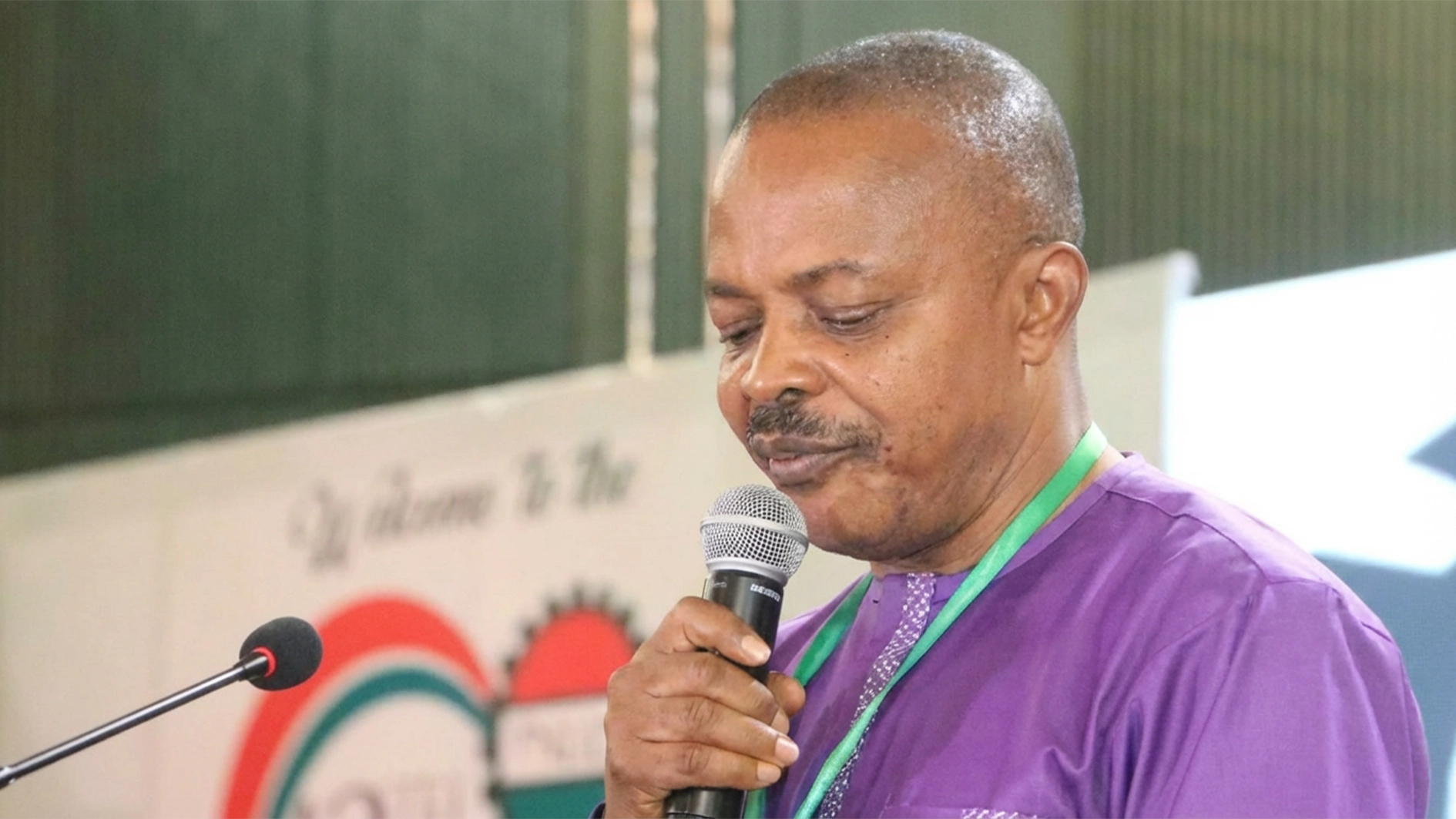
President of the Nigeria Labour Congress (NLC), Joe Ajaero, has challenged the Nigeria Union of Journalists (NUJ) to prioritise collective bargaining, better wages, and job security for media workers, warning that poor welfare conditions are undermining the profession and its ability to hold employers and governments accountable.
Ajaero said journalists could not effectively advocate decent work and workers’ rights while neglecting their own employment conditions, stressing that the NUJ must move beyond professional representation to actively negotiate better terms of employment for journalists.
Speaking at the Labour Writers Association of Nigeria (LAWAN) 2026 Conference in Lagos, where he spoke on the theme: ‘Workers at the Centre of Nigeria’s Political Transition: Defending Rights, Advancing Welfare and Building Economic Justice’, he questioned the absence of effective collective bargaining arrangements in many media organisations and challenged the union to establish a minimum wage for journalists, whether enforceable agreements exist between media employers and workers.
He argued that although journalism was a recognised profession, the employment realities of most practitioners made workers’ welfare a central responsibility of the union.
According to him, about 90 per cent of journalists work for others, making their livelihoods depend on the conditions set by media employers.
He maintained that the NUJ must play a more active role in negotiating wages, improving working conditions and protecting journalists against arbitrary dismissal.

He questioned the absence of a comprehensive social protection framework for journalists, particularly in healthcare, transportation, pensions and other welfare provisions.
According to him, media workers’ vulnerability is compounded by poor job security, irregular salaries, and inadequate retirement arrangements.
Ajaero urged the NUJ to work with organised labour to address the challenges confronting media workers towards developing sustainable welfare deals.
He warned that journalists struggling to meet basic living expenses would find it increasingly difficult to discharge their professional responsibilities without bias.
Beyond the welfare concerns, Ajaero called for stronger collaboration between labour organisations and the media, urging journalists covering the labour movement to deepen their understanding of industrial relations, collective bargaining and the challenges confronting organised labour.
He said labour reporting required specialised knowledge beyond reporting strikes and disagreements between employers and workers, stressing that journalists must understand the dynamics of negotiations and the responsibilities of labour leaders to their members.
According to him, collective bargaining involves compromises, strategic calculations and decisions shaped by prevailing circumstances, rather than maintaining rigid positions during negotiations.
He explained that labour leaders were accountable to their members and had to weigh available options during negotiations to secure the best possible outcomes for workers.
Ajaero cautioned against judging negotiation outcomes solely by unions’ initial demands, noting that agreements often reflected compromises reached after considering the circumstances of particular disputes.
He argued that a better understanding of labour matters would enable journalists to ask informed questions, interrogate negotiations more effectively, and report disputes beyond the immediate threat of industrial action.
Ajaero criticised the tendency to reduce labour reporting to questions about whether workers would strike, arguing that such an approach overlooked broader issues around employment relations and workplace welfare.
Ajaero stressed that effective negotiations must balance workers’ welfare with employers’ ability to sustain their businesses, adding that agreements must be realistic, enforceable and capable of improving working conditions.
He further urged labour correspondents to develop the capacity to examine employers’ financial positions, productivity levels and revenue generation when reporting wage disputes.
Chairman of LAWAN, Toba Agboola, noted the association’s importance as a major stakeholder in Nigeria’s socioeconomic landscape, playing a critical role in shaping discourse on employment and industry harmony.