
 Get Guardian on Google
Oladipupo Davies, a Lagos-based real estate broker and founder of Dipo Davies Realty, has called for inclusive urban planning that accommodates people across different income groups, stressing that housing development should reflect the needs of the wider population.
He argued that sound planning and reliable land records also matter to buyers assessing the real cost, legal status and long-term suitability of homes in Lagos.
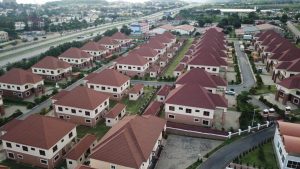
Oladipupo raised concerns about the direction of urban development in major Nigerian cities, where rising housing costs and the concentration of residential investments in high-value locations have raised questions about accessibility for low-income and middle-income earners.
He maintained that urban development should be measured not only by the quality of buildings being constructed but also by the ability of residents from different economic backgrounds to find suitable housing within their communities.
“A city cannot be considered successful simply because it has beautiful buildings and expensive properties. The real measure of development is whether the people who live and work there can afford decent housing and enjoy a reasonable standard of living,” he said.
The real estate professional explained that concentrating residential development on high-income buyers could leave a significant portion of the population with limited housing options. He called for planning decisions that recognise the different financial circumstances of households.

“Every city has people earning at different levels, and their housing needs must be considered when development plans are made. We cannot continue building communities that only a small percentage of the population can afford,” Oladipupo stated.
He added, “Inclusive urban planning does not mean every building must be affordable to everyone. It means creating a city where different housing options exist, and people are not excluded from decent living conditions because of their income.”
Beyond housing costs, Oladipupo identified infrastructure as an important consideration in creating residential communities that serve the wider population. He explained that access to basic services and transport connections could influence where people choose to live and how much they spend on their daily needs.
He said the availability of roads and services, the status of land documentation and prices in comparable areas should all inform a buyer’s assessment before any payment is made.
His position draws attention to the difficulties faced by residents who live far from employment centres because housing in commercial districts is beyond their financial reach. Long journeys to work can increase household expenses and reduce the time available for other activities.
According to Oladipupo, improving housing accessibility requires cooperation between government authorities, urban planners and property developers to ensure that residential projects respond to the needs of different communities.
“Developers have a responsibility to understand the communities they are building for, while government must provide the planning framework and infrastructure that make those developments sustainable. Both sides have a role to play in ensuring that housing opportunities reach different income groups,” he said.
Oladipupo’s experience in Lagos’ property market has exposed him to residential developments across Ikoyi, Victoria Island and Lekki, where he has worked in property rentals, sales and management through Dipo Davies Realty.
Although his company focuses on prime residential markets, his comments address a broader planning concern: cities need housing options that serve residents with different incomes.
His involvement in the sector has informed his interest in how planning decisions affect housing opportunities and the long-term development of urban communities. He believes that greater attention to housing accessibility can help Nigerian cities respond to population growth without leaving lower-income residents behind.
“We need to think about the kind of cities we are leaving for the next generation. If urban development continues without considering the needs of ordinary people, we risk creating cities where many residents can work but cannot afford to live,” Oladipupo added.
As Nigerian cities continue to expand, Oladipupo is advocating planning policies that give greater consideration to housing accessibility and the needs of different income groups. He maintains that future residential development should support communities where economic differences do not determine access to decent living conditions.