 Follow Us on Google News



 Follow Us on Google Discover
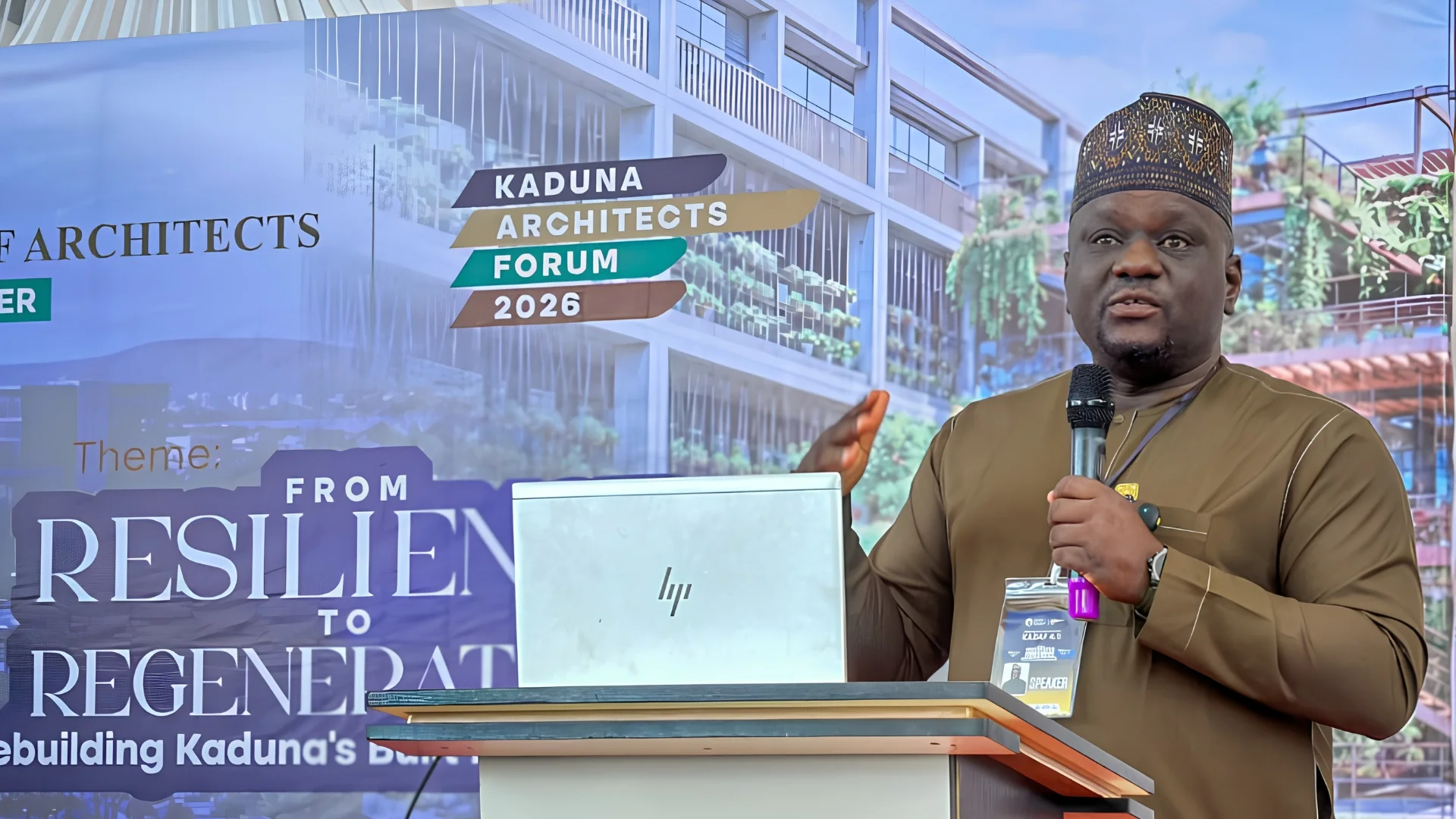
The President of the Society of Landscape Architects of Nigeria (SLAN), Dr Atumye Amos Alao, has called for a fundamental shift in how Kaduna is planned and developed, arguing that landscape architecture must be treated as essential infrastructure if the city is to move from resilience to regeneration.
He delivered the closing keynote at the 2026 Kaduna Architects Forum (KADAF 4.0) on Thursday, October 22, at the Royal Crown Multi Events Centre. Organised by the Kaduna State Chapter of the Nigerian Institute of Architects (NIA), the forum was themed From Resilience to Regeneration: Rebuilding Kaduna’s Built Environment.
In her welcome address, the NIA Kaduna State Chapter Chairperson, Arc Binta Othman Danmali, described regeneration as a call to action, declaring that “to merely survive is not our calling as architects. We are called to regenerate.” She emphasised restoring heritage, creating safer streets and providing dignified living environments. The Local Organising Committee Chairman, Arc Danjuma Ageni, reinforced the need for environmental restoration, stronger communities and lasting economic opportunities, stating that “architecture is not merely construction. It is nation building.”
The NIA President, Arc Sani Intisham Saulawa, stressed that protecting existing spaces was no longer sufficient. He called for regenerative practices supported by evidence based policies and collaboration among architects, engineers, planners, surveyors, environmental experts, government and local communities.
In his keynote, Advancing Kaduna 2050: A Shared Vision for a Regenerative Built Environment, Alao used satellite imagery from 2002 and 2026 to examine changes in tree canopy and land surface temperature within a three kilometre radius of Murtala Square. His analysis showed declining tree cover alongside rising surface temperatures in Kaduna’s historic core. He identified canopy loss as a factor contributing to increasing heat in the study area, underscoring the importance of protecting urban vegetation.
He also highlighted the relationship between urban development and flooding. Impermeable surfaces increase stormwater runoff, while obstructed drainage paths and the discharge of roof water into streets can heighten flood risk. Alao called for earlier collaboration between architects and landscape architects to integrate water capture, drainage and infiltration into building projects. He noted that building orientation and shading also influence indoor temperatures and demand for mechanical cooling. “Stop designing functions out of the city and calling it development,” he said.

Alao further highlighted the century-old mango trees at Lugard Hall and their association with migratory straw coloured fruit bats (Eidolon helvum). The bats contribute to seed dispersal, illustrating an ecological relationship that is easily overlooked when landscapes are valued only for appearance or commercial potential.
This example reflected a central idea in his keynote: Wise Cities. Rather than depending on the smart city model alone, Alao argued that ancestral knowledge remains relevant to understanding how places have functioned and what they continue to provide. Ecological studies and planning decisions, he said, should draw on the accumulated knowledge of communities about environmental change and the natural features that have sustained them. Combined with satellite imagery and professional analysis, such knowledge can reveal ecological relationships that formal data alone may miss.
Representatives of the Nigerian Society of Engineers, the Nigerian Institution of Surveyors and the Nigerian Institute of Town Planners also attended the forum, reinforcing the importance of collaboration across built environment professions. Flooding, urban heat, land use and public space require coordinated action rather than isolated professional responses.
Alao’s central message was clear: Kaduna’s future depends not only on the infrastructure it builds, but also on the ecological systems it protects and restores. Regeneration requires sound scientific evidence, collaboration across professions and recognition of the ancestral knowledge that can help cities plan for generations to come.

