 Get Guardian on Google
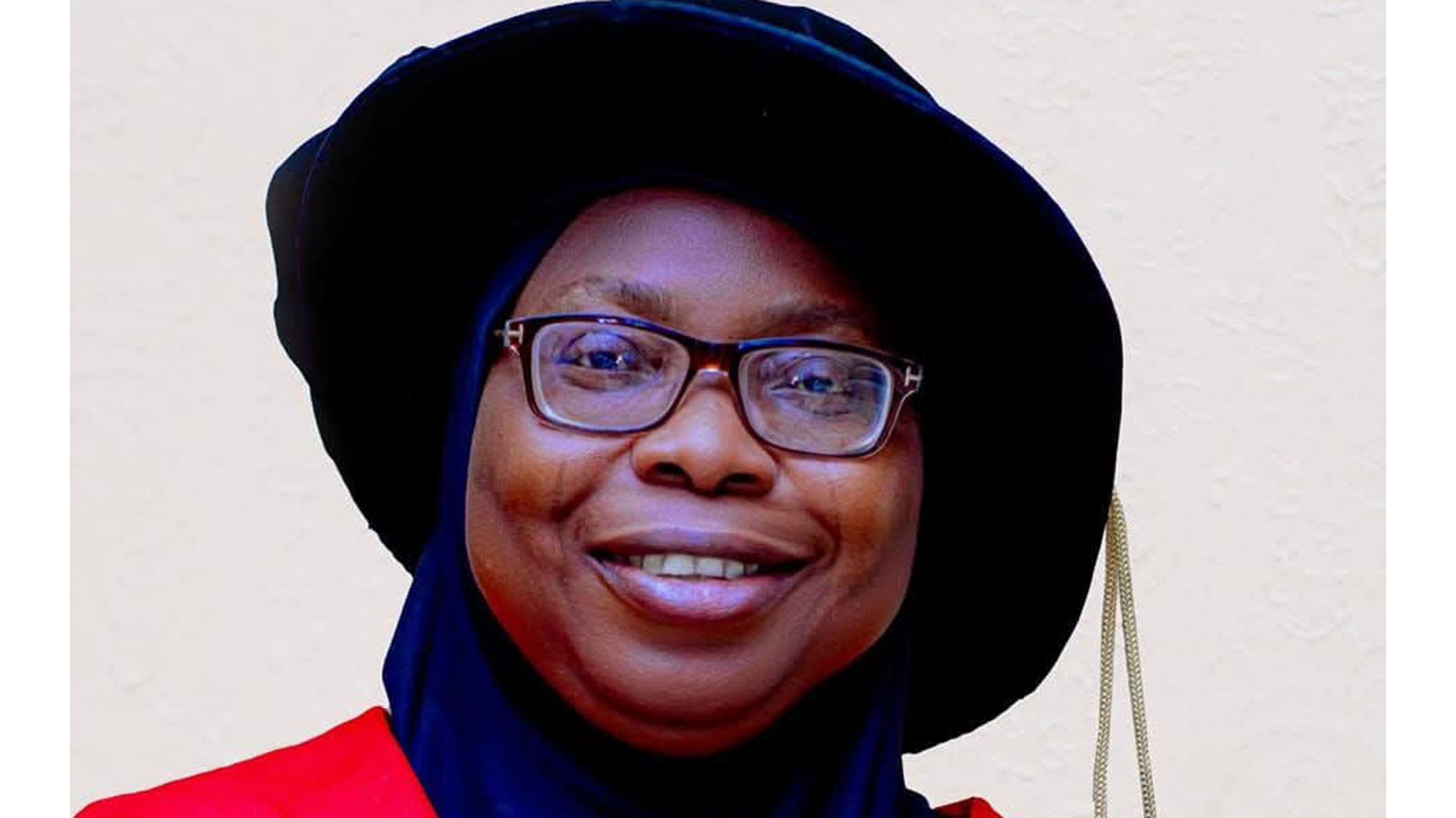
Dr. Suliat Ajoke Ogungboyega, popularly known as Jim-Salam is the Provost of the Federal College of Education, Iwo, Osun State, where she is working to strengthen teachers education, expand academic programmes and improve the institution’s infrastructure. Since assuming office, she has secured approval for 10 additional programmes and equipped four laboratories.Ogungboyega is an educationist and academic with years of experience spanning teaching, research and educational administration. She has taught at primary, secondary, college of education and university levels, and served in various capacities, including departmental unit coordinator, programme coordinator, project supervisor and principal of the International Secondary School. She is a firm believer in the importance of teachers to national development, she advocates better working conditions, improved remuneration and the integration of digital skills into teacher education. In this interview with SULIYAT TELLA, she speaks about her journey in education, the challenges facing teachers’ education in Nigeria, her vision for the college and the need to create more opportunities for women in leadership.
Tell us about your journey into the education sector
My journey into education has been driven by purpose, passion, commitment and a deep desire to make a positive impact on people’s lives through knowledge. I see education as more than the acquisition of certificates. It is an instrument for developing individuals, strengthening families, transforming communities and building a nation. As an educationist who has served in different capacities, these experiences gave me an understanding of the challenges and opportunities within the education sector, particularly in effective leadership, teachers’ discipline, innovation and collaboration among stakeholders. My academic and professional journey has strengthened my conviction that the quality of any educational system cannot rise above the quality, commitment and preparation of its teachers. This belief has shaped my approach to teaching, research, administration and institutional leadership. My emergence as Provost of the Federal College of Education, Iwo, was not an isolated achievement. It represents years of preparation, professional service, perseverance and faith in God’s plan. I see leadership not as an opportunity to exercise authority but as a call to service. It gives me an opportunity to contribute more significantly to teacher education and national development. Ultimately, my goal has always been to make a difference wherever I find myself.
What was your reaction when you received the news of your appointment as Provost?
I received the news with a mixture of gratitude to Almighty God, joy, humility and a great sense of responsibility. I saw it as a call to service. I was deeply grateful for the confidence reposed in me by the appointing authority and for the support, encouragement and mentorship of those who contributed to my professional journey. At the same time, I recognised that leading a college of education comes with enormous responsibilities. I have responsibilities to the students, staff, governing council, government, host communities and the Nigerian education system. As a woman, I also recognised the significance of occupying a leadership position in an institution that plays an important role in preparing the next generation of teachers. I accepted the appointment with a clear understanding that leadership is not about the prestige of an office. It is about the value one adds, the people one serves and the legacy one leaves behind.
Give an insight to your experience in your new role as provost?
Since assuming office, the journey has been both demanding and rewarding. It has provided opportunities to address institutional challenges, strengthen existing programmes and work towards achieving the vision I have for the college.
What are your major priorities for the college, and what changes would you like to see during your tenure?
My vision is to build a college that is academically excellent, technologically driven and recognised for producing competent and professional teachers. One of my priorities is to sustain existing programmes while pursuing approval for new ones. I thank God that, within the first six months of my administration, I was able to secure approval for 10 additional programmes from the relevant regulatory body. These include programmes in Chemistry, Physics, Fine and Applied Arts, Building, Political Science, Geography, among others. Another priority is to equip our laboratories to meet the requirements for approval of dual-mandate programmes. Within the first six months of my administration, I was also able to equip four laboratories. I want to strengthen student welfare and increase enrolment through different strategies, including publicity and maintaining good relationships with our host communities. I also want to strengthen the college’s internally generated revenue. This has been one of my priorities from the beginning, and we are working seriously towards achieving it. Staff development and improved professional conduct are equally important to me. I want to create an environment where members of staff are encouraged to improve their skills and deliver their responsibilities effectively. At the end of my tenure, I want the college to be recognised not merely as a growing institution but as a centre of excellence in teacher production.
What are the major challenges in the college, and how do you plan to address them?
One of the major challenges is the gap between the development needs of the college and the resources available to meet them. Funding remains a challenge, just as it is for many other public institutions. Some capital projects require attention to ensure their completion. Another challenge is financial sustainability. We have limited resources compared with our needs, and we must find ways to meet our growing operational demands. My approach is to address these challenges through strategic planning, prioritisation, accountability and collaboration. We cannot solve every problem at once. We have to identify our most urgent needs, pursue available funding opportunities and ensure that resources are applied responsibly.
What role do you think colleges of education should play in improving the quality of teaching and learning in Nigeria?
This is a very important question because colleges of education play a pivotal role in the Nigerian educational system. They train the teachers who will shape the future of coming generations. The quality of a country’s education cannot rise above the quality of its teachers. In other words, the quality of teachers determines the quality of the educational system. Permit me to quote the Executive Secretary for NCE programmes, our Amazon of Education, Dr Angela Ajala, who said in 2026: “If you miss it with teachers, you miss it with Nigeria. You miss it with teacher education, you miss it with Nigeria.” We can build classrooms, procure equipment, equip laboratories and develop curricula. However, if there are no qualified and professionally trained teachers to implement these policies, the expected results may not be achieved. Teachers are at the centre of implementing educational policies. They are the ones who use the laboratories and equipment provided and implement the curricula developed. The importance of teachers cannot be overemphasised. Teaching is the mother of all professions. A teacher teaches the doctor, produces the lawyer, trains the computer analyst and educates the surgeon. Behind every profession, there is a teacher. That is why the government must not toy with teacher education. Colleges of education must ensure that teachers receive the right training, practical experience and professional preparation to perform their duties effectively.
What changes would you like the government to make to improve the teaching profession in Nigeria?
The government must provide teachers with the necessary equipment to perform their duties. A teacher should not be expected to work without the tools required to deliver effective teaching. Governments should also prioritise career progression for teachers and ensure that they are adequately remunerated. When teachers are properly supported and their welfare is improved, they are more likely to give their best. An angry man is not a happy man, and the same applies to teachers. When their welfare is improved, they can work beyond expectations. Another important issue is the need to bridge the gap between theory and practice in our educational system. The rate of unemployment in Nigeria is becoming alarming partly because there is a wide gap between what students are taught in classrooms and the skills required in the world of work.
Sometimes, students are taught with outdated equipment, only to encounter modern technology and methods when they enter the workplace. They may find it difficult to fit into the demands of the industries they hope to work in. The classroom should reflect what is obtainable in the industries. We must improve internship opportunities, teaching practice and other programmes that expose students to practical experiences. We must also embrace digital transformation in our schools. Teachers should be digitally equipped, and our teaching methods, pedagogy and curriculum content should reflect current technological developments. We cannot continue to operate as though we are still in the past.
Women are increasingly taking up leadership positions, but they still face several challenges. What obstacles have you encountered as a woman in leadership?
Women have made remarkable progress in education, public administration, business and other sectors. Their contributions to government institutions and other organisations cannot be overemphasised. However, we must acknowledge that barriers still exist.
One of the challenges women face in leadership is the need to combine domestic responsibilities with official assignments. Women often have to balance these different responsibilities, and that can be demanding.
In my professional journey, I have learnt that advancing in a demanding career requires resilience, continuous learning, emotional intelligence and the courage to take responsibility.
I have also learnt not to allow challenges to limit my capacity or aspirations. Instead, I focus on competence, preparation, integrity and the quality of my work.
As a woman leading a tertiary institution, do you feel the need to constantly prove your competence amongst male counterparts?
Women in leadership positions can testify that their competence is sometimes questioned more than that of their male counterparts. They are sometimes subjected to additional tests before their abilities are recognised.
I have also had similar experiences. However, my philosophy is that leadership is not about being above another person. It is a call to serve. I have always allowed fairness, integrity and results to speak for me when it comes to my competence. The responsibilities of a woman in a leadership position are enormous.
However, my competence should also be measured by the team I am able to build, the problems I can solve and the achievements recorded during my tenure. My performance is also reflected in how I improve the welfare of students and staff and how effectively I resolve issues affecting them. These are some of the parameters for measuring the achievements of any leader.
How can educational institutions create more opportunities for women to rise to leadership positions?
Educational institutions should give women equal opportunities to compete with their male counterparts. This can be achieved through several measures. First, institutions should ensure career progression for their staff without discrimination based on gender. Women should have access to opportunities that enable them to build their curriculum vitae and develop the experience required to compete for leadership positions. There should also be merit-based recruitment processes. Recruitment must be transparent, fair and free from bias. Those responsible for these processes must carry out their duties with integrity and fairness. In addition, women should have equal opportunities to benefit from sponsorship for conferences, research and other professional development programmes. Women who demonstrate academic excellence and administrative competence should be given the opportunity to compete for leadership positions. Unfortunately, some people still believe women cannot lead effectively because they have domestic responsibilities to combine with their official duties. I disagree with this position. Women are capable of managing responsibilities and delivering results. Some people also believe women’s administration is too tough. I would say that women are simply unwilling to tolerate practices that undermine efficiency and discipline. We must remove discrimination at all costs and create an environment where women can contribute meaningfully to institutional development.
What advice would you give to young women who aspire to become academics, administrators and leaders in their chosen fields?
My advice to young women who aspire to occupy leadership positions is to be principled, build their careers and develop their capacity. They must believe in themselves and never be afraid to aspire. Integrity is a professional asset that every woman must protect. Invest in your education, build your career and prepare yourself for opportunities when they come. Do not allow yourself to be discouraged by negative comments about your gender. Some people may say a woman cannot become a provost or an administrator. Do not allow such opinions to weigh you down. Be yourself, believe in yourself, build your capacity and maintain high standards of integrity. Above all, be result-oriented. I want to encourage women, particularly those already occupying positions of authority, to be confident in discharging their responsibilities. What is given to you should be done diligently and efficiently. When you demonstrate competence and deliver results, people will recognise your contribution. A woman can do what a man can do, even better.