
 Get Guardian on Google
• FG keeps mum as operators run ports with 10-year-expired licences
• Poor legal framework extends view, renewal conclusion
• NPA only collecting service fees pending conclusion of review – official
• Concessionaires’ investment in Nigeria ports over $1b – terminal operators
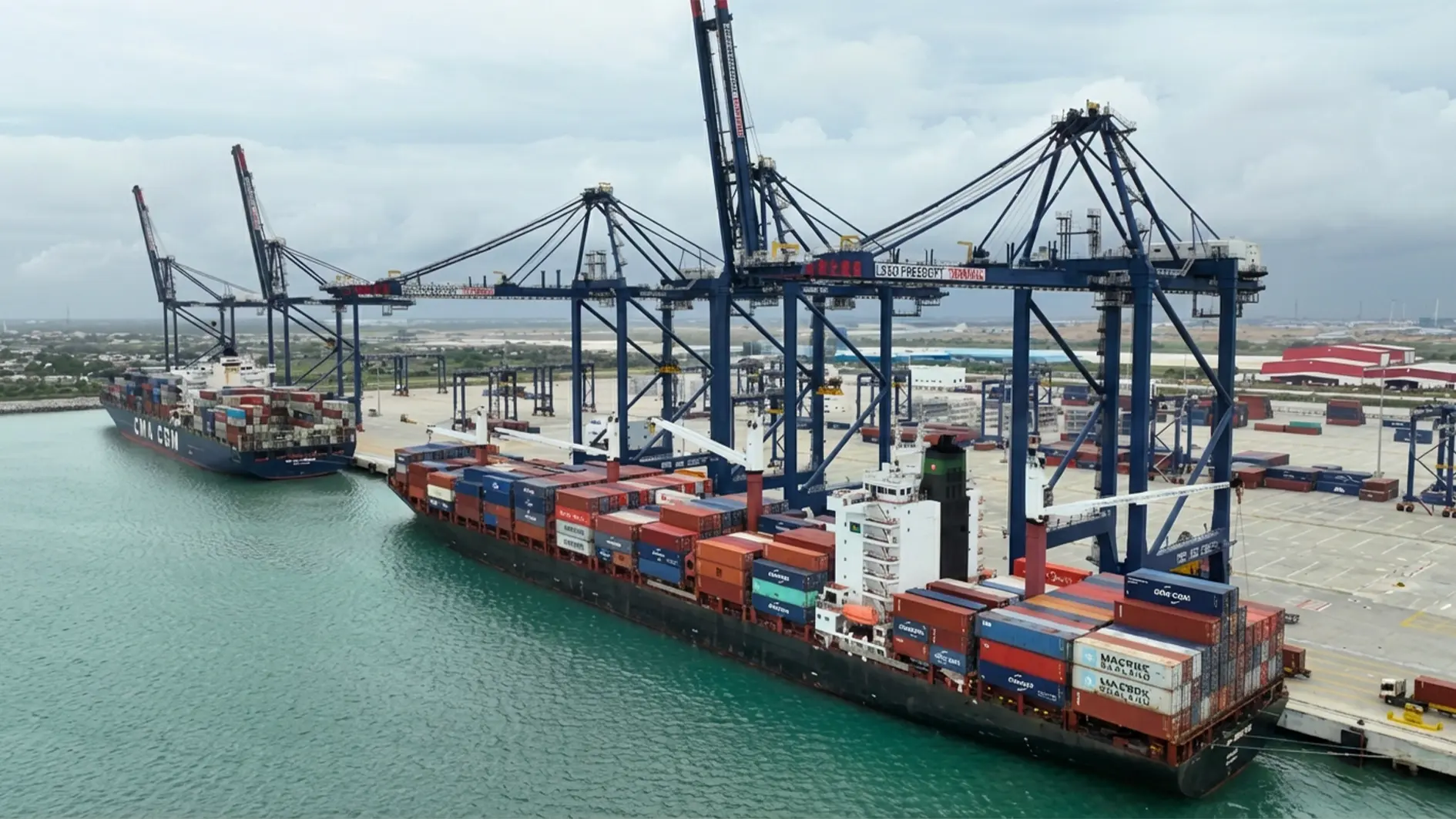
More than a decade after their concession licenses officially expired, terminal operators remain in control of Nigeria’s ports. With renewal decisions delayed and performance audits unpublished despite the Infrastructure Concession Regulatory Commission (ICRC) Act rules, the country risks lost revenue, weakened investor confidence, and a deeper infrastructure crisis.
Industry stakeholders argued that the continued operation of these concessionaires undermines the credibility of Nigeria’s port concession framework, which was designed to improve efficiency, attract investment, and ensure fair competition. By allowing expired contracts to linger without renewal or review, the government risks creating an uneven playing field that discourages new entrants and erodes investor confidence.
Critics also warned that the situation could have broader economic implications. With seaports serving as critical gateways for trade, the absence of clear regulatory enforcement may compromise revenue collection, weaken institutional trust, and stall much-needed modernisation efforts. Calls are growing for the Federal Government to break its silence, clarify the status of these concessions, and chart a transparent path forward for Nigeria’s maritime sector.
Findings showed that while these licensees still operate at the seaports, they pay service fees to the Nigerian Ports Authority (NPA) and shortchange the Federal Government on the full agreement fee.
According to a World Bank document, APM Terminals, whose 25-year concession contract is yet to expire, submitted a bid in 2005, with a net present value of $1.06 billion, of which about $300 million is expected to be invested in capital projects. This showed the extent to which the Federal Government is being shortchanged.
This is despite provisions of the ICRC Act, which requires a fresh tender and competitive bidding process following the expiration of a concession agreement.
These concessionaires, The Guardian gathered, continue to occupy the concession facilities at the seaports, operating their activities with expired licenses, with the NPA only requesting service fees provided to them, including harbour services and vessel reception, among others, to avoid uninterrupted maritime services pending the conclusion of the renewal process or cancellation of their contracts.
The Federal Government has used five to 10 years to review the expired port concession agreements, which had operational gaps in the legal and structural framework since they were drafted and signed in 2006 and has yet to come to a conclusion on whether to address the shortcomings or on whether to renew or cancel the contracts.
The gaps involve the operations and obligations of the concessionaires, the NPA and other regulatory agencies involved in the drafting of the agreement, including the National Council for Privatisation (NCP), the ICRC, and the Bureau of Public Enterprises (BPE).
There is no timeline for when the government would reconcile these outstanding obligations and improve performance among concessionaires and the authority, as indications show that it could take more years before renewing the agreements.
Checks showed that the Federal Government is still stalling on conducting a transparent, terminal-by-terminal performance audit and publishing the applicable Key Performance Indicator (KPI) framework and aggregate performance outcomes.
The government is also expected to reconcile concession fees, throughput obligations, capital expenditure and contractual compliance, as well as separate contractual rights from lobbying and other extraneous interests.
The Guardian learnt that landlord port model concession agreements were awarded to 20 concessionaires across Apapa, Tin Can Island, Port Harcourt, Onne, Warri and Calabar ports in 2006 for a period ranging from 10 to 25 years; however, some with 10 years received another five-year extension.
Information from the BPE website showed that those with expired licenses include ENL Consortium Limited, Josepdam Port Services Limited, Ports & Cargo Handling Services Limited (SIFAX Group), which have 10-year contracts that expired in 2016, with a five-year extension, already due in 2021, while Tincan Island Container Terminal (TICT), Ports & Terminal Operators Ltd (PTOL), Ports and Terminal Multiservices Limited, and Five Star Logistics Limited have 15-year contracts that expired in 2021.
Associated Maritime Services Limited (AMS), Brawal Oil Services Ltd (Federal Lighter Terminal A) and Lilypond Container Depot Nigeria Limited have a 10-year contract that expired in 2016.
Although the NPA put up a fresh bid for the Lilypond terminal in 2018, it was later converted to a truck park and export processing facility by the government due to congestion along the port corridor.
Concessionaires whose licenses are yet to expire are Apapa Bulk Terminals Ltd (ABTL), APM Terminals Nigeria, West Africa Container Terminal (WACT), Brawal Oil Services Ltd (Federal Ocean Terminal) and Julius Berger Nigeria Services (JBSN), which have 25-year contracts expiring in 2031.
BUA Ports and Terminals Ltd and Intels Nigeria Ltd (Calabar port) have a 20-year contract expiring in 2026, while Ecomarine Nigeria Ltd, Addax Logistics Nig. Ltd and Green Leigh Nig. Ltd signed a 20-year contract from 2007 to 2027.
The Guardian gathered that a poor legal and structural framework governing the concession agreement, lack of clear directives and unmet obligations from concessionaires and the landlord and other regulatory agencies are the issues stalling the Federal Government agreement renewal.
Further, these issues raise questions about whose responsibility it is to rehabilitate port infrastructure, equipment renewal, maintenance, improve the port facilities, invest in new cargo handling equipment, throughput obligations, boost overall port capacity, security, electricity, service quality, development plans, contractual compliance and other key performance indicators required in a properly structured concession framework.
It was gathered that the concessionaires and the landlord have been in disagreement over revenue performance, which pointed out issues which the concessionaires claim were not clearly their responsibility in the legal structure of the agreement, as some of the concessionaires claim it is still stifling their business.
They claimed they are unable to get investment to expand their operations and renovate their facilities for automation.
A source in one of the agencies told The Guardian that under the agreements, some concessionaires are expected to provide supporting infrastructure, including pavement, storage facilities, stacking areas, other operational equipment and the rehabilitation of berths, depending on their respective contractual obligations.
The source said these concessionaires have refused to fulfil their obligations in the agreement, citing the recent ongoing reconstruction of berths 5, 6, 7 and 8 at Rivers Port, with plans to merge the four berths into two longer facilities to accommodate bigger vessels and increase cargo-handling capacity.
The source further disclosed that BUA had been under pressure from the NPA to reconstruct those berths, which it neglected for several years before the current work commenced after the berths finally collapsed.
The Managing Director, NPA, Dr Abubakar Dantsoho, said the regulators are currently reviewing existing contracts to resolve past unmet obligations from both parties, noting that for existing operators who satisfy revised operational, financial, and infrastructural investment requirements, long-term concession renewals will be finalised.
He also stated that NPA is committed to building a robust and transparent legal framework for all terminal concession renewals, saying, “it is better to get it right than to rush into agreements that will be challenged later.”
Dantsoho explained that the government considered it important to assess the performance and contributions of all parties, including the NPA and concessionaires, to identify areas requiring realignment before renewing the concession licences.
He said the review had revealed grey areas that needed to be addressed to ensure a more effective arrangement and improve the performance of all parties involved.
Global Law Experts (GLE) stated that the typical concession model in Nigeria and the dominant instruments are Build-Operate-Transfer (BOT), long-term lease and broader public-private partnership (PPP) structures.
According to the law firm, under the BOT, the concessionaire builds and equips the terminal, operates it for a fixed term, and transfers the asset back to the NPA at expiry, as capital and operational risks sit largely with the concessionaire during the term.
The firm stated that under the Lease-and-operate, existing quays and terminals are leased to the concessionaire, which supplies equipment, stevedores and management, meaning that the concessionaires are responsible for fixing the ports.
A critical issue is the secrecy behind the concession document, with the public criticising the action, noting that the document should be for public scrutiny to enable general performance assessments, transparency and accountability.
Dantsoho specifically stated that where performance benchmarks are not met or contracts lapse without agreement, the Authority remains open to competitive bidding from reputable international port management investors to guarantee optimal asset productivity.
This comes against the backdrop of the deteriorating condition of Nigerian ports, causing inefficiencies, which require urgent rehabilitation, quay wall reconstruction and modernisation of equipment, as well as the upgrade of critical port infrastructure to enhance their competitiveness in attracting cargo traffic across the African market.
Foreign shipping companies are often discouraged from patronising ports with inadequate infrastructure, as such deficiencies increase cargo dwell time to more than 15 days. This has contributed to the diversion of Nigerian-bound cargo to neighbouring countries, including Ghana, Togo and Benin Republic, whose well-equipped and modernised ports offer more efficient cargo handling and turnaround times.
According to industry data from the Sea Empowerment and Research Centre (SEREC), Nigeria’s maritime sector is currently operating below its economic potential, with port inefficiencies, poor infrastructure, policy gaps and delayed reforms costing the country a yearly economic loss of between N3 trillion and N5 trillion.
The Federal Government has already commenced engagement with foreign investors, opening up the possibility of competitive bidding from reputable international port management investors to take over as new concessionaires to guarantee optimal asset productivity.
One of the outcomes of this engagement has been the reassignment of some proposed port projects to new investors.
A case in point is the Olokola Deep Seaport project, for which the Ogun State Government signed a fresh $7 billion deal with DP World in Paris, France, in the presence of President Bola Ahmed Tinubu, for the development of the port and its economic zone, despite an existing Memorandum of Understanding (MoU) with Dangote Industries Limited for the project.
The Dangote Group had already commenced preliminary activities towards the construction of the deep-sea port in 2025. The conglomerate holds an 80 per cent stake in the Olokola Free Trade Zone Company, established to develop the project, while the Ogun and Ondo State Governments own a 10 per cent stake.
This has raised questions about the earlier MoU with the Dangote Group on whether the new arrangement could potentially collide or overlap with interests already covered by the existing MoU,
Another example is the $2.59 billion Badagry Deep Seaport project, whose concessionaire is Badagry Port Development Limited (BPDL). The project has suffered years of delays, with its pre-construction and financing stages stalled despite receiving a Full Business Case Compliance Certificate from the Infrastructure Concession Regulatory Commission (ICRC) in April 2022 and Federal Executive Council (FEC) approval on August 3, 2022, under a 45-year Build-Own-Operate-Transfer (BOOT) concession.
In what appears to be another effort by the Federal Government to attract investors, it secured an agreement with APM Terminals in Copenhagen, Denmark, on September 7, 2026, for the company to sign an MoU with BPDL to advance the development of the port.
The Guardian learnt that these developments have heightened concerns among existing concessionaires, who fear losing out on contract renewals after committing substantial funds to port development. The uncertainty, according to industry sources, could discourage further investment in the sector.
Concessionaires have also expressed fears that the agreement could be politicised, citing the Federal Government’s persistent efforts to pitch port facilities to foreign investors.
Indigenous concessionaires, however, lamented that losing out on concession agreements or contract renewals could force their businesses into liquidation, unlike their foreign counterparts, who have access to government-backed loans and financing to establish operations in other regions.
Already, some of these foreign concessionaires are investing billions of dollars in port development projects across other African countries, equipping them with modern technologies to compete for the continent’s cargo market while seeking to recoup their investments.
DP World committed $90 million to upgrade the Port of Luanda after securing a 10-year extension to its terminal operating licence and also a $165 million expansion project for its container terminal at the Port of Maputo under a 10-year concession extension.
APM Terminals invested $800 million in two port expansion projects completed in 2024, with another projected investment of $2.2 million for the third port in Morocco.
The NPA is doing all it can to get the $1 billion port modernisation programme and other investments to ensure major physical infrastructural upgrades and operational equipment overhauls beginning from Q4 2026, which, once fully phased in, is projected to deliver up to a 50 per cent reduction in vessel turnaround times and significantly improve cargo handling efficiency.
Although, the concessionaires claimed that they have in the last 20 years of the port concession programme in Nigeria, invested over $1 billion in the port industry.
Managing Director of PTML Ascanio Ruso, who gave the figures during the second-quarter 2026 Citizens /Stakeholders‘ Engagement organised by the Federal Ministry of Marine and Blue Economy, said PTML alone has committed over $250 million to infrastructure and operational development, with plans to invest an additional $50 million in the terminal to strengthen port infrastructure, improve operational efficiency and support Nigeria’s ambition of becoming the leading maritime hub in West and Central Africa
WACT- APM Terminals invested $115 million in capacity expansion and modernisation, including a terminal upgrade project launched in 2020, while pledging a fresh $600 million investment in Nigeria, targeting port modernisation, logistics infrastructure, and technology-driven maritime operations.
Co-Founder & Head of Research, SEREC, Eugene Nweke, acknowledged that the 2006 concession programme brought private capital, equipment, management expertise and operational discipline into the terminals.
He said official records acknowledged significant improvements in vessel turnaround, cargo dwell time and operational hours following the concession.
Nweke, who is also the Secretary, Customs Consultative Committee (CCC), however, argued that a successful concession is not the same thing as an automatic right to perpetual renewal.
He said that while the agreements themselves are not generally available as public documents, his understanding is that the contractual architecture provides for periodic assessment of the concessionaire’s obligations and performance.
“I have personally had the privilege of examining relevant portions of the 2006 concession documentation, particularly Sections 5, 6, 7 and 8. Performance should therefore be assessed against measurable obligations: Concession and lease payments, throughput obligations, capital investment, equipment renewal, maintenance, safety, service quality, development plans, contractual compliance and other agreed KPIs,” he stated.
He said the government may continue to receive lease fees, throughput-related charges, royalties and other statutory or contractual revenues during a transition, depending on the terms of the particular concession.
Nweke said if a concession expires and a new operator is selected, the government may incur transaction, valuation, due diligence, handover and rehabilitation costs, noting that there could also be temporary operational disruption if the transition is badly managed.
He noted that a terminal that is uncertain about its future may postpone capital expenditure, equipment renewal and expansion, adding, “conversely, a competitive re-tender may attract an operator prepared to make substantially larger investments.”
Nweke stated that the fiscal analysis should compare the net present value of continuing with the incumbent against the value obtainable through renewal, restructuring or competitive re-tendering.
According to him, this requires access to the individual concession’s financial and performance records.
Nweke said the government must not neglect the value created by the existing concession, noting that the analysis must be balanced by considering the private terminal operators’ invested capital, equipment, technology and management expertise in Nigeria’s ports.
He cited ICRC material, which previously estimated post-2006 terminal-operator investment at about N200 billion over 10 years, compared with the approximately N50 billion contemplated in the original investment programme.
Director of International Trade, Maritime Researchers and Authors Association of Nigeria (MARASSON), Sunday Ademuyiwa, said the investment should be acknowledged and protected within the contractual framework, noting that where renewal is justified, the government should negotiate a new generation of concessions with stronger investment, technology, service-quality and infrastructure-rehabilitation obligations.
He also stated that where competitive re-tendering is required, the government must ensure a properly managed transition that does not disrupt port operations, while introducing stronger periodic performance reviews rather than waiting until concession expiry before discovering structural deficiencies.