 Get Guardian on Google
Contrary to the perception in some government quarters that the recent report by the International Monetary Fund (IMF) and the World Bank is entirely positive for the health of the Nigerian economy, it clearly underscores a trend of deepening poverty across the country. This reality needs to be addressed beyond political gestation, or it will become an albatross that will not go away. If anything, the sharp contrast between the report’s highlights and the economic adversity confronting the average Nigerian may be a warning against wholesale adoption of the Bretton Woods standard for assessing peculiar economies such as Nigeria’s.
It often appears that when the World Bank and IMF sing the praises of a country’s economy, its citizens struggle to survive under that same economy. This has been an age-old lopsided economic syndrome that needs closer inspection. Recently, the Nigerian economy came under the scrutiny of the Bretton Woods Institutions (BWIs), which issued a scorecard after its routine update exercise. It was a balanced assessment of strengths and areas needing improvement. In a globalised and interdependent world, global governance agencies shape the economic outlooks of nations. Their meddling is ubiquitous in developing countries, including Nigeria.
The World Bank and IMF update, titled Nigeria Development Update (NDU), is a biannual World Bank report series. The current report assessed recent economic and social developments and prospects for economic advancement in Nigeria, within the context of global development and prospective outlooks. It mainly focuses on selected economic and policy issues. The report addresses a capital audience—“policymakers, business leaders, financial market participants, and the community of analysts and professionals engaged in Nigeria’s evolving economy”.
According to the Bank and IMF, “Nigeria’s growth has remained resilient, while higher oil prices have bolstered fiscal revenues and external balances, despite temporarily interrupting the decline in inflation. As stability takes hold, the priority is shifting from restoring macroeconomic fundamentals to achieving faster and more inclusive growth that creates jobs, reduces poverty, and improves living standards”.
The report relates to improvements in the country’s external reserves, stability in the regime of a flexible exchange rate, steady growth in the gross domestic product, and a considerable contribution of the service sector to GDP; the future projection of economic growth is forward-looking. Reeling out macroeconomic data, the Bretton Woods institutions noted that Real GDP grew by 4.2% in early 2026, though poverty remains high, with 50.8% in extreme poverty. The federal deficit is projected to widen to 3.5% of GDP in 2026. The active portfolio exceeded $16.4 billion. The report put real GDP growth projections at 4.1%–4.2% for 2026, with inflation averaging 15.1% to 15.7%. Gross international reserves rose to $51.9 billion by mid-2026.
To the developed world, the above figures are heart-warming. For the government, it is an affirmation that its reform policies are not doing badly. But the scorecard should not become a tool of propaganda for a government struggling to recover from widespread public distrust over its reforms that have caused hardship for the broad masses of the population. In its reaction, the government enthused that: “These findings confirm that the difficult but necessary decisions to remove the petrol subsidy, unify the foreign exchange market and strengthen fiscal discipline have raised revenues, stabilised the economy and created fiscal space for every tier of government to invest in its people…The dividends of reform are becoming visible. But more work remains to ensure they fully translate into better living standards for every household, starting with lower food prices and decent jobs for our young people…Our administration will stay the course of reform and redouble its focus on inclusive growth under the Renewed Hope Agenda”.
While the update builds on an earlier report in April, which affirmed what the World Bank and IMF termed “meaningful progress in restoring macroeconomic stability following the implementation of bold reforms that have impacted inflation, external and fiscal positions and overall economic growth”, the present report is not all about praise, as it points out areas for improvement. It noted that household incomes had yet to improve while the level of immiseration, in other words, poverty remained high. The spillovers from the conflict in the Middle East have not helped matters. Inflation rose to 15.4 per cent year-on-year in March 2026, with a consequent spike in international fuel and food prices which impacted Nigerians adversely. This reality underscores the imperative of stabilising the gains of reform through inclusive growth.
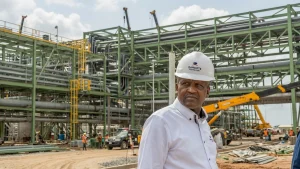
The economic fundamentals are looking good in terms of macroeconomic stats and have even encouraged the rise of national capital, exemplified by the flourishing Dangote refinery, which has largely curbed the scarcity of petroleum products. This has come at a cost. Its cost is prohibitive relative to the income of an average Nigerian who relies on petroleum products for energy generation. Everyone agrees that the reform gains have not translated into improved living for most Nigerians. The wellbeing of Nigerians matters. The reality is that Nigerians have slid into multidimensional poverty. The country harbours a very high number of out-of-school children; acute food insecurity affects about 30.6 to 35 million people. Indeed, on the GHI index, Nigeria ranks 115 out of 123. Child health has deteriorated, with about 32-33.8 per cent stunting and 11.6 per cent wasting. The country suffers from an effective housing shortage of about 28 million.
These challenges of nation-building and reliance on the development set, in other words, external agencies, for solutions are not new and have not worked. Since the austerity measures of the Shagari administration, Nigeria has been subjected to the medicine from the BWIs; they have not worked, and there are no star pupils among the countries in sub-Saharan Africa that have heaved a sigh of relief thanks to the BWIs. Under the Obasanjo administration, 1999-2007, the country trod the path of the Policy Support Instrument (PSI).
Today, the country has yet to witness a significant change in the production relations. The standard of living of Nigerians remains a huge challenge confronting the government, which needs to be tackled head-on without playing politics. Some ingenuity is required. Corruption and ostentatious governance are thriving to the detriment of citizens. So far, government palliative measures such as the proposed marginal discount on premium motor spirit (PMS) and a new cash transfer programme offering N50,000 monthly to eligible vulnerable households, as part of the scheme called the National Emergency Relief and Stabilisation Intervention (NERSI), are inadequate in a corruption-ridden environment. In the face of a faint hope of a better tomorrow. Nigerians demand accountability, transparency and an end to poverty and misery.
Limits of the Bretton Woods report on Nigeria
Contrary to the perception in some government quarters that the recent report by the International Monetary Fund (IMF) and the World Bank is entirely positive for the health of the Nigerian economy