
 Get Guardian on Google
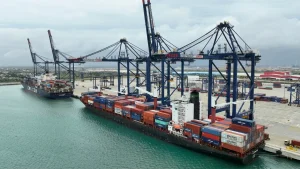
Nigeria has identified trillions of naira in potential illicit financial flows (IFFs) arising from import transactions between 2020 and 2024, raising concerns about trade misinvoicing, revenue leakages and the country’s capacity to safeguard wealth generated through international commerce.
Preliminary findings from an analysis of Nigeria Customs Service (NCS) transaction-level import data, using the United Nations Conference on Trade and Development (UNCTAD) Price-Filter Method+, indicate significant exposure to import under-invoicing and over-invoicing, with attendant risks to customs duties and value-added tax (VAT) revenues.
Speaking yesterday in Abuja at a media workshop on evidence-based reporting of illicit financial flows in Nigeria, Head of Anti-Corruption at the Nigeria Revenue Service (NRS), Muhammed Idris Abdullahi, described the exercise as a significant step towards measuring and tackling financial leakages.
He, however, cautioned that the estimates represent potential values at risk, not confirmed cases of fraud, established criminal proceeds or verified government revenue losses.
According to him, the methodology identifies transactions whose declared unit values fall outside statistically established admissible ranges and flags them for further examination.
He explained that variations in product quality, contractual arrangements, packaging, related-party pricing and measurement errors could also account for some of the anomalies.
Abdullahi urged journalists to distinguish between statistical anomalies and proven financial crimes to avoid sensationalism and misinformation.
He identified trade misinvoicing, tax evasion, aggressive profit shifting, concealment of beneficial ownership, corruption and cross-border movement of criminal proceeds as major challenges undermining Nigeria’s economic development.
Import under-invoicing, he explained, could conceal the actual value of goods, thereby reducing applicable customs duties and tax obligations. Over-invoicing, conversely, could facilitate the illegal transfer of funds abroad through inflated payments for imports.
He added that multinational corporations could exploit differences in national tax systems and manipulate related-party transactions to shift profits across jurisdictions, weakening the domestic tax base.
To tackle the challenges, Nigeria is implementing reforms under the Nigeria Tax Act 2025 and Nigeria Tax Administration Act 2025, including relevant provisions of the Organisation for Economic Co-operation and Development’s (OECD) Pillar Two framework, which establishes a 15 per cent effective minimum tax for qualifying multinational enterprises.
Other measures include tighter transfer pricing oversight and plans to establish a National Transfer Pricing Intelligence Centre.
Abdullahi said the country was also strengthening beneficial ownership transparency through the Corporate Affairs Commission’s Persons with Significant Control framework, established under the Companies and Allied Matters Act 2020.
He disclosed that the NRS was developing beneficial ownership and social network analytics to identify individuals behind corporate entities and examine relationships that could facilitate financial crimes.
The agency is also planning a joint NRS-NCS-Nigerian Financial Intelligence Unit (NFIU) Trade Analytics Task Force to improve information sharing and detect suspicious trade patterns.
He also identified the National Action Plan for 2027–2030 as a framework for consolidating the country’s interventions, improving institutional coordination and introducing periodic measurement of illicit financial flows.
In a separate presentation, a former Director of Prosecution at the Independent Corrupt Practices and Other Related Offences Commission (ICPC), Adedayo Kayode, said Nigeria’s efforts to mobilise revenue for economic development, infrastructure expansion and job creation were being undermined by illicit financial flows.
He noted that illicit financial flows extended beyond corruption and the diversion of public funds by politically exposed persons to include sophisticated commercial practices through which businesses and multinational corporations manipulate trade transactions, shift profits across borders and exploit weaknesses in tax systems to reduce their financial obligations.
In his paper, ‘Understanding IFFs: Global Trends and Nigeria’s Context’, Kayode identified commercial and tax-related activities as the biggest drivers of illicit financial flows globally, accounting for more than 60 per cent of such movements.
He argued that tackling the problem required an approach that went beyond anti-corruption agencies to address corporate financial practices, weaknesses in trade documentation and tax administration, as well as international structures used to conceal and transfer illicit proceeds.
According to him, developing countries were particularly vulnerable, losing substantial financial resources that could otherwise finance economic transformation, poverty reduction and public investment.
In Nigeria, he said, the consequences cut across government revenue, public service delivery, economic competitiveness and the capacity to create sustainable employment.
Kayode explained that trade misinvoicing involved deliberately manipulating the declared value of imports and exports, either through under-invoicing or over-invoicing, to facilitate the illegal movement of funds across borders.
He also identified transfer pricing abuse, offshore corporate structures and tax avoidance as channels through which illicit financial flows could occur.
The former ICPC director further warned that Nigeria’s dependence on oil revenues exposed the economy to illicit financial activities in the extractive industry.
He identified crude oil theft, illegal bunkering and manipulation of production and export data as major channels through which illicit financial flows occurred in the sector.