 Get Guardian on Google
… Promises the same commitment nationally
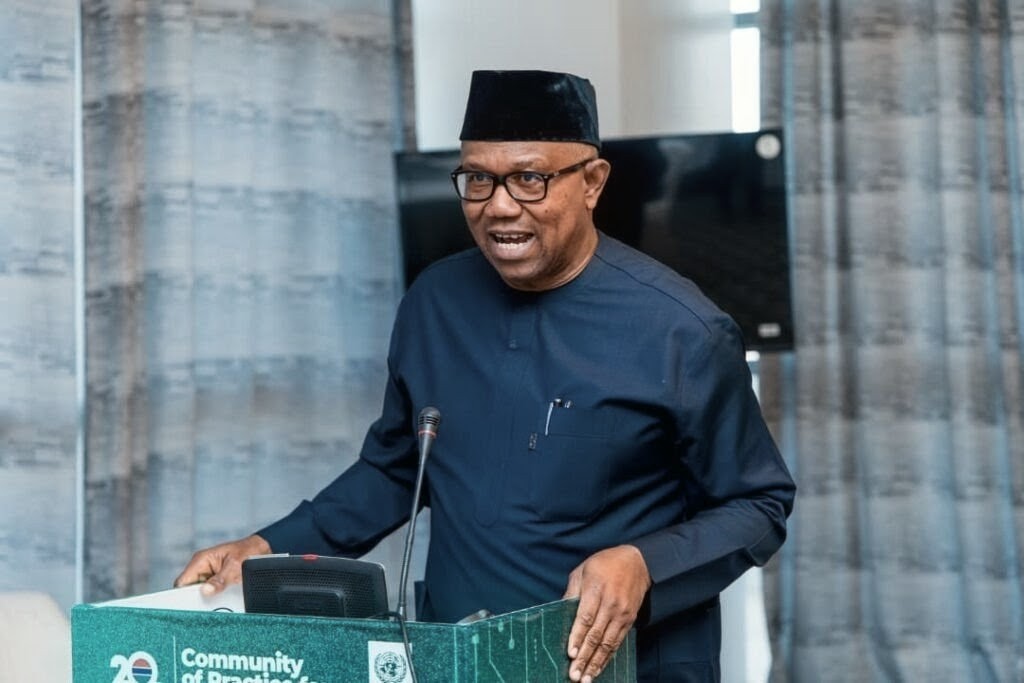
Former Anambra State Governor Peter Obi has highlighted his administration’s investments in education, from primary schools to universities and technical institutions, promising to bring the same commitment to the sector nationwide if elected president.
In the third instalment of his “Nigerians, Go and Verify” series on X, Obi said education was never a political game or a convenient campaign promise for him, describing it as the foundation of meaningful development and the most enduring investment any government could make in its people.
He said one of his first major decisions as governor was to return mission and privately owned primary and secondary schools to their original proprietors while retaining government support.
According to him, his administration committed billions of naira to rehabilitating the returned schools, restoring the partnership between government and religious institutions that had historically contributed to educational development.
Obi said the policy attracted international attention, citing a World Bank-commissioned study led by Oxford economist and World Bank consultant, Professor Paul Collier.
He said Collier’s team examined the arrangement, under which mission schools regained ownership while the government continued paying teachers’ salaries and providing infrastructure, describing it as a revolution in public service delivery and recommending its adoption by other Nigerian states and developing countries.
Responding to claims that his administration did not build schools, Obi challenged critics to verify the records.
He said his government constructed five-classroom blocks in virtually all the 177 communities in Anambra, adding that town union chairmen and community leaders from the period could attest to the projects.
Hundreds of dilapidated schools were also renovated, including abandoned facilities where trees had grown through buildings. He cited Comprehensive Secondary School, Onitsha, and Oraukwu Grammar School as examples.
On technology, Obi said his administration distributed about 40,000 computers to schools, including more than 22,500 HP laptops, while secondary schools were equipped with Microsoft Academies and internet connectivity.
He said generators were supplied, libraries established and stocked, school sports revived, and boreholes installed in more than 300 schools, including all girls’ schools.
Obi cited commendations from industry executives to support the scale of the interventions. He said Fabrice Campoy, then Managing Director of HP Inc.‘s Personal Systems Group, described the laptop procurement and distribution as the biggest project of its kind in the Middle East and Africa.
He also quoted Ken Spann, then Country Manager and Head of Microsoft Nigeria, as describing the deployment of Microsoft Academies in more than 500 secondary schools as the most extensive of its kind in Africa at the time.
Similarly, Gerald Ilukwe, Chief Executive Officer of Galaxy Backbone Plc, reportedly commended the rollout of VSAT internet connectivity to more than 500 secondary schools, describing it as unprecedented among states and noting that Anambra was the first state government to treat broadband connectivity in public schools as essential infrastructure.
Public secondary schools also received buses, with some allocated two each, for transporting students, supplies and handling emergencies.
Obi said his administration released ₦525 million directly to schools to establish sick bays and dispensaries, while principals received intervention funds to address erosion and other urgent challenges.
He added that he personally visited every secondary school in the state, often unannounced, ate with boarding students and inspected dormitories and classrooms. He said all senior prefects had his telephone number.
On teachers’ welfare, the former governor said his administration recruited 2,000 primary school teachers and 5,000 secondary school teachers, alongside another 2,000 special-subject teachers. He said provision was made to cover their salaries for two years to avoid imposing an immediate financial burden on his successor.
He added that salaries and allowances were paid promptly, pension and gratuity arrears cleared, promotions restored and the ceiling preventing some teachers from rising beyond Grade Level 16 removed.
Obi said Government Technical Colleges in Onitsha, Nkpor and Umuchu were renovated and re-equipped, while several technical programmes received accreditation. Adult Education Centres and Market Schools were also strengthened, alongside the provision of equipment to 53 nomadic and migrant schools.
At Chukwuemeka Odumegwu Ojukwu University, he said more than 40 projects were constructed or completed, including faculties of Law, Engineering, Agriculture, Management Sciences, Arts and Social Sciences, as well as a Mass Communication Complex, an e-learning and research centre and student hostels.
He said ₦5 billion was released to the university, while two 250-bed hostels were facilitated through the Central Bank of Nigeria under its then Deputy Governor, Dr Kingsley Moghalu.
Nwafor Orizu College of Education, Nsugbe, and the College of Agriculture, Mgbakwu, also benefited, with about 15 buildings constructed at the latter. More than 25 buildings were equally built for Chukwuemeka Odumegwu Ojukwu Teaching Hospital.
Obi added that St Charles Borromeo Hospital and Iyi-Enu Hospital had since become teaching hospitals.
Private institutions also received support, he said, listing Madonna University, Paul University, Tansian University and Peter University as beneficiaries of grants of about ₦100 million each, alongside vehicle support.
He further said every Anambra indigene who graduated with a first-class degree received ₦1 million, with more than 500 graduates benefiting. He cited Dr Uchenna Nze, now Head of the Department of Mass Communication at Tansian University, as one of the beneficiaries who said the grant helped him pursue further education.
Obi said that by the time he left office in 2014, Anambra had moved from lower positions in WASCE, GCE, NECO and JAMB examinations to the top positions, adding that schools in the state continued to win local and international awards.
He said he had sustained his support for education across Nigeria as a private citizen through donations, classroom construction and the provision of learning materials.
Promising to replicate his Anambra experience nationally, Obi said: “As President, I will bring the same energy, commitment, and political will to bear on education nationally, with all agencies responsible for education functioning effectively and held accountable.”
He also called for greater transparency in the management of education funds, insisting that taxes and other revenues collected specifically for the sector must be properly accounted for so Nigerians can know how much is raised, where it goes and how it is spent.
He said government support should extend to mission, private and community-owned schools, stressing that responsibility for educating children should not be determined solely by ownership.
Obi said the fourth instalment of his series would focus on his administration’s achievements in the health sector.