
 Get Guardian on Google
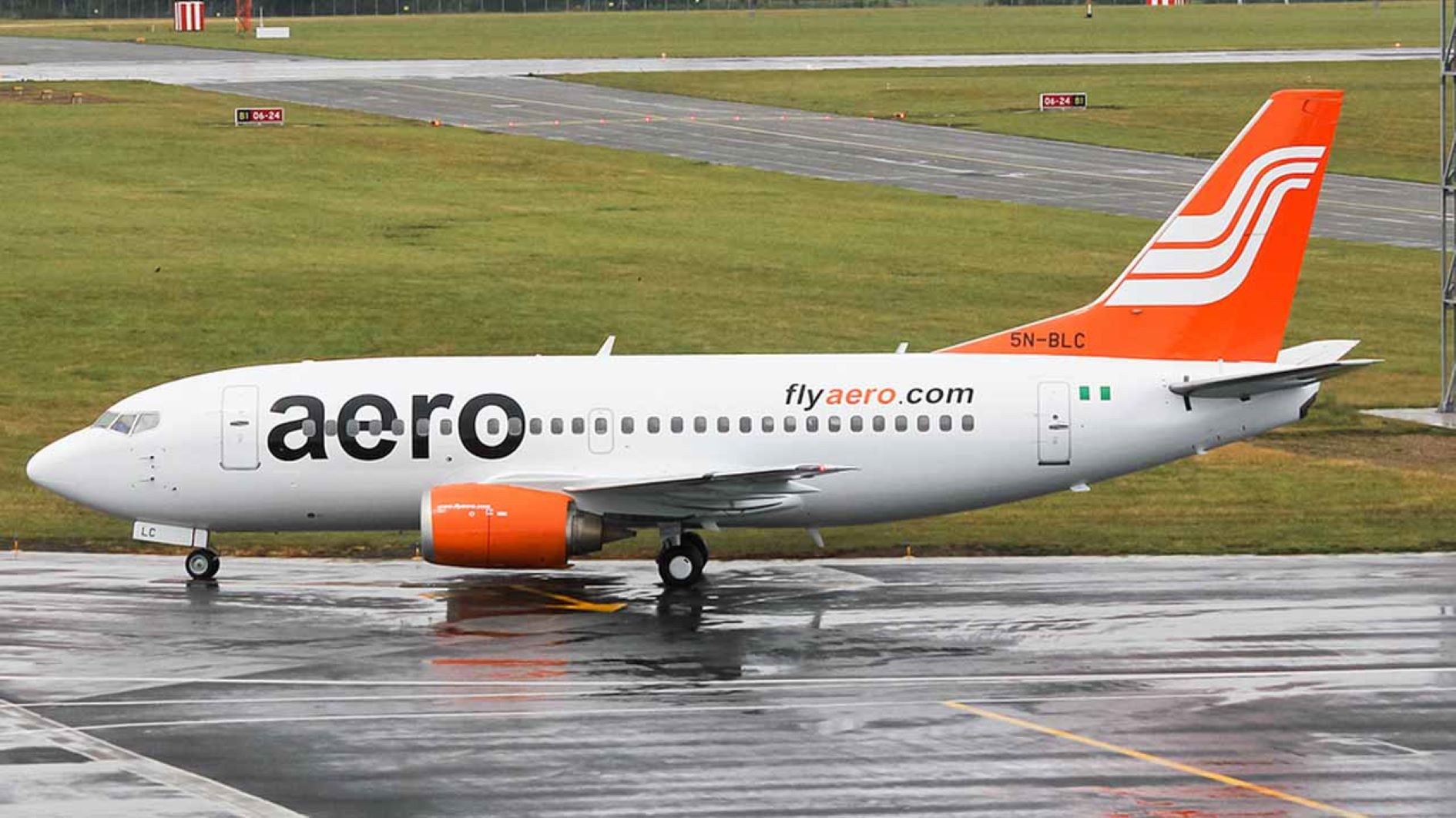
The Managing Director of Aero Contractors, Ado Sanusi, has faulted the Nigerian Airspace Management Agency’s (NAMA) approach to infrastructure investment, urging the agency to involve airlines in decisions on facilities and equipment acquired for the industry.
Sanusi, a former Managing Director of NAMA, told The Guardian that airlines were rarely consulted before the installation of facilities funded with public resources to support their operations.
He warned that the agency risked spending billions of dollars on sophisticated equipment and infrastructure that airlines might lack the technical capacity to utilise effectively.
He urged NAMA to adopt a customer-driven investment strategy, arguing that the airlines constitute its primary customers and should have a say in determining its investment priorities.
He said: “We are left behind. I am telling you, we are left behind. The thing I would like to discuss also is that NAMA has to understand that 100 per cent of their customers, in fact, are the airlines.
“You don’t give any other services to any other person apart from the airlines. I also made a mistake when I was sitting in NAMA, thinking that I would give the best surveillance system, the best communication system, the controller, the pilot, and the data link system, not knowing what the actual customer wants.
“Does the customer have the capability to actually use what I’ve given him? And I think that is also important in what we are doing now. I heard the Minister of Aviation and Aerospace Development, Festus Keyamo, saying we have the Automatic Dependent Surveillance-Broadcast (ADS-B); we are going to do this. Who are you giving these services to? Is it to Nigeria or to whom?”
Sanusi also called on the Federal Government to immediately constitute NAMA’s board of directors to provide airlines with a formal platform to participate in decisions affecting air navigation services and infrastructure development.
He said his experience as a former chief executive of the agency and his subsequent leadership of an airline had exposed the disconnect that could arise between infrastructure providers and their customers.
He recalled that while at NAMA, he had prioritised the acquisition of advanced surveillance, communication, and controller-pilot data link systems without adequately considering whether airlines had the technical capacity to use them.
Sanusi maintained that constituting the agency’s board would help address the problem by giving operators a voice in its operations and creating a structured platform for consultations.
He also urged NAMA to take responsibility for regularly engaging with airlines to understand their operational requirements, rather than relying solely on directives or interventions from the Ministry of Aviation and Aerospace Development.
“The constitution of the NAMA board should be done immediately because that’s the only way the airlines can have a say in what NAMA does.
“We can go to the minister and start talking to him to talk to NAMA, and NAMA too must understand and visit their customers. The forum should be there when you discuss with your customers what they need,” he added.
Sanusi also raised concerns about coordination challenges among aviation agencies, citing an experience involving NAMA and the Nigerian Meteorological Agency (NiMet) during the implementation of a safety tower project.
He explained that the project included an automated weather reporting system designed to enable pilots to receive hourly weather information through air traffic control facilities.
However, implementation was initially delayed because the meteorological component was under NiMet’s control, complicating integration of the system into NAMA’s operations.
Although the agencies eventually resolved the issue through consultations, Sanusi said it was concerning that Nigeria continued to struggle with inter-agency collaboration even as the global aviation industry moved towards more integrated systems.
He called for a review of the governance structures and funding arrangements of aviation agencies to improve operational efficiency and service delivery.
Sanusi also advocated the commercialisation of NAMA, urging the Federal Government to consider adopting the Canadian model, under which aviation professionals manage air navigation services on a cost-recovery basis.
He argued that such an arrangement would promote professional management, improve accountability and ensure that services were aligned with operators’ needs.
While commending the leadership of the National Association of Air Traffic Controllers (NATCA) for initiating discussions on NAMA’s future, he said the engagement should translate into concrete reforms.
He maintained that a better understanding of airline requirements, stronger accountability and a commercially driven operational structure were essential to repositioning the agency and preventing Nigeria’s air navigation system from falling further behind global standards.