
 Get Guardian on Google
Lower fuel costs alone may not guarantee the success of compressed natural gas (CNG) adoption in Nigeria, as the benefits of tax incentives and import-duty exemptions will depend on the availability of conversion facilities, refuelling infrastructure and affordable vehicles, BENJAMIN ALADE reports.
Nigeria’s decision to remove value-added tax (VAT) and import duties on CNG-powered vehicles, conversion kits, and related equipment could accelerate the adoption of gas-powered transportation among motorists.
However, experts warn that lower costs alone will not guarantee widespread adoption, as infrastructure, consumer awareness, safety and financing remain critical to making CNG a viable alternative to petrol and diesel.
Nigeria’s transition to gas-powered transportation is entering a critical phase, with the Federal Government’s fiscal incentives offering fresh opportunities to reduce vehicle operating costs and stimulate investment across the automotive industry.
The removal of VAT and import duties on CNG, liquefied petroleum gas (LPG), conversion kits, and associated equipment is expected to ease some of the financial barriers facing motorists, fleet operators, and businesses seeking alternatives to conventional fuels.
For an automotive industry grappling with rising vehicle acquisition costs, expensive maintenance and fuel price volatility, the intervention could influence decisions on vehicle purchases, conversions and fleet renewal. Yet questions remain about whether the incentives will translate into a sustainable motoring culture centred on gas-powered vehicles.
Unlike conventional petrol and diesel vehicles, CNG adoption requires an ecosystem of specialised conversion equipment, refuelling facilities, trained technicians, reliable gas supply and accessible maintenance services. Without these supporting structures, the financial benefits of cheaper conversions could remain largely untapped.
The policy intervention followed advocacy by the Nigeria Liquefied and Compressed Gases Association (NLCGA), which approached the Presidency in 2023 through an engagement with the Special Adviser to President Bola Tinubu on Energy, Olu Verheijen.
The association had raised concerns about the fiscal burden imposed by VAT and import duties on LPG, CNG and equipment required for gas storage, transportation, distribution and utilisation.
For the automotive sector, the concerns were particularly relevant because expanding CNG-powered mobility requires substantial investment in cylinders, conversion kits, compressors, dispensers, valves, pipelines and other specialised components.
Where these items attract additional taxes and import charges, the costs are ultimately reflected in higher conversion prices, infrastructure investment and, potentially, the cost of operating gas-powered vehicles.
Following engagements with the Office of the Special Adviser and the Federal Ministry of Finance, the government introduced measures granting zero import duty and VAT exemptions on LPG and qualifying equipment. The measures were approved by the Federal Government in July 2026.
The intervention presents an opportunity to reduce the cost of establishing gas infrastructure while improving the economics of converting existing vehicles and acquiring CNG-powered models.
For motorists, lower conversion costs, combined with the price advantage of CNG over conventional fuels on an equivalent energy basis, could shorten the period required to recover their investment. This is particularly relevant for commercial buses, taxis, delivery vehicles and haulage trucks that cover substantial distances daily.
For fleet operators, fuel savings could become significant when multiplied across hundreds or thousands of vehicles.
Companies operating large commercial fleets are increasingly considering alternative fuels as they seek to manage operating expenses and reduce exposure to petrol and diesel price fluctuations.
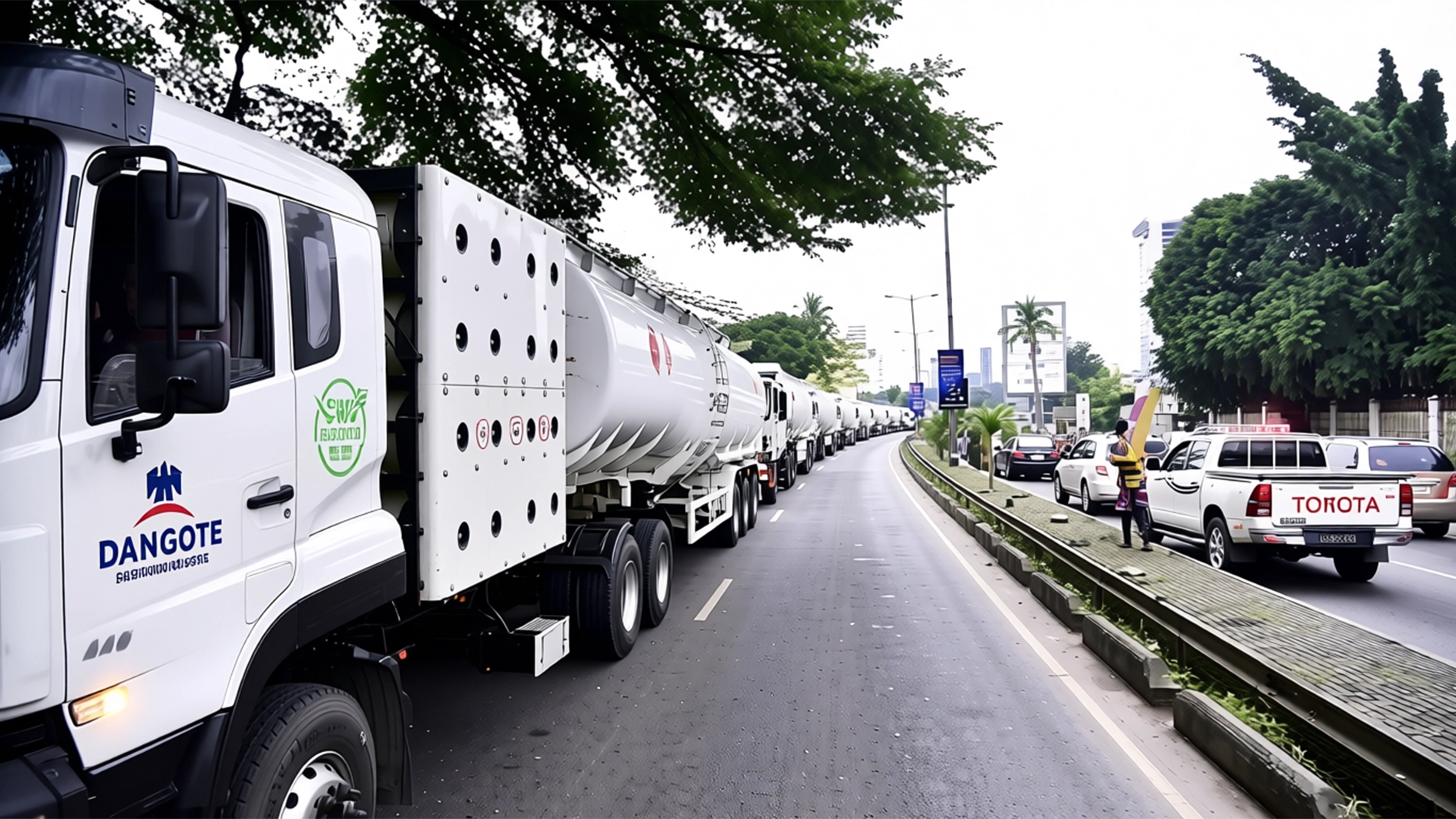
Dangote Cement, for instance, has announced plans to transition substantial portions of its fleet to CNG-powered vehicles, illustrating growing commercial interest in gas as a transportation fuel.
However, the economics of fleet conversion extend beyond purchasing and installing conversion equipment. Transport companies must consider the availability of refuelling stations along their operating routes, refuelling time, vehicle range, maintenance requirements and access to trained personnel.
Commenting on the issue, the President of NLCGA, Ladi Falola, said the incentives should be considered within the broader objective of developing a viable domestic gas market, rather than merely as a tax-reduction measure.
Falola, in an interview with The Guardian, maintained that reducing the fiscal burden on CNG equipment could encourage investment and make gas-powered transportation more attractive to motorists and fleet operators.
He, however, stressed the importance of complementary measures, including investment in refuelling infrastructure, reliable gas supply, technical capacity, appropriate financing and policy consistency.
Falola also argued that the policy could create opportunities for local assembly, equipment supply and technical services as the CNG market expands.
Similarly, Associate Professor of Marketing and Transport Services Researcher at Keele University, United Kingdom, Dr Emmanuel Mogaji, said VAT and import-duty exemptions could encourage CNG adoption by reducing costs but cautioned that affordability alone would not guarantee acceptance.
According to him, the transition must also address consumer behaviour, particularly awareness, confidence and trust in the technology.
Mogaji identified three important interventions that could improve public acceptance.
First, he said Nigerians needed adequate awareness and education about CNG, including its potential cost savings, operational benefits and safety considerations.
He argued that the government should move beyond announcing fiscal incentives to providing practical information that would help motorists understand how the technology works and what it means for vehicle ownership.
Mogaji advocated practical demonstrations involving taxis, buses and private vehicles to show that CNG-powered vehicles could operate safely and reliably under everyday conditions.
Such demonstrations, he explained, could reduce uncertainty among motorists who might otherwise hesitate to adopt an unfamiliar technology.
He also highlighted the importance of credible endorsements from trusted transport operators, experienced drivers, automobile experts and early adopters.
According to him, consumers are more likely to embrace unfamiliar technology when they see others using it successfully.
He explained that while tax incentives could make CNG affordable, awareness creates interest, demonstrations build confidence and credible endorsements establish trust.
He said: “Consumers need adequate awareness and education about CNG, including its potential cost savings, operational benefits and safety considerations.
“Practical demonstrations involving taxis, buses and private vehicles can help motorists understand how CNG-powered vehicles perform under everyday conditions.
“Such demonstrations can reduce uncertainty among motorists who may be reluctant to embrace a technology they consider unfamiliar.”
Energy Partner at Bloomfield Law Practice, Dr Ayodele Oni, also told The Guardian that VAT and import-duty exemptions were useful but would not, on their own, deliver mass adoption of CNG.
Oni explained that one of the major challenges confronting motorists was access to dependable refuelling infrastructure.
He said: “The VAT and import-duty exemptions are helpful, but they will not deliver mass CNG adoption on their own. Incentives can reduce the cost of conversion kits, cylinders and gas-powered vehicles, but the principal question for motorists remains whether they can refuel reliably.
“Official figures put the CNG fleet at slightly above 143,000 vehicles and the network at 105 refuelling stations, compared with a target of one million conversions by 2027. The relief has limitations because access runs through an Import Duty Exemption Certificate, while dual-fuel vehicles and some spare parts are outside the scope of the exemption.”
According to Oni, additional measures were necessary to make gas-powered mobility more affordable and sustainable.
He called for government and private investors to build more refuelling stations along major transport corridors and in underserved parts of the country and also advocated a transparent and predictable price regime for transport gas, backed by reliable supply contracts that would give investors’ confidence to finance new stations.
He also advocated financing schemes that would enable commercial drivers and transport unions to pay for vehicle conversions from the savings generated from lower fuel costs.
The tax relief presents Nigeria’s automotive industry with an opportunity that goes beyond replacing petrol with gas.