
 Get Guardian on Google
African countries have been urged to take greater control of their natural resources, strengthen local manufacturing and invest in indigenous technology to overcome global economic disruptions and achieve energy security.
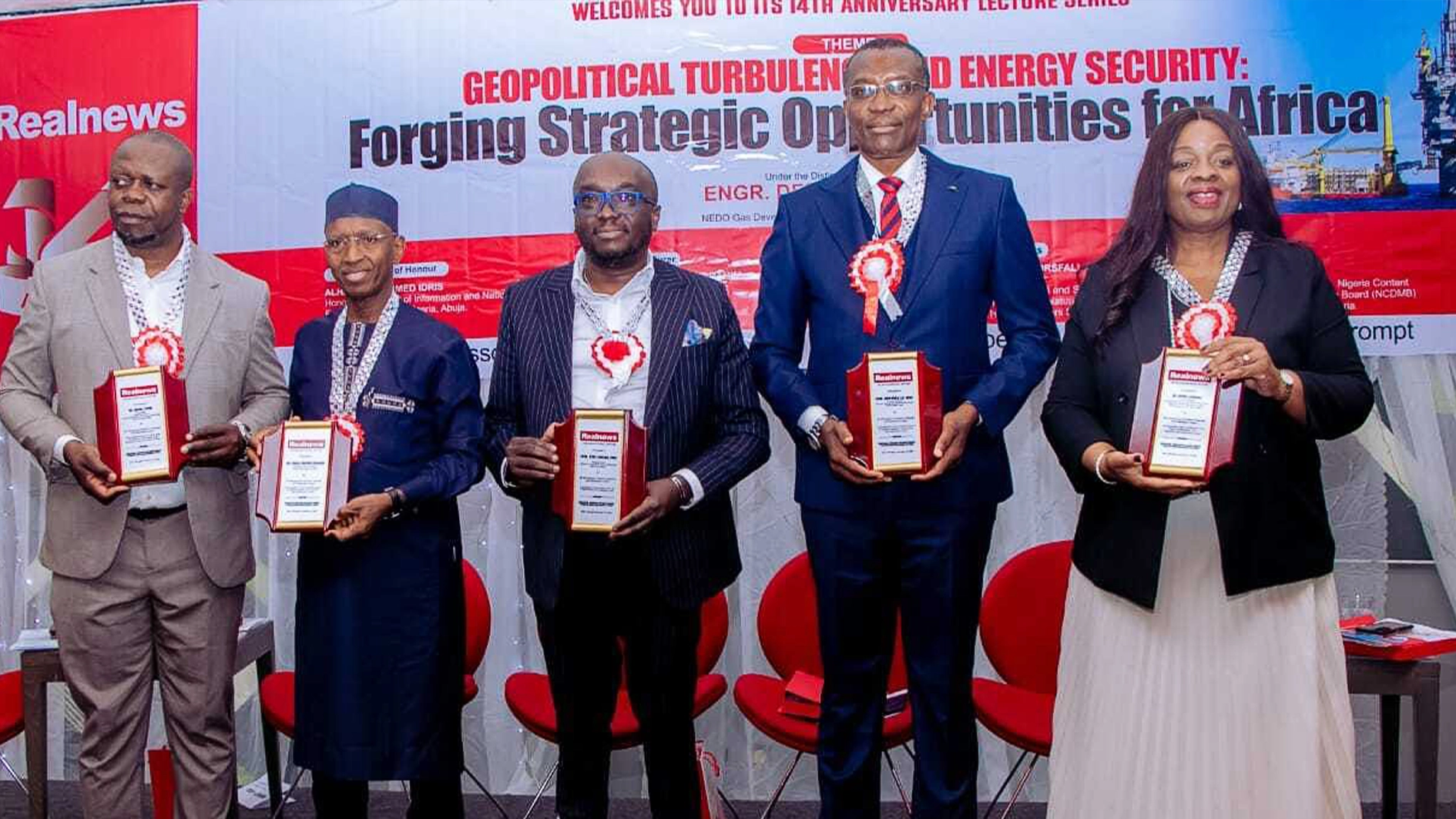
The call was made at the 14th anniversary lecture of Realnews Magazine, held in lkeja Lagos with the theme, “Geopolitical Turbulence and Energy Security: Forging Strategic Opportunities for Africa.”
Delivering the keynote address, Dr Umar Farouk Ibrahim, Regional Chair for Africa, World Energy Council, said Africa’s energy insecurity was not caused by a shortage of natural resources but by inadequate financing, limited technology and weak market infrastructure.
He noted that more than 560 million people in sub-Saharan Africa lacked access to electricity, while about 970 million remained without clean cooking facilities, according to the 2026 Tracking SDG 7 report.
Ibrahim said geopolitical tensions, armed conflicts and global supply chain disruptions had exposed Africa’s energy vulnerabilities, urging governments to invest in infrastructure, local technology, strategic petroleum reserves and regional cooperation.
He identified the Africa Energy Bank and the proposed Central Africa Pipeline System as initiatives that could strengthen energy financing and regional integration.
On the energy transition, he advocated a balanced approach that would expand renewable energy while recognising the continuing role of oil and gas in electricity generation, industrial development and other economic activities.
“Our energy transition must be a transition from energy poverty to energy prosperity, not from energy poverty to deeper deprivation,” he said.
Earlier, the publisher of Realnews Magazine, Dr Maureen Chigbo, said the annual lecture series, established in 2014, had provided a platform for professionals, scholars and policymakers to discuss issues affecting Nigeria and Africa.
She appealed to corporate organisations, government institutions, civil society groups and individuals to support the magazine, warning that declining advertising revenue and rising operational costs threatened the sustainability of independent investigative journalism.
“Realnews Magazine is free, but without your support from the public or private sector alike and the civil society, it will not survive,” she said.
Chigbo said organisations could support the publication through advertisements, special supplements, sponsored features, staff training and sponsorship of books and other publications.
She appreciated organisations that had supported the magazine, including the Bank of Industry, Zenith Bank, Nigerian National Petroleum Company Limited, Nigeria LNG Limited, Nigerian Communications Commission, Seplat Energy, Dangote Group, Chevron Nigeria Limited, Shell Nigeria Exploration and Production Company Limited, Access Bank and the Central Bank of Nigeria.
She also urged journalists to disseminate the lecture’s recommendations widely and ensure that discussions translated into practical action.
The lecture was chaired by Engr Debo Fagbami, Managing Director of NEDO Gas Development Company. Other industry participants included Engr Chuka Eze, Managing Director of Frazimex Engineering Limited; Dr Sophia Horsfall, General Manager, External Relations and Sustainable Development at Nigeria LNG Limited; and Dr Obina Ezeobi, General Manager, Communications at the Nigerian Content Development and Monitoring Board.
Eze and Ezeobi called for stronger local manufacturing, indigenous engineering capacity and investment in domestic industries to reduce Africa’s exposure to external economic shocks.
Eze said the continent must move beyond exporting raw materials and develop the infrastructure, technology and industrial capabilities required to transform its resources into sustainable wealth.
He argued that global conflicts, trade restrictions and energy supply disruptions presented opportunities for Africa to reposition itself in the global market by strategically developing its oil, gas and critical mineral resources.
“Africa isn’t the grass. We have the resources the world is starving for. If we strategise and collaborate across borders, we aren’t the victims of global turbulence; we are the pilots,” he said.
He called for investment in gas infrastructure, local manufacturing, engineering expertise and energy distribution networks, citing Nigeria’s Ajaokuta-Kaduna-Kano and Obiafu-Obrikom-Oben gas pipeline projects, as well as the Greater Lagos Gas Distribution Network, as examples of indigenous engineering contributions.
Eze also advocated stronger liquefied natural gas security, regional gas partnerships and local processing of critical minerals such as cobalt, manganese, chromium and platinum group metals. He urged African leaders to ease restrictive visa policies to encourage cross-border trade and technical cooperation.
Similarly, Ezeobi said developing the capacity to manufacture essential industrial components locally would enable African countries to withstand supply chain disruptions, rising production costs and other external shocks.
“If you also develop how to manufacture the components you need, you’re no longer vulnerable to what they call turbulence,” he said.
He called for increased financing and targeted interventions to support Nigerian content development, empower indigenous companies and reduce dependence on foreign suppliers.
“With local content, Africans can overcome turbulence in any area of operations,” he added.
Also speaking, Dr Paul Dozie-Arinze, Chief Executive Officer of Pedestal Africa Limited, urged African governments, investors and policymakers to pay closer attention to the impact of artificial intelligence on the continent’s energy future.
He warned that failure to develop deliberate policies and investments around emerging technologies could widen Africa’s development gap as artificial intelligence accelerates energy discovery and development.
Dozie-Arinze also called for greater mobilisation of African capital to develop the continent’s natural resources rather than relying largely on foreign interests to process and export them.
Citing the Africa Energy Bank and the Dangote Refinery as examples of large-scale investment, he urged governments and development institutions to explore similar opportunities in refining, mining, oil and gas exploration, production and reserves development.
The speakers collectively stressed the need for stable government policies, accessible financing, technology transfer and sustained investment in indigenous industries to strengthen Africa’s economic resilience.
Eze also challenged journalists to report not only project delays but successful indigenous engineering and industrial achievements.