 Get Guardian on Google
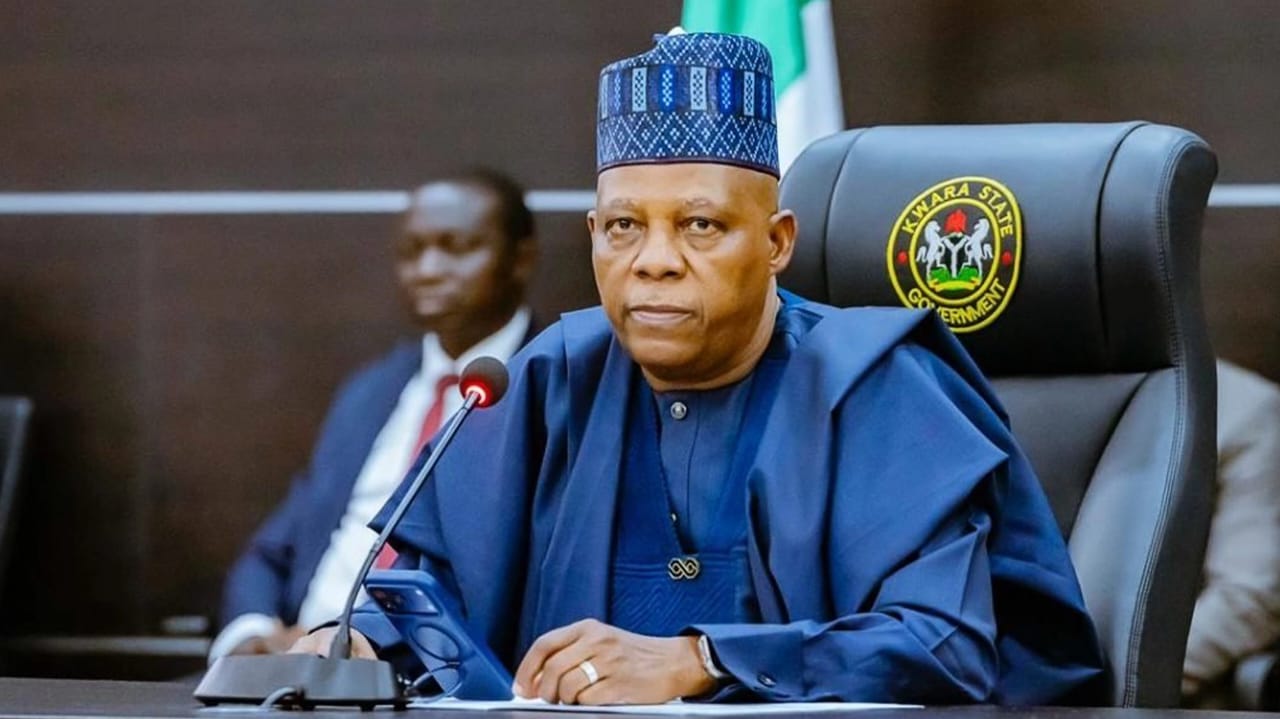
VICE PRESIDENT Kashim Shettima has called for a unified and sustained national response to combat drug trafficking and substance abuse, stressing that the menace constitutes a multi-dimensional threat to Nigeria’s public health, security, and economic development.
Shettima made this call during the official unveiling of the National Drug Control Master Plan (NDCMP) 2026–2030, yesterday in Abuja.
He said that the newly launched five-year blueprint builds on the lessons of the previous cycle and provides a robust framework to tackle evolving criminal trends.
The Vice President emphasized that law enforcement alone cannot secure a drug-free society therefore, the need for a comprehensive approach combining rigorous intelligence operations, public health interventions, institutional accountability and sustainable community development.
Represented by Aliyu Modibbo, he noted that “The drug problem must be understood as many things at once, including a public health concern, a security threat, a development challenge and an economic issue.”
He pointed out that addressing the crisis requires proactive measures across all tiers of government, security agencies, the justice sector and educational institutions.
Shettima specifically charged federal ministries, state governments, and local authorities to integrate the master plan’s pillars into their respective operational programs and budgetary frameworks.
According to him, “Five years from now, the significance of today’s launch will not be judged by this ceremony; it will be judged by stronger institutional cooperation, more effective prevention, better access to treatment, disrupted criminal networks, sustainable livelihoods and real improvements in the safety and well-being of our people,” he added.
The Vice-President formally commended the National Drug Law Enforcement Agency (NDLEA) and other stakeholders for their resilience, urging all agencies to transition seamlessly from policy documentation to measurable, high-impact implementation.
Also speaking, the Chairman and Chief Executive Officer of the National Drug Law Enforcement Agency (NDLEA), Brig. Gen. Mohamed Marwa (Retd), while unveiling the masterplan with other dignitaries, pointed out that drug control remains one of the top three national security challenges facing Nigeria.
Marwa noted that modern drug trafficking networks have grown increasingly sophisticated, leveraging digital platforms, encrypted communications, and cryptocurrencies to expand their markets.
Consequently, he stated that the new masterplan shifts the paradigm beyond mere arrests to comprehensive financial investigations, asset forfeiture, and international intelligence cooperation.
“Our response must go beyond increasing confinement and arresting criminals.
“We must deepen intelligence-led investigations, dismantle the leadership of trafficking networks, trace and recover illicit proceeds, and forge stronger collaboration across law enforcement, financial intelligence, border management, and justice institutions,” Marwa stated.
He highlighted recent operational breakthroughs, including the recent dismantling of a major transnational drug trafficking and money laundering ring.
Marwa said that the multi-judicial operation led to the arrest of a Nigerian billionaire drug tycoon, Amadi Simon, in Switzerland, alongside two female kingpins in Anambra and Delta states, while multi-billion naira properties and crypto wallets linked to the syndicate were frozen or marked for interim forfeiture, among other breakthroughs.
According to him, the successful implementation of the 2026–2030 masterplan requires a holistic whole-of-government and whole-of-society approach, cutting across federal, state, and local government structures, as well as active partnerships with traditional rulers, civil society, and the organized private sector.
He further underscored alternative development and sustainable livelihoods as a core strategic pillar of the new framework, pointing to pilot initiatives aimed at steering rural communities away from illicit cannabis cultivation through viable agricultural alternatives.
Marwa insisted that “A master plan is not measured by the elegance of its language. It is measured by the lives it improves, the communities it protects.”
He urged all tiers of government and international allies to commit adequate financial resources to translate the policy document into tangible, life-saving outcomes.
The Attorney General of the Federation and Minister of Justice, Prince Lateef Fagbemi, SAN, said the new Plan consolidates its achievements into a whole-of-government framework that bridges law enforcement with public health, education, social development, financial investigation and community participation.
Fagbemi assured that the Federal Ministry of Justice would work with the Judiciary to facilitate speedy disposal of drug cases in line with the Administration of Criminal Justice Act, ensure that every conviction is matched by confiscation of illicit assets, and advance mutual legal assistance, extradition and cross-border asset recovery.
“I commend the leadership, officers, and men of the NDLEA, under the stewardship of its Chairman and Chief Executive Officer, Brigadier-General Mohamed Buba Marwa (Rtd). The Agency remains the bedrock of our national drug control architecture, delivering vital results across intelligence operations, interdiction, investigation, prosecution, and public sensitization.” He said.