 Get Guardian on Google
Welcome, dear readers, and thank you for joining me again.
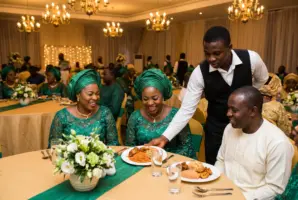
If you have ever sat at a Lagos wedding and watched the Anglican hymn give way to a Pentecostal praise break and then a Muslim uncle’s prayer, you will know that faith and tribe in this country are tangled together like the wires behind a generator. This piece is the conclusion of months of research into the story of how the faith arrived and spread across our communities, and of years of experience writing about Nigerian culture, so let me answer the question properly: which tribes in Nigeria are Christians, and why did the map end up looking the way it does?
The short version is that Christianity is strongest in the south and across much of the Middle Belt. The Federal Ministry of Foreign Affairs puts it plainly in its official overview of Nigeria’s peoples, noting that the Igbo are predominantly Christian, that the Efik, Ibibio and Annang are mainly Christian, and that the Yoruba have a balance of Christians and Muslims.
But that is only half the story.
Some of the most committed Christian communities in Nigeria live far from the coast, in places many southerners have never visited. In February 2026, church leaders, traditional rulers and thousands of worshippers gathered in Kafanchan for the Southern Kaduna Prayer Summit, a reminder that the peoples of Southern Kaduna, Plateau and Benue are as much a part of Nigerian Christianity as any parish in Onitsha or Calabar. So, rather like a Nigerian family tree, the answer has branches, cousins and a few surprises. Shall we walk through it together?
Who Brought Christianity to the Igbo People?
The Igbo are the group most Nigerians name first when they think of Christian tribes, so it makes sense to begin with how that happened. The surprising part, for many readers, is that the first missionaries to settle in Igboland were not British at all.
On 25 July 1857, a steamer called the Dayspring reached Onitsha on the River Niger, carrying a Church Missionary Society (CMS) party led by Samuel Ajayi Crowther, a Yoruba man who had been freed from a slave ship as a boy. Two days later, on 27 July, the Obi of Onitsha and his elders welcomed the party, and Crowther left behind the Reverend John Christopher Taylor, a Sierra Leonean of Igbo parentage, with a scripture reader named Simon Jonas. Anglicans across the South East still mark 27 July as the CMS anniversary, with processions through Onitsha every year.
Think about that for a moment. Christianity in Igboland was planted by a Yoruba priest (who would later become Africa’s first Anglican bishop) and an Igbo-descended returnee, rather like a family recipe brought home by relatives who had been away for generations.
For its first three decades, the Niger Mission was run almost entirely by Africans. Progress was slow, partly because the mission had little money and partly because Igbo society, with its many small, self-governing communities, did not convert village by village on the orders of a king.
Then came the Catholics. On 5 December 1885, Father Joseph Lutz arrived at Onitsha with a small team of French Holy Ghost Fathers (also called Spiritans), and the competition began in earnest. The decisive figure was an Irishman, Bishop Joseph Shanahan, who led the mission from 1905 to 1931 and had a simple strategy: build schools. In a society that prized achievement and wanted its children to read, write and get on, the mission school was the door through which much of Igboland walked into the church.
I have heard elderly men in Nnewi describe their fathers’ choice in almost economic terms. “The Catholics had the school, so we became Catholic,” one of them told me, laughing, as if it were the most obvious thing in the world. (He was also a devoted daily communicant, so do not mistake the practical motive for a shallow faith.)
Two more milestones sealed it. The Union Igbo Bible, completed in 1913 under the Anglican missionary Thomas Dennis, gave the Igbo the scriptures in their own language, and the trauma of the civil war from 1967 to 1970, when churches and mission relief networks were lifelines, bound faith and identity together even more tightly.
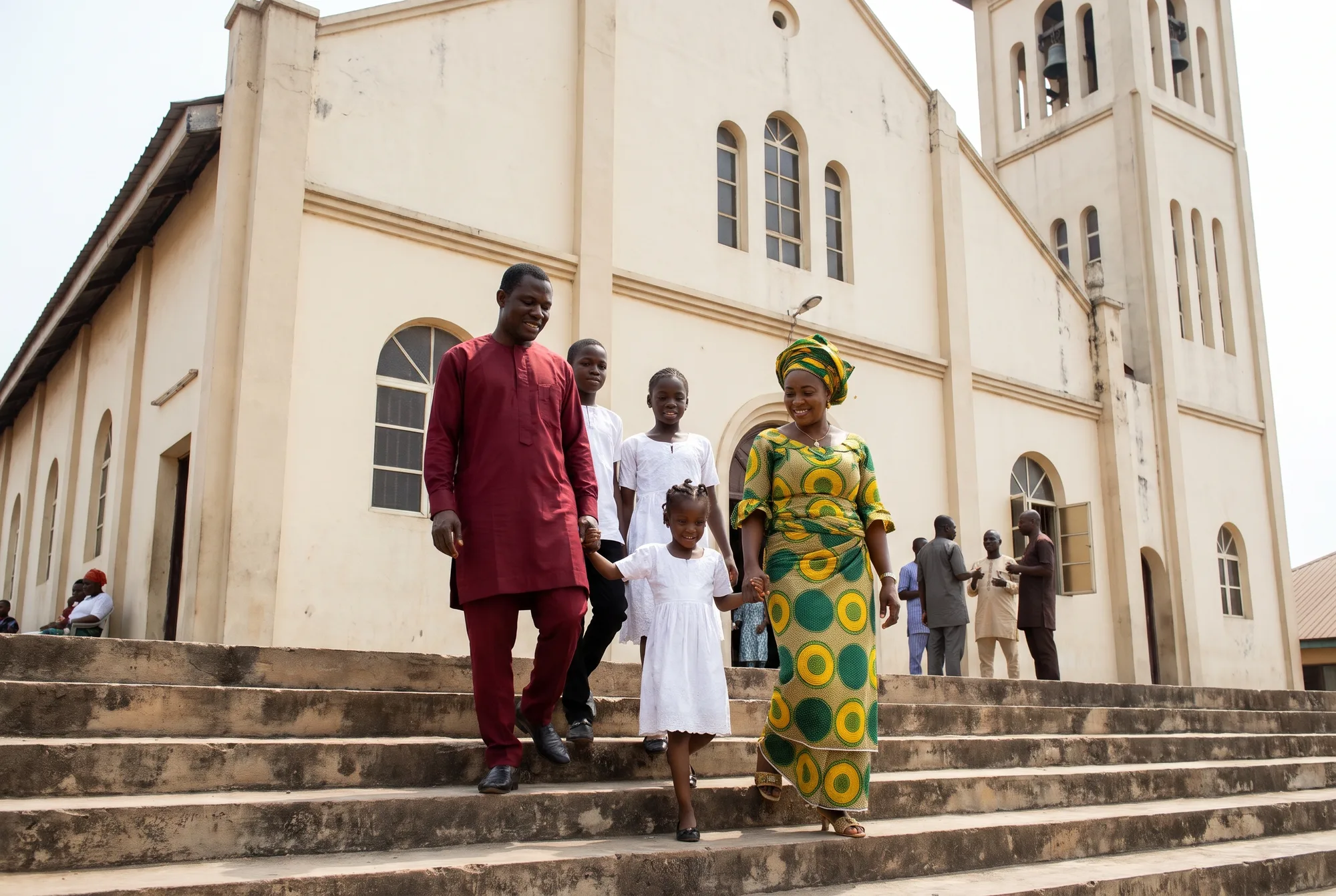
Further south and east, a parallel story unfolded among the Efik, Ibibio and Annang. Presbyterian missionaries from Scotland, led by Hope Waddell, arrived in Calabar in 1846, and the Qua Iboe Mission began at Ibeno in 1887. It was in this world that Mary Slessor waged her famous campaign against the killing of twins in Calabar, a story I tell in full elsewhere. Today, a Sunday drive through Uyo or Ikot Ekpene is a lesson in how completely the faith took root: you will pass Catholic cathedrals, Presbyterian halls, Qua Iboe chapels and Pentecostal tents, sometimes on the same street.
Which Nigerian Tribe Is the Most Catholic?
If you mean the tribe where the Catholic Church is strongest, the answer is clearly the Igbo. Anambra, Enugu, Imo and Abia are the heartland of Catholic Nigeria, and archdioceses such as Onitsha and Owerri are among the busiest in Africa. Seminaries in the South East have for decades produced priests for parishes in Lagos, Abuja, London and Houston.
Within Igboland, some areas are almost proverbially Catholic. Mbaise in Imo State is famous for the number of priests and religious sisters it has produced, and Anambra towns compete over church buildings rather like other places compete over football grounds.
Why the Catholics and not the Anglicans, given that the CMS arrived first? Part of the answer is Shanahan’s schools, and part is timing. The Catholic mission expanded into the Igbo interior just as British colonial rule was opening roads and creating demand for clerks, teachers and catechists, so a Catholic education became a ticket to the new economy. Anglicanism remained strong, especially along the Niger and in towns such as Onitsha, Awka and Owerri, which is why so many Igbo families have one Catholic branch and one Anglican branch (and the in-law jokes that come with it).
The Igbo are not the only strongly Catholic people, though. The Ibibio and Annang of Akwa Ibom have a large Catholic population, the Tiv and Idoma of Benue have big Catholic dioceses, and there are significant Catholic communities among the Edo, Esan and Urhobo. In the Middle Belt, Catholic and Protestant missions often divided territory between them, which explains why one Tiv village can be largely Catholic while the next is overwhelmingly Reformed.
One small sign of how deep Catholicism runs in the South East came in 2022, when the Bishop of Ekwulobia in Anambra State, Peter Okpaleke, was named a cardinal. President Muhammadu Buhari publicly congratulated the Church on the appointment, describing him as well qualified for the role, and the celebrations in Ekwulobia lasted for days. We will come back to him, because his story says a great deal about how tribe and church interact.
A practical note if you are visiting a Catholic parish in Igboland: Sunday Mass usually runs between ninety minutes and two hours, with an English Mass and an Igbo Mass at different times. Thanksgiving processions, where families dance to the altar with gifts, can add another half hour, so eat before you go.
What Do Yoruba Christians Call Jesus?
Ask a Yoruba Christian grandmother how she prays and you will hear a vocabulary that is both deeply Christian and deeply Yoruba. Jesus is Jésù, usually Jésù Kristi, and he is addressed as Olúwa (Lord) and Olùgbàlà (Saviour). God is Ọlọ́run, the old Yoruba name for the Owner of the Heavens, and the Holy Spirit is Ẹ̀mí Mímọ́.
Much of this language was fixed by one man. Samuel Ajayi Crowther, the same Crowther who led the 1857 mission to Onitsha, supervised the translation of the Yoruba Bible, the Bíbélì Mímọ́, which was first printed in full in 1884. The title page of his New Testament calls Jesus “Oluwa ati Olugbala wa”, our Lord and Saviour, and those words still ring out in Anglican and Aladura churches every Sunday.
You may have seen the viral claim that Jésù was formed by adding a J to Èṣù, the Yoruba trickster deity. It makes for a lively WhatsApp argument, but the simpler explanation is that Jésù is a Yoruba rendering of the Greek and Latin Iesus, the same name every other language borrowed.
Why does this matter for our question? Because the Yoruba are the clearest example of a Nigerian people who did not pick one faith. Christianity reached Yorubaland through the CMS and Methodist missions at Badagry and Abeokuta in the 1840s, largely carried by returning Saro families from Sierra Leone, while Islam had been there for centuries before. The result is a people where it is completely normal for a Christian daughter, a Muslim son and a traditionalist uncle to share one compound and one Sunday jollof.
The Yoruba also gave Nigeria its own homegrown Christianity. After the influenza epidemic of 1918, prayer groups broke away from the mission churches and became the Aladura (“praying people”) movement: the Cherubim and Seraphim, the Church of the Lord (Aladura), the Christ Apostolic Church and the Celestial Church of Christ. These churches use drums, white garments, Yoruba hymns and fervent prayer in ways the Victorian missionaries would hardly have recognised. When the Cherubim and Seraphim turned 100, the chairman of the Lagos Christian Association of Nigeria used the occasion to urge the church to keep its worship clear and biblical, a sign of how seriously the wider church takes this Yoruba-born family of congregations.
I still remember my first Celestial service in Ketu. Everyone was barefoot, the white sutanas glowed under fluorescent tubes, and the drumming was so good I briefly forgot I had come to take notes. Is it any wonder this style of worship has spread from Lagos to every Nigerian city and to London, Houston and beyond?
A design note for visitors: Aladura churches ask worshippers to remove shoes inside, and many expect white clothing for members. As a guest, simple light colours and easy slip-on footwear will save you an awkward moment at the door.
Which Tribes in Nigeria Are Christians? The Direct Answer
So, which tribes in Nigeria are Christians? The groups where Christians form a clear majority are concentrated in the South East, the South South and the Middle Belt. They include:
- the Igbo of the South East, overwhelmingly Christian, mostly Catholic and Anglican;
- the Ibibio, Annang and Efik of Akwa Ibom and Cross River;
- the Ijaw, Urhobo, Isoko, Itsekiri, Ogoni and Ikwerre of the Niger Delta;
- the Edo (Bini), Esan and many other peoples of Edo State, alongside strong traditional practice;
- the Tiv, Idoma and Igede of Benue State;
- the Berom, Ngas, Mwaghavul, Tarok and many smaller peoples of Plateau;
- the Atyap, Bajju, Ham and neighbouring peoples of Southern Kaduna, and many peoples of Southern Bauchi, Taraba and Adamawa.
The Yoruba are the great exception among the large groups, split roughly evenly between Christianity and Islam, while the Hausa, Kanuri and Fulani are overwhelmingly Muslim, each with small Christian minorities. Nationally, the most recent survey estimates put Christians at a little over 40 per cent of Nigerians and Muslims at a little over half, as I explain in my guide to the religions practised in Nigeria.
One more thing is worth holding onto. Tribe predicts religion in Nigeria, but it does not decide it. There are Hausa pastors in Kaduna, Fulani Christian fellowships in Jos, Igbo Muslims in Enugu and Yoruba traditionalists in Osogbo, and every one of them is as Nigerian as you or me.
Denominations, too, have long since crossed ethnic lines. The Cherubim and Seraphim Church began among the Yoruba in Lagos in 1925, yet when it marked its centenary in 2025 it held a national thanksgiving service in Enugu, hundreds of kilometres from its Yoruba birthplace. Faith travels more freely than tribe.
Christian Share of Nigeria’s Major Ethnic Groups
Here is the picture group by group. Please read the third column as a band rather than a precise figure, because Nigeria’s censuses have not asked about religion since 1963 and every number comes from surveys, church records and researchers’ estimates.
| Ethnic group | Main homeland states | Estimated Christian share | Churches you will meet most |
|---|---|---|---|
| Igbo | Anambra, Enugu, Imo, Abia, Ebonyi | Over 90 per cent | Catholic, Anglican, Pentecostal |
| Ibibio, Annang, Efik | Akwa Ibom, Cross River | Over 90 per cent | Catholic, Presbyterian, Qua Iboe, Pentecostal |
| Ijaw | Bayelsa, Rivers, Delta | Over 90 per cent | Anglican, Catholic, Pentecostal |
| Urhobo and Isoko | Delta | Over 90 per cent | Anglican, Catholic, Pentecostal |
| Edo (Bini) and Esan | Edo | Large majority | Catholic, Anglican, Pentecostal |
| Tiv | Benue, Nasarawa, Taraba | Large majority | Reformed (NKST), Catholic |
| Berom and other Plateau peoples | Plateau | Large majority | COCIN, ECWA, Catholic |
| Southern Kaduna peoples | Southern Kaduna | Majority | ECWA, Catholic, Baptist |
| Yoruba | Lagos, Ogun, Oyo, Osun, Ondo, Ekiti, Kwara | About half | Anglican, Aladura, Pentecostal, Baptist |
| Nupe | Niger, Kwara | Minority | Anglican, ECWA |
| Hausa | Kano, Katsina, Kaduna, Sokoto and other northern states | Small minority | ECWA, Catholic, Anglican |
| Kanuri and Fulani | Borno, Yobe and across the north | Very small minority | ECWA, Catholic |
The pattern is clear: the closer a people lived to the nineteenth century mission stations of the coast and the Niger, or the further they stood from the old Sokoto Caliphate, the more likely they are to be Christian today. The middle of the country is where the two faiths meet, which is why the Middle Belt carries both the richest religious mix and, sadly, some of the sharpest tensions.
Which Tribes Do Nigeria’s Five Cardinals Come From?
Nothing illustrates the ethnic spread of Nigerian Catholicism better than the men the Pope has made cardinals. (If you want to know who leads each denomination today, my piece on the head of Christianity in Nigeria maps the current leadership.) Nigeria has had five, and between them they cover a remarkable slice of the country.
Dominic Ignatius Ekandem, made a cardinal in 1976, was the first from Nigeria and West Africa. He was Ibibio, born in 1917 at Obio Ibiono in present-day Akwa Ibom, the son of a chief who served as priest of the local deities, which tells you how quickly the faith moved through a single generation.
Francis Arinze, made a cardinal in 1985, is Igbo, from Eziowelle in Anambra State. He grew up in a family that practised traditional religion and was baptised as a boy, later becoming one of the youngest bishops in the world and a senior figure in the Vatican.
Anthony Olubunmi Okogie, made a cardinal in 2003, was born in Lagos to an Esan father from the royal family of Uromi in Edo State and a Yoruba mother. He served for decades as Archbishop of Lagos and became famous for speaking his mind to military governments.
John Olorunfemi Onaiyekan, made a cardinal in 2012, comes from Kabba in Kogi State, among the Owe, a Yoruba-speaking people of the Okun area. He led the Archdiocese of Abuja for twenty-five years and is widely respected as a voice for dialogue between Christians and Muslims.
Peter Ebere Okpaleke, made a cardinal in 2022, is Igbo, from Amesi in Anambra State, and he is the only Nigerian cardinal young enough to vote in a papal election.
So that is two Igbo, one Ibibio, one Esan and Yoruba, and one Owe Yoruba. Not bad for a “Catholic tribe” theory, is it?
Okpaleke’s own story adds an uncomfortable twist. In 2012, Pope Benedict XVI appointed him Bishop of Ahiara, a diocese covering Mbaise in Imo State, but many local priests and lay faithful refused to accept him because he was not from Mbaise. The cathedral doors were locked against him, he was ordained bishop outside the diocese, and in 2017 Pope Francis gave the priests thirty days to pledge obedience. Okpaleke resigned in 2018, became the first Bishop of Ekwulobia in 2020 and was made a cardinal two years later. When that happened, the Igbo cultural body Ohanaeze Ndigbo described his rise from rejection to the red hat as a moral lesson, and plenty of Nigerians agreed.
Here is the lesson I take from it. Even among people who share a faith, a language and a state boundary, local identity can run deeper than doctrine. Tribe does not disappear when people become Christians; it moves into the church with them.
Visiting a Church Outside Your Own Tribe: A Practical Guide
Perhaps this article has made you curious to worship, or simply to observe, in a community different from your own. That is one of the best ways to understand Nigeria, and it is easier than you might think. Here is how I approach it.
- Choose the service language before you go, because many parishes in Onitsha, Uyo, Makurdi or Ibadan run separate services in English and the local language, and the English service is usually the gentlest start for a visitor.
- Ask a member of the congregation about the dress code a day ahead, since Catholic and Anglican parishes expect modest clothing, Aladura churches ask you to remove your shoes, and some Pentecostal assemblies are relaxed enough for smart casual.
- Budget for transport and an offering, with ₦500 to ₦2,000 for the offering bag being normal for a visitor in most cities, and keep small notes ready because ushers rarely have change.
- Arrive fifteen to twenty minutes early so an usher can seat you, and expect a Sunday service to last between ninety minutes and three hours depending on the church.
- Learn two or three words of greeting in the local language, such as “Ndewo” in Igbo, “M sugh u” in Tiv or “E kaaro” in Yoruba, because a greeting in someone’s own tongue opens more doors than any introduction.
- Follow the congregation’s lead on standing, kneeling, dancing and silence, and ask before you take photographs, especially during communion or thanksgiving processions.
- Stay for the fellowship after the service if you are invited, because the conversation over a plate of rice or a bottle of malt is where you will learn how faith and tribe really fit together in that community.
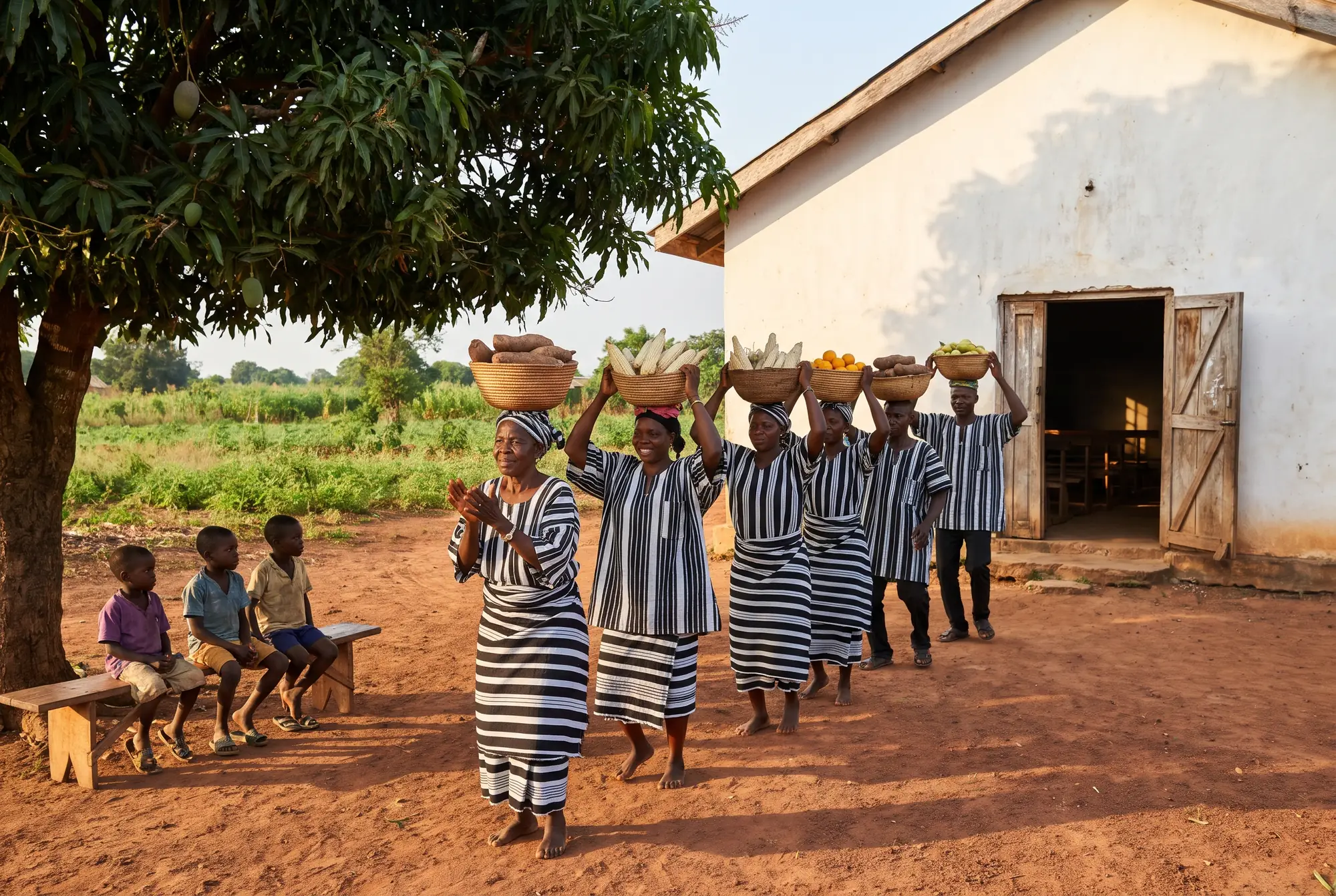
A word on styling, since people always ask. In the South East, a well-cut senator suit or a neat English outfit works for men, and women will rarely go wrong with a long skirt or a wrapper and blouse with a matching head tie. In Yorubaland, aso ebi colours often signal which family or society a group belongs to, so avoid copying a group’s colours unless you are part of it. In Benue, the black-and-white striped Tiv cloth, the A’nger, is worn with pride at church festivals, and a visitor who wears it respectfully will receive many smiles.
Final Thoughts on Which Tribes in Nigeria Are Christians
So, which tribes in Nigeria are Christians? The Igbo, the Ibibio, Annang and Efik, the peoples of the Niger Delta, most of Edo, and a great arc of Middle Belt peoples from the Tiv and Idoma to the Berom and the Atyap are predominantly Christian, while the Yoruba are split down the middle and the Hausa, Kanuri and Fulani are overwhelmingly Muslim with small Christian minorities.
How did we get here? A Yoruba priest and an Igbo-descended returnee landed at Onitsha in 1857, Scottish Presbyterians reached Calabar in 1846, French and Irish Catholics built schools across Igboland, and Dutch and American missions travelled up the Benue. Then Nigerians took the faith and made it their own, in Aladura drumming, Igbo hymns and Tiv harvest services.
My encouragement is simple. Treat the tribe-religion map as a starting point, never as a verdict on any individual you meet.
- Next time someone asks about a person’s faith, ask the person rather than guessing from their surname or state of origin.
- When you read a religious figure for any ethnic group, check its source and year, because no Nigerian census has counted religion since 1963.
- Visit at least one church, mosque or shrine outside your own background this year, and listen more than you speak while you are there.
Related Articles
If the Calabar part of this story caught your interest, my piece on who stopped the killing of twins in Nigeria follows Mary Slessor through the Efik and Ibibio country where the Presbyterian mission put down its roots, and explains why her legacy is still argued over.
And if you would like the full ethnic map behind the religious one, my guide to how many tribes there are in Nigeria walks through the major groups and the many smaller peoples, so you can place every community in this article on the map.
Key Takeaways
- The Igbo, Ibibio, Annang, Efik, Ijaw, Urhobo, Tiv, Idoma, Berom and many Southern Kaduna peoples are predominantly Christian.
- The Yoruba are roughly evenly split between Christianity and Islam, while the Hausa, Kanuri and Fulani are overwhelmingly Muslim.
- Mission history, schools and distance from the old Sokoto Caliphate explain much of the pattern, but individual faith never follows tribe automatically.
Frequently Asked Questions: Which Tribes in Nigeria Are Christians?
Which tribes in Nigeria are Christians?
The main Christian-majority tribes are the Igbo, the Ibibio, Annang and Efik, the Niger Delta peoples such as the Ijaw and Urhobo, and Middle Belt peoples such as the Tiv, Idoma, Berom and Atyap. The Yoruba are split roughly evenly between Christianity and Islam, while the Hausa, Kanuri and Fulani are mostly Muslim.
Are all Igbo people Christians?
The great majority of Igbo people are Christians, mainly Catholic and Anglican, with a fast-growing Pentecostal population. There are also Igbo Muslims and a smaller number who keep to the traditional religion, known as Odinani.
Which Nigerian tribe is the most Catholic?
The Igbo are the most Catholic tribe in Nigeria, with Anambra, Enugu, Imo and Abia forming the country’s Catholic heartland. The Ibibio, Annang, Tiv and Idoma also have large Catholic populations.
Who brought Christianity to the Igbo?
The Church Missionary Society brought Christianity to Igboland in July 1857, when Samuel Ajayi Crowther’s party arrived at Onitsha and left John Christopher Taylor there as missionary. French Holy Ghost Fathers led by Joseph Lutz followed in December 1885 and built the Catholic mission that later grew under Bishop Joseph Shanahan.
Are there Christians among the Hausa and Fulani?
Yes, there are Hausa and Fulani Christians, mostly in Kaduna, Kano, Plateau and other northern states, although they are a small minority within groups that are overwhelmingly Muslim. Many belong to ECWA, the Catholic Church or the Anglican Church, and some have formed fellowships for Christians from Muslim backgrounds.
Which Middle Belt tribes are mostly Christian?
The Tiv, Idoma and Igede of Benue, the Berom, Ngas, Mwaghavul and Tarok of Plateau, and the Atyap, Bajju and Ham of Southern Kaduna are among the Middle Belt peoples with Christian majorities. Many smaller peoples of Southern Bauchi, Taraba and Adamawa are also predominantly Christian.
What does Yoruba call Jesus?
Yoruba Christians call Jesus Jésù or Jésù Kristi, and they address him as Olúwa, meaning Lord, and Olùgbàlà, meaning Saviour. These terms were fixed largely by Samuel Ajayi Crowther’s Yoruba Bible, which was first printed in full in 1884.
Are Olodumare and Yahweh the same?
Yoruba Christians generally use Olodumare and Ọlọ́run as names for the one God of the Bible, much as English speakers use the old word God. Some theologians and traditionalists argue that Olodumare belongs to a different religious system, so the question remains a lively debate rather than a settled answer.
Who are the five cardinals in Nigeria?
Nigeria’s five cardinals are Dominic Ekandem, made a cardinal in 1976, Francis Arinze in 1985, Anthony Okogie in 2003, John Onaiyekan in 2012 and Peter Okpaleke in 2022. Ekandem died in 1995, and Okpaleke is the only one young enough to vote in a papal election.
Which bishop was rejected in Nigeria?
Peter Okpaleke was rejected as Bishop of Ahiara in Imo State after his appointment in 2012, because many local priests and faithful wanted a bishop from Mbaise. He resigned in 2018, became Bishop of Ekwulobia in 2020 and was made a cardinal in 2022.
Is the Tiv tribe Christian?
Most Tiv people are Christians, belonging mainly to the Reformed church known as NKST and to the Catholic Church. Missionaries reached Tivland in the early twentieth century, and Christianity has since become central to Tiv community life in Benue State.
Why are there no exact figures for each tribe’s religion?
Nigeria’s national censuses have not asked about religion since 1963, and none has published ethnic figures since then either. Every percentage you see comes from surveys, church records or researchers’ estimates, so treat precise numbers with caution.