 Get Guardian on Google
• Tinubu retains borrowing projections, deficit
• Economists back expenditure reduction plan, seek further scrutiny
• Senate approves $7.7 billion, N10.79 trillion borrowing plans
• Government quiet on MTEF 2027-2029, 2027 appropriation
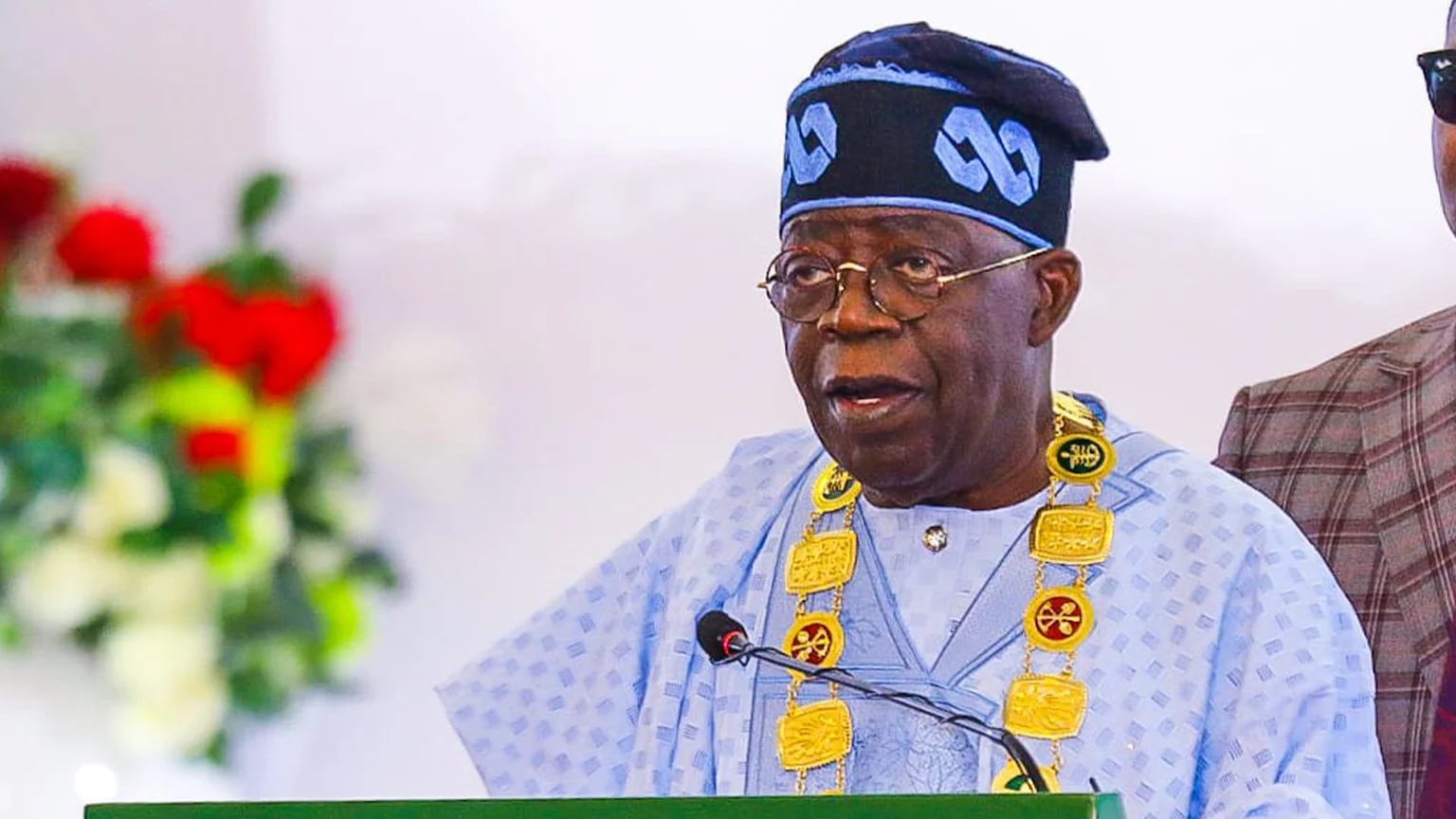
President Bola Tinubu’s latest request to the National Assembly to amend the national budget has exposed deeper weaknesses in Nigeria’s fiscal coordination, expenditure plan and public financial management framework.
The request to reduce the 2026 budget from N68.323 trillion to N65.176 trillion, while retaining the N31.457 trillion fiscal deficit and N29.218 trillion borrowing plan, comes amid the continued implementation of the 2025 capital budget, delays in presenting the 2027 Appropriation Bill and the unresolved legislation of the 2027-2029 Medium-Term Expenditure Framework (MTEF) and Fiscal Strategy Paper.
The development raises questions about how the Federal Government intends to maintain fiscal discipline and accountability when three successive budget cycles are at different stages of implementation and preparation, even with the administration seeking to amend an appropriation that has barely five weeks left before the end of its statutory validity.
In the face of a huge deficit, the proposed reduction in expenditure does not translate into a lower financing requirement. Despite cutting the budget by N3.147 trillion, the government has retained its deficit and borrowing projections, leaving stakeholders guessing the underpinning of the latest move.
Under the revised proposal, total expenditure would fall to N65.176 trillion, while the fiscal deficit remains at N31.457 trillion, representing 5.64 per cent of gross domestic product (GDP). The ratio is 2.67 per cent above the threshold allowed by the Fiscal Responsibility Act (FRC).
The Federal Government has also retained its N29.218 trillion borrowing plan, comprising N18.428 trillion in domestic borrowing and N10.79 trillion in foreign loans.
The Bola Tinubu administration projects revenue of N33.72 trillion, including earnings from government-owned enterprises (GOEs), while capital expenditure stands at N26.232 trillion.
Tinubu conveyed the request in a letter dated November 20, 2026, and addressed to the Speaker of the House of Representatives, Tajudeen Abbas, who read it during plenary. The President explained that the proposed adjustment was intended to align government spending with available resources and existing financial obligations.
According to him, the amendment would accommodate expenditures incurred by the Nigerian National Petroleum Company Limited (NNPCL) on behalf of the federation, address underprovided debt-service obligations, recognise issued capital warrants and supplementation commitments, and provide refunds to ministries, departments and agencies (MDAs) and special accounts.
The proposal also introduces additional capital and overhead provisions for selected national priorities, including the completion of critical road projects, protection of agricultural production, reduction of production costs, improvement of farm yields and enhanced market access.
However, the late recognition of some of the obligations exposes gaps in the original budget estimates, the quality of fiscal planning and coordination among the agencies responsible for preparing and implementing the national budget.
Beyond the immediate implications of the amendment, the timing has drawn attention to a broader problem: the continued operation of multiple appropriation cycles. The President had last year sought the reenactment of 2024 and 2025 appropriations as part of his commitment to ending overlapping budgets.
Still, the National Assembly had extended the implementation of the capital component of the 2025 Appropriation Act until thrice and ultimately to December 31, 2026. Consequently, the 2025 capital budget is running concurrently with the 2026 Appropriation Act, which took effect on April 1, 2026, but without clear communication about its implementation.
The overlapping arrangements create complications for expenditure tracking, project execution, cash management and accountability, experts have warned.
The implications extend beyond the implementation of existing appropriations to the preparation of the next fiscal framework.
Although the Budget Office had reportedly concluded the draft 2027-2029 MTEF and Fiscal Strategy Paper in July to support the September presentation of the 2027 budget, the National Assembly has not received the framework.
The Federal Government subsequently indicated that the 2027 budget would be presented before the end of December, leaving limited room for legislative scrutiny, public consultations and adequate preparations for implementation from January 1, 2027.
The FRC establishes a statutory framework for this process. Section 14 requires the Minister responsible for finance to present the MTEF to the Federal Executive Council before the end of the second quarter of each financial year for consideration and endorsement. The endorsed framework takes effect upon approval by a resolution of each chamber of the National Assembly.
Section 18 further provides that the MTEF shall form the basis for preparing yearly revenue and expenditure estimates presented to the National Assembly.
These provisions are intended to ensure that yearly budgets reflect a coherent medium-term fiscal strategy rather than being developed through successive adjustments to expenditure and financing commitments.
The delay in completing the legislative process for the 2027-2029 framework, alongside the late presentation of the next budget, reflects Tinubu’s administration’s fiscal governance style and raises concerns about adherence to the statutory fiscal planning timetable and the institutional discipline required to sustain idea public financing.
The problem of overlapping appropriations also has significant implications for public-sector accounting, financial reporting and audit accountability.
Under established accounting and auditing principles, public expenditure must be traceable to approved appropriations, properly classified, supported by adequate documentation and reported within the appropriate financial period.
Where capital budgets are repeatedly extended while subsequent appropriations are already in operation, accounting officers face greater responsibilities to distinguish expenditure incurred under different budget years, reconcile outstanding commitments and provide accurate implementation reports.
For emphasis, the 2025 budget implementation report (BIR) is yet to be concluded, 11 months after the cycle should have been closed.
The Senate has approved borrowing proposals, including a $7.7 billion external borrowing plan and an additional N10.79 trillion facility.
Chairman of the Senate Committee on Appropriations, Senator Solomon Adeola, supported the proposals but called for stronger legislative oversight to prevent the diversion or misuse of borrowed funds.
He identified major infrastructure projects, including the Lagos-Calabar Coastal Highway, Sokoto-Badagry Superhighway and Kaduna-Kano railway, as investments expected to deliver long-term economic benefits.
Adeola urged relevant committees of the National Assembly to strengthen monitoring of ministries, departments and agencies responsible for implementing projects financed through borrowed resources.
MEANWHILE, the Federal Government has approached the House of Representatives for approval to issue N330.08 billion in promissory notes to settle verified outstanding liabilities.
The request followed an addendum to an earlier communication, correcting the omission of N60.64 billion from the presidential approval. The proposed issuance comprises N269.45 billion and N60.64 billion, bringing the total to N330.08 billion.
Taken together, the additional borrowing and liability-settlement requests underscore the financing pressures confronting the government as the fiscal year draws to a close. They also raise questions about the relationship between budgetary commitments, actual revenue performance and the government’s growing dependence on debt to meet expenditure obligations.
Interestingly, the Federal Government has acknowledged some of the structural weaknesses underlying the country’s budgetary problems, particularly overlapping appropriations, unrealistic revenue projections and repeated extensions of capital budgets.
At a meeting of the Economic Management Team on November 18, the government advanced discussions on budget harmonisation and alignment around more realistic revenue and financing assumptions.
The team also discussed plans to implement as much capital expenditure as possible in 2026 while carrying outstanding balances into 2027, as part of efforts to move Nigeria towards a single annual budget cycle.
The Minister of Finance and Coordinating Minister of the Economy, Taiwo Oyedele, had earlier acknowledged weaknesses in budget preparation and implementation, particularly unrealistic revenue projections and repeated extensions of capital budgets. He said the government was working towards a more realistic budgeting framework from 2027.
The acknowledgement provides an important context for the latest amendment. However, harmonising the budget process will require more than transferring unfinished projects and outstanding commitments from one fiscal year to another.
It will require realistic revenue assumptions, better coordination between fiscal authorities, timely preparation and approval of the MTEF, credible cash-flow projections and a clear distinction between approved expenditure, actual releases and payments.
Without these safeguards, the proposed harmonisation could simply reproduce existing weaknesses under a different budget structure.
THE latest amendment has also generated differing views among economic and public finance experts, particularly over whether reducing the budget represents a sensible response to fiscal constraints or another indication of weaknesses in government expenditure planning.
Prof. Godwin Oyedokun of Lead City University supported the expenditure reduction, arguing that cutting government spending could improve the government’s ability to deliver on its budgetary commitments.
According to him, reducing expenditure is desirable if it enables the government to implement the budget more effectively.
“If cutting down expenditure is what will help them to implement the budget effectively, it is good for us that they are cutting down the expenses,” he said.
Oyedokun also defended the government’s borrowing strategy, maintaining that borrowing to finance investments capable of generating future economic benefits should not necessarily be discouraged.
However, Lead Director of the Centre for Social Justice, Eze Onyekpere, disagreed, describing the N2.2 trillion expenditure reduction as insignificant relative to the country’s fiscal challenges.
He questioned the sincerity of the administration’s commitment to implementing the capital budget, alleging that the government had failed to demonstrate a genuine intention to execute capital projects since assuming office in 2023.
“The cut is not even reasonable; it is too insignificant. The president has never had an honest intention to implement the capital budget from 2023 till now,” Onyekpere said.
He also raised concerns about domestic borrowing, arguing that the government’s actual borrowing had already exceeded the amount originally planned.
According to him, the Federal Government had planned to borrow N18 trillion from the domestic market but had raised more than N20 trillion as of September 2026.
More troubling, he said, was that despite the substantial borrowing, no funds had been released for the implementation of the 2026 capital budget.
“Having raised over N20 trillion, not a single kobo has been released from the 2026 capital budget. We are still implementing the 30 per cent carryover from 2025,” he alleged.
For Head of Research at Iron Capital, Abiodun Ogunniyi, the proposed adjustment amounts more to a budget realignment than fiscal tightening. He argued that retaining the deficit and borrowing figures means the underlying fiscal pressures have not been addressed.
He said the reduction should not be interpreted as evidence of an improved fiscal position, given that the amount the government intends to borrow to finance the budget remains unchanged.
According to him, reducing the size of the budget does not necessarily mean the government is spending within its means. Rather, the adjustment suggests that the original appropriation did not fully capture certain existing government obligations.
Ogunniyi said his greater concern was whether the reallocated capital expenditure would be deployed efficiently in the areas identified by the government, including NNPCL-related expenditure and other commitments.
He noted that the efficiency of reallocated capital spending points to a broader problem with Nigeria’s public investment management, where the challenge is not only how much the government approves or borrows but also how effectively available resources are translated into completed infrastructure and productive economic assets.