
 Get Guardian on Google
Millions of people across the world rely on domestic work to survive, yet most remain trapped in informal arrangements that expose them to low pay, excessive hours, and little or no social protection. Fifteen years after a landmark international convention promised change, fresh ILO estimates reveal just how far the journey to decent work still is, writes COLLINS OLAYINKA.
For many domestic workers, the day begins before sunrise, cleaning homes, preparing meals, caring for children, and managing countless household tasks. Yet when the workday ends, the worry does not. The wages earned must stretch to feed families, cover school fees, pay transport costs, and support relatives. Still, paid employment offers no guarantee of stability: income remains uncertain, hours are often excessive, and protection against illness, injury, or sudden job loss is largely absent.
This precarious reality underscores the wider challenges of informal employment, where millions of workers operate outside formal contracts and legal protections. For domestic workers, the absence of enforceable standards means vulnerability is woven into their daily lives, whether through unpredictable pay, lack of benefits, or exposure to exploitation.
The International Labour Organisation has repeatedly warned that without stronger policies and enforcement, these workers will remain invisible in labour statistics and excluded from the promise of decent work.
Their services remain essential to households, particularly those in which adults must balance paid employment with childcare, eldercare and other domestic responsibilities. But the workers themselves often have limited bargaining power and few reliable safeguards against unfavourable working conditions.
This contradiction has become a central issue in the global debate about decent work, following new estimates by the ILO showing that more than four in five domestic workers worldwide remain informally employed.

The figures raised important questions for Nigeria, where policymakers face the broader challenge of expanding access to productive employment while improving the quality of jobs available to millions of workers.
The ILO’s statistical brief, ‘The State of Domestic Work in 2025: 15 Years After Convention No. 189’, estimated that 80 million people aged 15 and above are employed as domestic workers worldwide, up from 75.6 million in 2019.
Of this number, 66.5 million, representing 83.1 per cent, remain in informal employment, often without effective labour and social protection.
The figures exposed a fundamental weakness in the labour market: employment does not necessarily translate into decent working conditions.
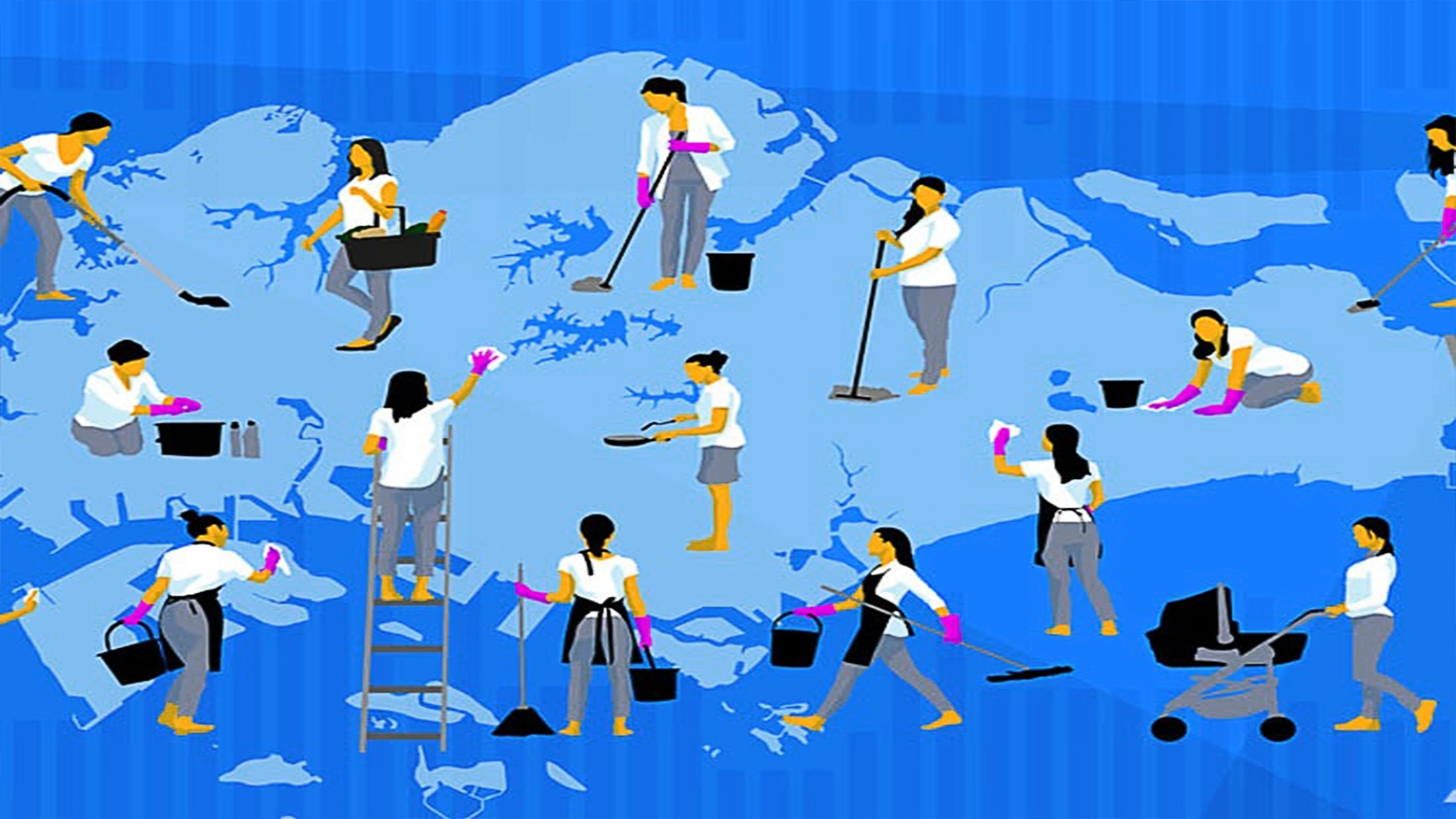
Domestic workers perform a wide range of services, including cleaning, cooking, childcare and care for older persons and people with disabilities. Their work helps households function and enables other family members to participate in paid employment.
Yet, despite this contribution, domestic employment frequently falls outside the arrangements through which workers in more formal sectors access social security, enforce employment agreements and seek redress for workplace grievances.
The problem is particularly significant because domestic work takes place in private households, where employment relationships can be difficult to monitor and regulate.
When employers and workers operate without clear written agreements, disputes over wages, working hours, duties, and termination of employment can be difficult to resolve.
The absence of formal arrangements can also make it harder for workers to establish their employment history or demonstrate eligibility for benefits linked to their work.
These challenges are not unique to Nigeria. The ILO’s findings showed that informality remains a global problem, although its prevalence varies considerably across regions and countries.
Between 2019 and 2025, informality declined or remained stable in 91 of the 140 countries with comparable data. These countries account for nearly 70 per cent of domestic workers worldwide.
However, informality increased in the remaining 49 countries, which represented about 30 per cent of the global domestic workforce.
The global picture therefore combines progress in some countries with persistent or worsening difficulties elsewhere.
For Nigeria, the findings provided a useful framework for examining the relationship between domestic employment, informality and the protection of vulnerable workers.
The ILO estimates presented in the report do not establish Nigeria’s specific domestic-workforce size or informality rate. Nevertheless, labour authorities, trade unions, and social protection institutions should pay closer attention to the wider challenge of extending labour protection to workers outside conventional formal employment.
The central question is whether domestic workers can obtain the practical benefits of labour rights when their employment arrangements are informal, their workplaces are private residences, and their bargaining power may be limited.
This is not a one-way reality, as this has implications for workers and employers alike.
For workers, formal employment arrangements can provide greater clarity about wages, responsibilities, working hours, rest periods and the conditions under which employment may be terminated.
For employers, clear agreements can prevent misunderstandings, set reasonable expectations, and provide a basis for resolving disputes.
For government, better formalisation can improve the visibility of domestic employment and create opportunities to extend social protection to workers who might otherwise remain outside established systems.
However, formalisation must be designed to work in practice. Registration procedures that are expensive, complicated or difficult for individual households to navigate may discourage compliance rather than encourage it.
An effective approach would require accessible information, practical registration mechanisms, appropriate enforcement, and social protection arrangements that recognise domestic workers’ circumstances.
It would also require greater awareness among employers and workers of their respective rights and responsibilities.
The objective should not simply be to classify domestic work as employment, but to ensure that the people performing it can enjoy meaningful protection.
The vulnerability of domestic workers is also reflected in their earnings. According to the ILO, domestic workers worldwide earn an average of 53.3 per cent of other employees’ monthly wages. For domestic workers in informal employment, the figure falls to 48.7 per cent.
The overall wage ratio has declined from 56.4 per cent in 2019, indicating that domestic workers’ earnings have fallen further behind those of other employees.
The ILO cautions, however, that the widening gap does not necessarily mean domestic workers’ wages have declined in absolute terms. In many countries, their earnings increased but at a slower pace than those of other employees. Changes in the geographical distribution of domestic work also influenced the global results.
Even with this qualification, the disparity highlights how little many labour markets value domestic work.
In Nigeria, where households and workers face competing demands on limited incomes, the relationship between wages and the cost of living is an important area for further investigation.
A domestic worker’s earnings must often cover transport, food, housing and family responsibilities. The adequacy of those earnings depends not only on the amount received but also on the number of hours worked, the regularity of payment and the worker’s access to other forms of support.
This makes it important to distinguish between having a job and having a job capable of providing a reasonably secure livelihood.
In Nigeria, where wages are low and employment is unstable, workers must take on additional informal work to meet basic needs.
The ILO’s findings illustrate both sides of this problem. Some domestic workers work excessive hours, while others face very short working hours that may reflect underemployment or irregular work across several households.
As a result, the workforce faces different forms of insecurity, whether through excessive workloads or insufficient opportunities to earn.
The challenges facing domestic workers also have a significant gender dimension.
Women account for 77.2 per cent of the global domestic workforce and are disproportionately concentrated in cleaning and direct-care occupations.
The ILO estimated that female domestic workers earn an average of 48 per cent of the monthly wages of other employees, compared with 65.8 per cent for male domestic workers.
Households depend on domestic workers to provide services that support paid employment and family life. Yet the people performing these services may have limited access to the protections that help make employment sustainable.
Improving their conditions is therefore not simply a matter of raising wages in one occupational category. It is also part of the wider effort to improve women’s economic opportunities and ensure that care systems do not depend on the vulnerability of the workers who sustain them.
Adopting the ILO Domestic Workers Convention, 2011 (No. 189), marked an important international effort to recognise domestic workers’ rights and promote decent working conditions.
However, 15 years later, the latest estimates show that formalisation remains incomplete.
The ILO calls for stronger implementation of Convention No. 189 and Recommendation No. 201, including targeted formalisation strategies, accessible registration and social protection systems, effective minimum wages and progress towards living wages.
For Nigeria, these recommendations point to the need to ensure accessible complaint mechanisms, the practical reach of labour inspection, and the availability of appropriate social protection arrangements.
Traditional trade union organising models may not readily reach workers employed separately in private residences. Expanding representation and access to information may therefore require approaches adapted to the particular structure of domestic employment.
The future of domestic employment will become increasingly important as demographic changes, migration and changing household needs reshape demand for care services.
Without adequate labour standards and accessible social protection, employment growth cannot coexist with low wages, excessive working hours and persistent insecurity.
The ILO’s findings showed that progress is possible, as informality declined or remained stable in most countries covered by its comparable data.
Yet the continued exclusion of 66.5 million domestic workers from effective formal employment arrangements shows that existing efforts have not gone far enough.
For labour stakeholders in Nigeria, the broader lesson is that employment policies must consider not only how many jobs are created, but also the conditions under which people work.