 Follow Us on Google News


 Follow Us on Google Discover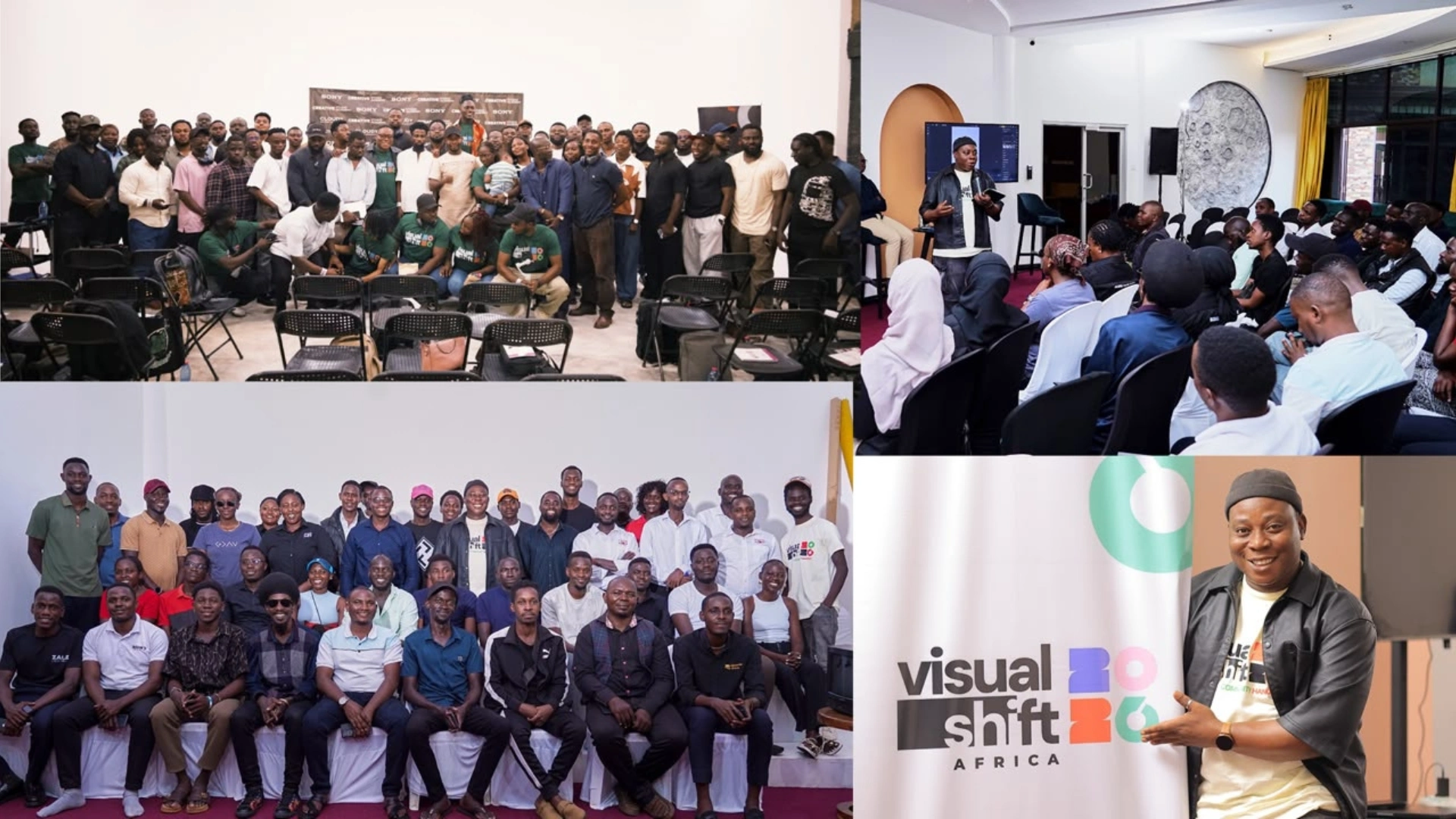
Artificial intelligence is no longer a prediction about the future of photography. It is already changing how images are conceived, produced, edited, marketed and experienced.
For Nigerian visual artist, photographer, creative educator and mentor Muegbeyogho Nosakhare Courage, popularly known as Ncourage, the question is no longer whether African creatives should engage with artificial intelligence, but how they can learn to use emerging technology without losing the human thinking and storytelling that make visual work meaningful.
That conviction led to the creation of Visual Shift Africa, a creative education initiative founded by Ncourage to help African visual storytellers understand and adapt to the rapid technological changes reshaping the creative industry.
In August 2026, the initiative moved beyond Nigeria, with international editions held in Accra, Ghana, and Kampala, Uganda, bringing together more than 150 creatives physically across the two workshops and extending the learning through WhatsApp communities that grew to more than 400 members across both locations.
The workshops centred on the theme “Visual Storytelling in the Age of AI”, exploring how photographers and other visual creatives can incorporate artificial intelligence into their creative processes, businesses and workflows while maintaining their individual creative voice.
The idea behind Visual Shift Africa came from Ncourage’s observation that technological change has always been part of photography.

From the camera obscura and the development of photographic processes to film, digital cameras, DSLRs and mirrorless systems, photographers have continually adapted to new technologies.
Artificial intelligence, he believes, represents another significant shift.
The danger, therefore, is not simply that AI may change photography. It is that creatives who refuse to understand the technology may find themselves increasingly disconnected from the industry.
“AI is already here,” Ncourage explains. “Photography has always evolved. From the camera obscura to the different generations of cameras we use today, the industry has never remained static. If you don’t evolve with it, you will be left behind.”
His philosophy is not that technology should replace the photographer.
Rather, Visual Shift Africa encourages creatives to understand how technology can extend their capabilities.
“AI is going to replace people who refuse to learn how to use it,” he says. “The goal is not to remove the storyteller. The goal is to give the storyteller more tools.”
That philosophy shaped the first international rollout of Visual Shift Africa.
The Accra edition of Visual Shift 2026 brought together approximately 60 to 70 creatives for a day of learning and interaction around photography, visual storytelling, artificial intelligence and the changing creative economy.
Ncourage served as Host and Lead Facilitator, working alongside other facilitators and creatives from Ghana and Nigeria.
The programme went beyond demonstrations of AI software. Participants explored AI-assisted editing, visual storytelling, personal branding, creative business development, workflow optimisation and the use of technology in developing visual concepts.
A major component of the programme was helping photographers understand how AI can be introduced earlier in the creative process — from developing ideas and storyboards to creating mood boards, planning shoots and refining visual direction.
Participants were also exposed to practical examples from Ncourage’s own creative work, with explanations of how particular visual concepts were developed and executed.
From Accra to Kampala
The Accra edition was powered by Evoto, with Sony and RØDE listed as supporting brands.
The initiative then moved to Kampala, Uganda, where the Kampala edition of Visual Shift 2026 was held later that month.
Again serving as Host and Lead Facilitator, NCOURAGE worked with Ugandan creatives and facilitators to bring the conversation around AI and visual storytelling to a new creative community.
The Kampala edition was made accessible to participants at no cost through support from participating brands, reflecting one of the central principles behind Visual Shift Africa: access to relevant knowledge should not be limited to creatives who can afford expensive international training.
For Visual Shift Africa, the workshops were never intended to end when participants left the venue.
Participants were onboarded into dedicated WhatsApp communities, creating spaces where questions could continue to be answered, work could be shared and new tools could be explored after the physical events.
The Ghana community grew to approximately 250 members, while the Kampala community reached approximately 164 members.
Together, the two communities created a network of more than 400 participants beyond the physical workshops.
Through the initiative’s relationship with Evoto, participants were also provided with free Evoto credits, allowing them to experiment with AI-powered editing and apply some of the techniques introduced during the training.
Participants subsequently shared their edits and creative experiments within the communities, extending the learning beyond the physical workshops.
For NCOURAGE, this continuing engagement is an important part of what mentorship should look like.
“It’s not just about bringing people into a room and teaching them for a few hours,” he says. “The idea is to create an environment where people can continue asking questions, experimenting and learning.”
Although Ghana and Uganda represented the first major international physical editions of Visual Shift, the vision behind the initiative extends beyond individual workshops.
NCOURAGE describes Visual Shift Africa as a platform through which African visual storytellers can learn from one another, adapt to emerging technologies and develop stronger creative and business practices.
The initiative has also explored engagement with other African creative communities, including Nairobi, where a virtual edition took place.
The broader ambition is to create a network in which photographers and visual artists across the continent are not simply consumers of technological change but active participants in shaping the future of African visual culture.
This is particularly significant at a time when AI-generated and AI-assisted imagery is raising questions around authorship, originality, ethics and the future of professional photography.
For NCOURAGE, however, the conversation should not be reduced to whether AI will replace photographers.
The more important question is whether photographers will learn to use the technology deliberately.
From Photographer to Educator and Mentor
The development of Visual Shift Africa also reflects a broader evolution in NCOURAGE’s own career.
Alongside his work as a visual artist and photographer, he has increasingly taken on the role of educator and mentor, sharing practical knowledge with other creatives and helping photographers think beyond image-making alone.
His approach combines photography with creative direction, visual storytelling, technology, business development and personal positioning.
That multidisciplinary approach was reflected in the Ghana and Kampala programmes, where participants were encouraged not only to improve their technical workflows but also to consider how they build sustainable creative careers.
The recognition of this mentorship work has also begun to extend beyond the Visual Shift initiative. NCOURAGE was nominated for Photography Mentor of the Year by The Visual Conference in Uyo, Akwa Ibom, an acknowledgement of his growing contribution to the development of other photographers and visual creatives.
For him, however, mentorship is part of a larger responsibility.
“As creatives, we have a responsibility to keep learning,” he says. “But when you learn something that can help someone else, you should also be willing to share it.”
The Next Chapter of Visual Shift Africa
The Ghana and Kampala editions represent an early stage of the initiative’s wider ambition.
With more than 150 creatives physically reached across the two workshops and more than 400 people participating in the accompanying online communities, Visual Shift Africa has begun establishing a model that combines physical education, digital community and access to emerging creative technology.
For NCOURAGE, the objective is not simply to teach photographers how to operate another piece of software.
It is to encourage a change in mindset.
African visual storytellers, he believes, should be prepared to participate fully in the next chapter of image-making — equipped with the technology, critical thinking and storytelling skills necessary to shape that future themselves.
Visual Shift Africa is therefore built around a simple idea: the future of African visual storytelling should not happen without African visual storytellers at the table.
And as artificial intelligence continues to reshape the creative industry, NCOURAGE intends for Visual Shift Africa to keep creating the shift.

