 Follow Us on Google News


 Follow Us on Google Discover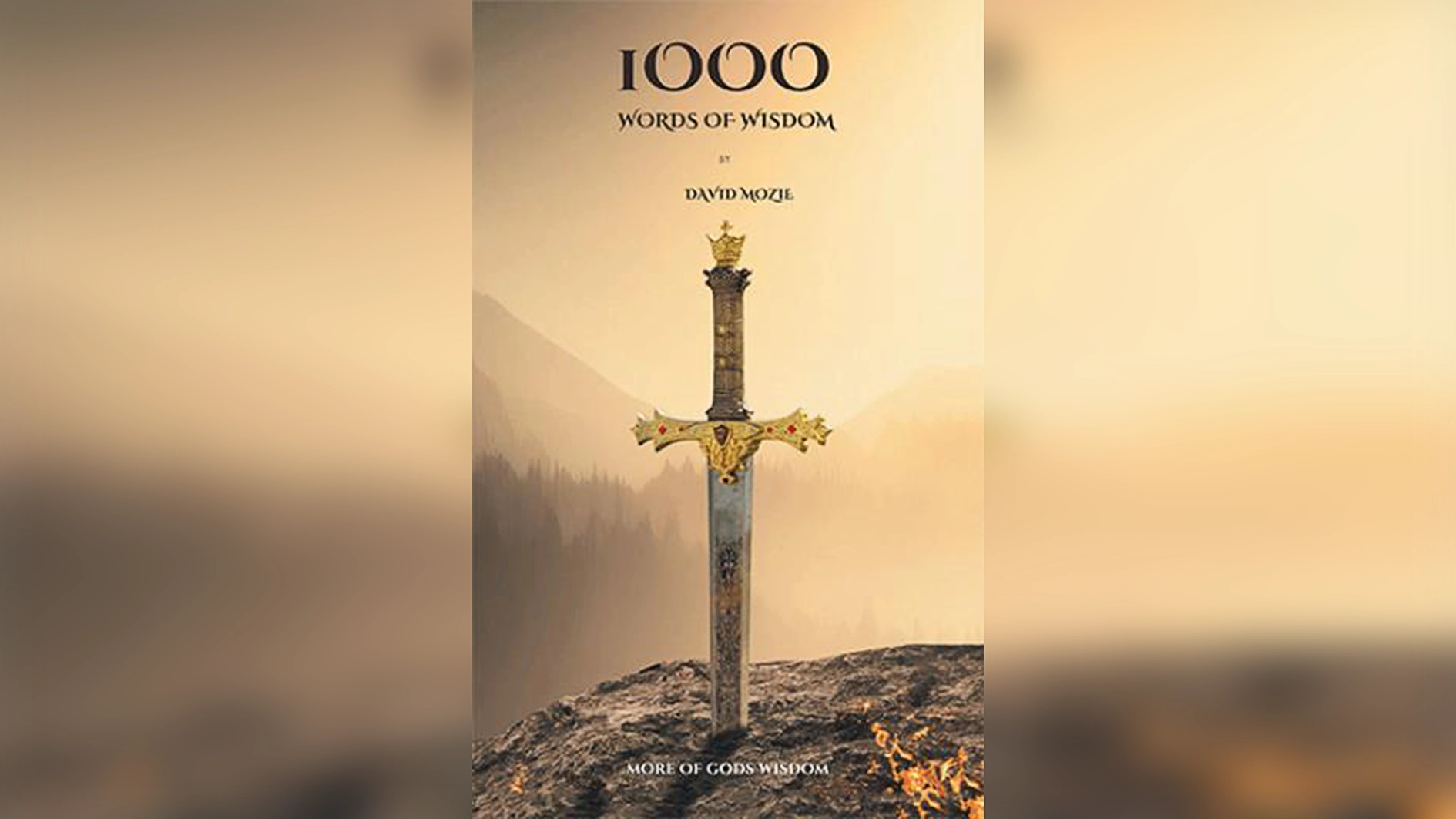
Book Review
Title: 1000 Words of Wisdom: More of God’s Wisdom
Author: David Mozie
Reviewer: Greg Nwakunor
David Mozie’s book, 1000 Words of Wisdom: More of God’s Wisdom, is part of the extensive library of Christian aphoristic literature. Based on literary precepts, moral guidance, and genuine faith, the book offers a variety of spiritual perspectives. It is structured as a set of short, reflective statements. The work is more of a sustained reflection than a standard narrative novel, and it is meant for continuous reading, introspection, and assimilation.
Fundamentally, the book functions as a spiritual tool, offering brief insights that condense complex religious ideas into sentences that are simple to recall. Mozie demonstrates a sincere dedication to conveying Christian truth in an uncomplicated and direct way. The aphoristic structure, enables readers to engage with the book in a non-linear fashion, making it suitable for both introspection and spiritual practice.
The work tone consistency and topic focus are among its most striking characteristics. Mozie’s comprehensive writings constantly highlight life in a Christ-centered manner, restating core ideas like faith, grace, salvation, love, and divine purpose. The recurring idea that “all solutions to life…”are in the word of the Lord” encapsulates the philosophical basis of the book. Although intentional, this repetition enhances the text’s introspective quality by drawing the reader more into the author’s spiritual viewpoint.
The language deployed in the book is straightforward and emphasizes clarity over ornamentation. A wide spectrum of people, even those without formal theological knowledge, can engage with the message. However, simplicity may result in syntactical irregularities and grammatical errors. Nevertheless, these shortcomings do not significantly lessen the sincerity or impact of the work in the context of devotional literature. Rather, they add to an authentic, uncensored voice that is genuine and intimate.
Mozie’s work is especially helpful for motivating and uplifting people via faith. Numerous writings are inspirational, offering comfort in the face of hardship and demonstrating the transformative power of faith. Phrases like “faith in Christ defeats the devil” or “grace leads you on” show a resilient and triumphant theology. This presents the book as a source of emotional and psychological support for readers coping with life’s challenges in addition to spiritual reading.

The book’s universality within its own religious context is another important quality. Many of its reflections—on love, purpose, perseverance, and self-worth—have a wider human application even though they are firmly anchored in Christian theology. The work may be applicable to a wide range of people looking for moral or spiritual guidance because the emphasis on compassion, integrity, and personal growth extends beyond just religious circumstances.
The book can be used as a daily devotional or reference due to its segmented format, which is divided into numbered sections. There is more flexibility in reading habits because readers can engage with specific paragraphs on their own. In a time where shorter, easier-to-read content is frequently preferred, its flexible layout is perfect for contemporary reading habits.
However, there are inherent problems with the same structure. Some readers might be eager for further theological reflection or critical engagement because there isn’t a clear narrative arc or progressive argument. The work does not explore alternate opinions or contemporary religious disputes, and it typically supports rather than challenges established beliefs. Therefore, reinforcement rather than exploration is its main strength.
From an artistic and cultural perspective, 1000 Words of Wisdom contributes to the lengthy tradition of religious literature that seeks to make spirituality more approachable in daily life. Its focus on rhythmic phrasing and words of wisdom that it could be modified for usage in a variety of creative genres, including spoken word poetry, performance, and digital devotional media. Its adaptability makes it more relevant in today’s artistic and cultural contexts.
Crucially, there is a clear sense of authorial purpose throughout the book also the quotations consistently exhort readers to pursue spiritual development, embrace love, and live in accordance with divine principles. This intent gives the work a solid philosophical and moral foundation, connecting it to literature that seeks to influence behavior and worldview in addition to providing information.
This piece demonstrates a number of important indicators of a rising artistic and cultural contribution in its context. Its extended aphoristic structure, dedication to a distinct thematic purpose, and ability to express complex ideas in an intelligible fashion are examples of its originality. Additionally, it is a work with cultural and creative worth due to its capacity for cross-media adaptation and engagement with universal concerns of human experience.
Therefore, 1000 Words of Wisdom: More of God’s Wisdom is a meaningful addition to current devotional literature. While it does not endeavor to push theological limits, it succeeds in its primary goal of inspiring, encouraging, and guiding readers toward a faith-centered living and philosophy. Its biggest merits are its simplicity, consistency, and sincerity, which provide a rewarding and broadly accessible words. Mozie’s work has the potential to be an important voice in the landscape of modern spiritual and inspirational literature, with further refining and extension into broader creative platforms.

