
 Get Guardian on Google
The increasing growth in number of people seeking opportunities abroad, popularly known as Japa, has become one of the defining social realities of contemporary Nigeria.
For many young Nigerians, leaving the country in search of greener pastures represents an escape from economic uncertainty, unemployment and the seemingly diminishing prospects of a better future at home. However, beneath the enthusiasm surrounding migration lies a critical question that many prospective migrants rarely ask: Do they truly understand what awaits them once they leave Nigeria?
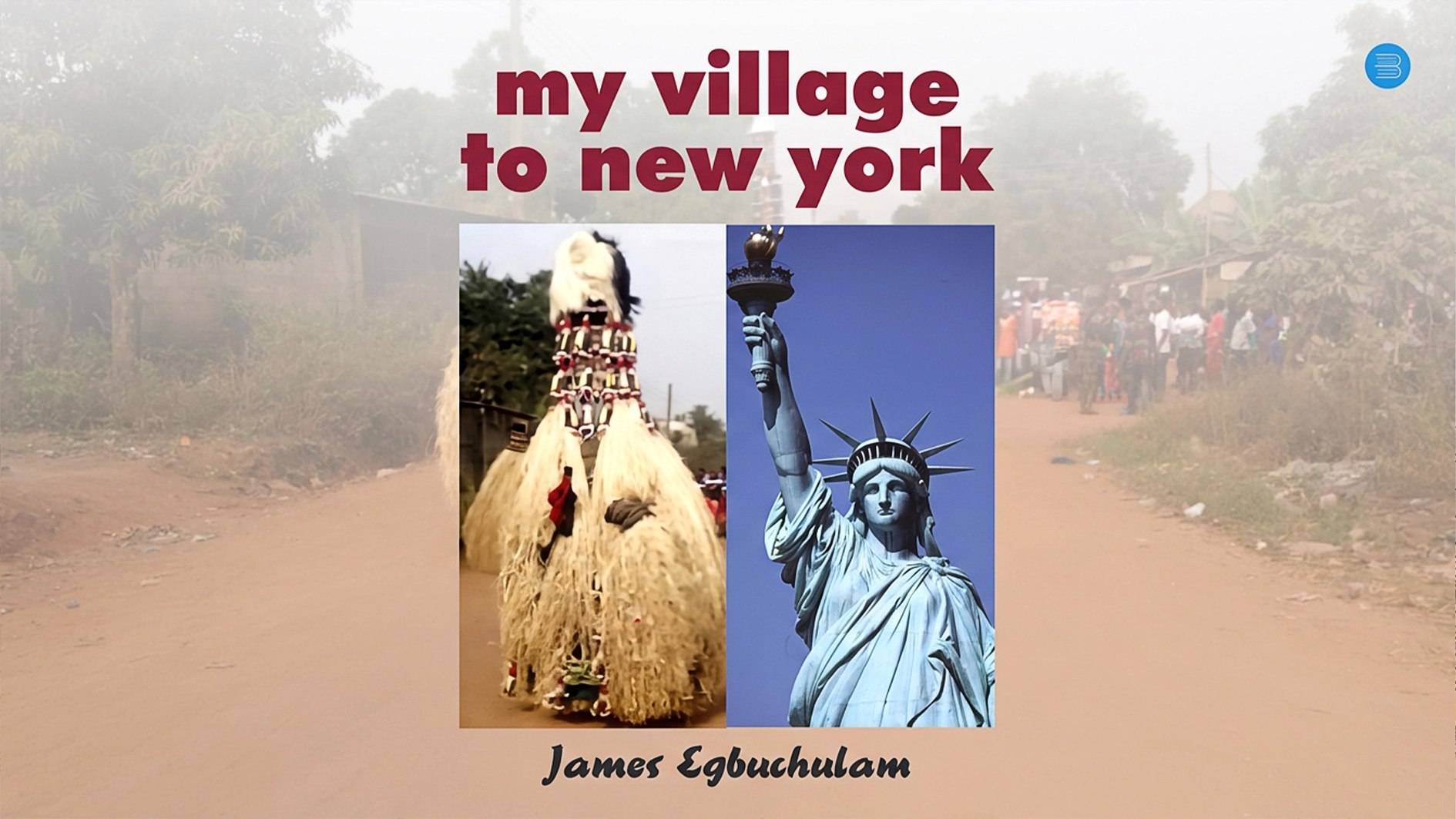
It is against this backdrop that James Egbuchulam’s My Village to New York assumes considerable relevance.
More than a travelogue or a personal account of geographical relocation, the book offers a thoughtful exploration of the expectations, misconceptions and realities associated with seeking a new life abroad.
At first glance, the narrative appears to follow the familiar trajectory of a journey from a Nigerian village named Umunoha in Imo State to the much-celebrated metropolis of New York. However, as the reader progresses through its pages, it becomes apparent that Egbuchulam’s intention goes beyond recounting a physical journey. Beneath the travel narrative lies a deliberate attempt to educate, caution and reorient Nigerians who regard migration as an automatic pathway to prosperity.
Towards the end part, particularly chapter nine of the book, titled, ‘Reflections’, makes one of the most significant contributions by interrogating the wrong perception of America as a land where opportunities abound without corresponding struggles.
For years, popular narratives about life abroad have helped sustain the belief that success is almost guaranteed once an individual crosses Nigeria’s borders. Social media, diaspora success stories and carefully curated accounts of foreign lifestyles have further reinforced this perception, often concealing the sacrifices, financial pressures and personal challenges that accompany life in a foreign country.
Egbuchulam challenges this misconception with a reminder that nothing comes free abroad. Although America may offer opportunities and a relatively structured environment for personal advancement, such opportunities are often accompanied by demanding responsibilities.
According to him, money does not grow on trees, neither is prosperity picked from the ground. Survival requires hard work, discipline, resilience and the willingness to confront realities that may be considerably different from what prospective migrants have imagined.
“As I arrived and stayed in the United States, I did not find dollars on the streets of New York or any where else, but I met a clean, disciplined environment, peopled by folks who treasure freedom, democracy d hardwork. In America, I found that ‘there is no food for lazy man’s, and that you have to fight your way in through the narrow door. Everybody -man and woman- upholds is business and finds job satisfaction in whatever he is doing, even selling cold bottled water on the street at $1 each.”
The book still offer some advice to those who already began their lives abroad, reminding them to always make use of any opportunity at first glance. Though abroad especially America, which is the author’s point of argument, present opportunities, that if one is sluggish or lackadaisical or even prayerful can get lost because over there, one just needs to be active, alert and always take a clean and sharp shot.
My Village to New York does not conclude without offering a sobering message to Nigerians who are determined to leave their homeland for America in search of a better life. Egbuchulam suggests that much has changed about the American experience, noting that some immigrants who once dreamed of settling permanently in the country are now considering returning to Nigeria. He also draws attention to the pressures exerted by some family members back home, who, rather than encouraging their relatives abroad to return, would prefer that they remain overseas, endure the struggles and continue sending money home.
This observation exposes an often-overlooked dimension of migration: the financial expectations and emotional burdens that immigrants are compelled to shoulder on behalf of their families.
Earlier in the opening chapters, the author takes readers through the process of his migration journey, beginning with his visa application and the experiences surrounding his encounter with immigration officials. He highlights how the manner in which an applicant is attended to and the outcome of such encounters can significantly influence the success or otherwise of the visa application process.
Beyond its central message about migration, the book also offers practical lessons that Nigerians can draw from and incorporate into their everyday lives.
Among the issues Egbuchulam highlights is the state of road infrastructure in America. He challenges the assumptions often created by media portrayals, drawing attention to the fact that even a country as developed as America has its own infrastructural shortcomings and does not necessarily enjoy the picture of perfection sometimes presented to Nigerians.
Another notable observation concerns road safety and traffic management. Unlike the numerous police checkpoints commonly encountered on Nigerian roads, the author points to the extensive deployment of closed-circuit television (CCTV) cameras in America as an effective means of monitoring road users and maintaining order. He also draws attention to the apparent restraint in the use of sirens, particularly by convoys of government officials and other prominent personalities, a practice that contrasts sharply with the frequent abuse of sirens on Nigerian roads.
These observations, though seemingly ordinary, reinforce one of the book’s underlying messages: Nigerians can learn valuable lessons from other societies, not necessarily by abandoning their homeland, but by examining practices that promote orderliness, accountability and respect for public institutions.