 Follow Us on Google News


 Follow Us on Google Discover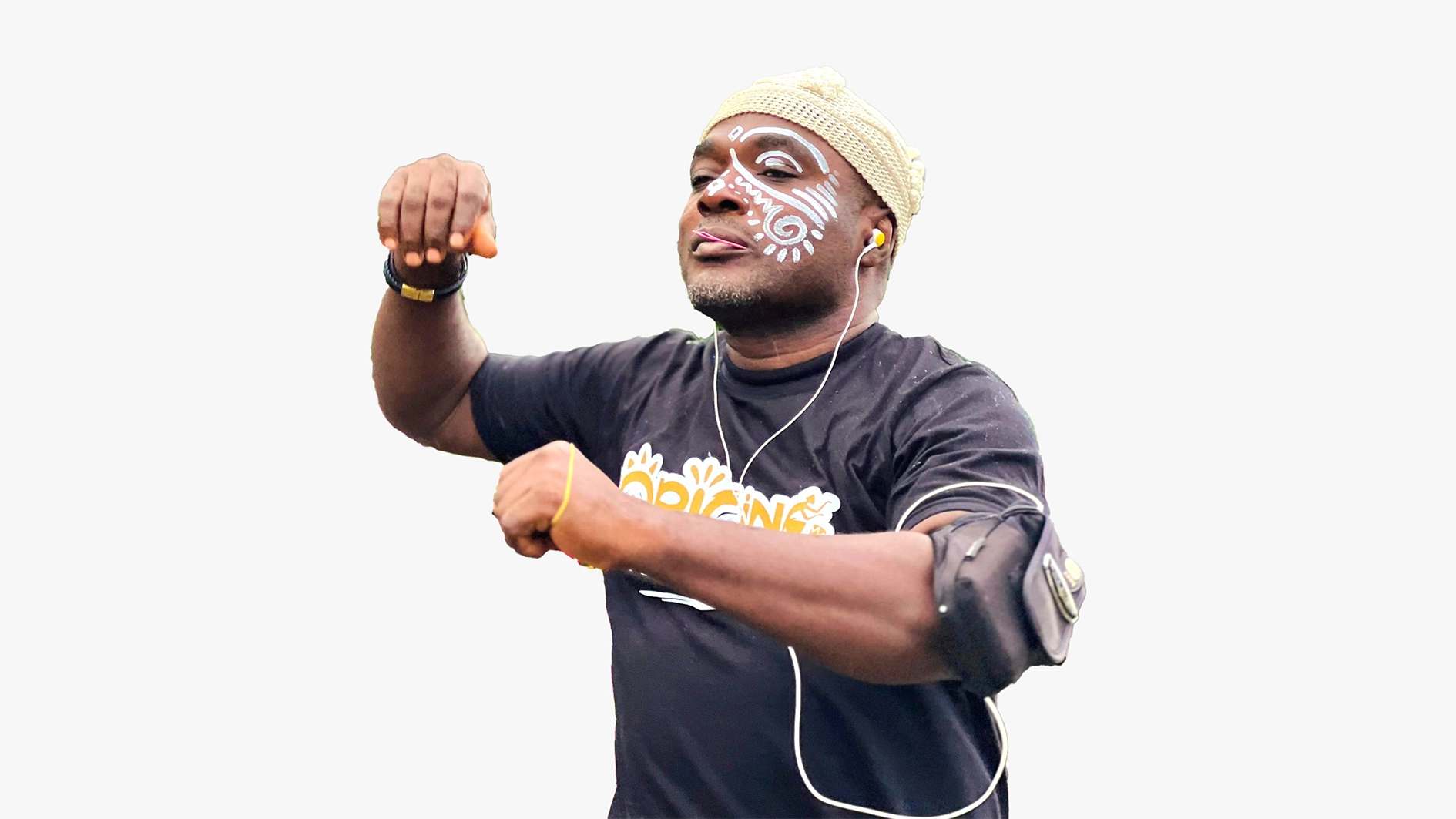
There are moments in an artiste’s career when silence is mistaken for absence. However, as Anthony McCyprains Odey confessed what happened in his case was, in reality, “a period of incubation.”
His recent performance, Meyeyubalami, best revealed this. “If hibernation represents a period of artistic incubation and transformation, Meyeyubalami, meaning ‘experience my journey’ in Yala, moves even closer to autobiography,” he quipped.
The premise resonates strongly with Odey’s own journey and raises an important question: what does it mean for an artiste to discover a vocation in an environment where that vocation may not initially be understood or accepted?
With over three decades, this distinction is important. Odey is not returning to dance; he is returning to it with a different vocabulary. Through Danzodey Artz and the Body Language Klinik, he has trained and mentored more than 170 artists across beginner, intermediate and professional levels. His influence therefore cannot be measured solely through his own performances.
His artistic legacy is also visible in the artists he has helped develop. Among those associated with his mentorship are practitioners such as Justine Ezirim (Wao Factor), Michael Ejinkeonye (Ntoroso Odido), Wunmi Idowu (Woezo Africa) and Anthony Edet Offiong (Thew Foundation/Thintalltony limited), whose subsequent professional journeys demonstrate the potential reach of his pedagogical practice.
He is not merely teaching people how to dance. He is transmitting knowledge about how an entire theatrical ecosystem functions. For him, teaching extends beyond choreography. He is concerned with theatre versatility: costume and set design, storytelling, traditional musical instruments, maintenance and repair, performance, and general theatre management. This is perhaps where his identity as a cultural custodian becomes most evident.

“My artistic journey has taken me across Nigeria and beyond, through dance, choreography, theatre, teaching, cultural festivals, international exchanges, and multidisciplinary performance. My movement from Western Nigeria to South-South Nigeria, Cross River State precisely, has become particularly significant in my hibernation. It is presented not simply as geographical migration but as an artistic search for ‘more’: more experience, more cultural knowledge, more possibilities, and perhaps, a deeper understanding of myself as an African artiste.”
Meyeyubalami, therefore, becomes more than a dance production. It becomes a testimony to artistic courage. Its themes of resilience, self-discovery and determination are not abstract concepts. They emerge from the lived experience of an artist who has spent decades building a career within a demanding and evolving creative environment. Justapose this with his decision to study Dance and Choreography at university level. Can itself constitute an act of resistance, especially in societies where professional success is frequently measured through conventional career paths, choosing dance requires conviction. The young artist must overcome not only external expectations but also the internal fear of pursuing an uncertain path.
Perhaps the most significant evolution in Odey’s career is the transition from being a young dancer searching for direction to becoming a mentor responsible for helping others find theirs.
So, his Danzodey’s Hibernation challenges the assumption that an artiste who becomes less visible has necessarily become less active.
Odey presents hibernation as a period of intense artistic excavation —a time of looking inward, moving across cultures, questioning identity, and allowing new artistic possibilities to take form. “The hibernation refers to my ‘disappearance’ from Lagos “the Entertainment and Creative mainstream/scene of Nigeria/Africa; a journey to rediscover self; deeper reflection of my creative surgeon spanning over three decades. In other words the hibernation is the chronicle of an era within the journey of my recent explorations that birthed Meyeyubalami.”
For Odey, the movement from one Nigerian cultural environment to another appears to have created an opportunity to encounter differences from within his own country.
This is one of the most interesting dimensions of his work. Rather than treating Nigerian culture as a single, homogeneous entity, Odey’s practice recognises the multiplicity of movement traditions, histories, rituals, aesthetics, and performance languages that exist within Nigeria,” he says.
“My engagement with this vocabulary is, therefore, not simply aesthetic. It becomes a method of asking questions about the body and society. What happens when the dancer refuses the expected shape? What happens when movement becomes exaggerated? What happens when the familiar becomes strange? And what happens when cultural traditions are not frozen in the past but transformed into contemporary artistic languages?” he asks.
He believes that one challenge a contemporary African choreographer confronts is “the relationship between indigenous movement traditions and contemporary dance.”
He says: “There is a danger at both extremes: tradition can become museum-like if it is reproduced without questioning, while contemporary experimentation can become disconnected from the cultural knowledge that gives the work its identity.”
Odey’s practice appears to occupy the space between these two positions.
His choreography draws from indigenous movement vocabularies while embracing contemporary dance, theatrical spectacle and experimentation. The result is not an attempt to choose between tradition and modernity but to allow both to speak to one another.
His experience in Eastern Nigeria, particularly his long association with the cultural environment of Cross River State and Carnival Calabar provided a new performance laboratory.
Here, dance intersects with masquerade, ritual, spectacle, costume, music, communal celebration, theatrical exaggeration, and the transformation of the human body.
In this sense, “hibernation can be read as a record of artistic migration: the dancer leaves one environment, encounters another, and returns transformed.”
His sustained involvement with Carnival Calabar from 2012 to 2025, including his work as Director of Dance and Choreography for Diamond Band, gave him extensive experience working within one of Africa’s most prominent cultural festivals.
It also exposed him to the possibilities and contradictions of large-scale cultural performance: spectacle and substance, tradition and commercialisation, community and institution, heritage and contemporary entertainment.
“Carnival has traditionally provided a space where social conventions can be inverted. The ordinary becomes extraordinary. The marginal can become visible. The body can challenge authority, convention and expectation.
Odey’s engagement with Carnival consequently provides him with a powerful artistic language for examining contemporary Nigeria,” he notes.
Carnival occupies a particularly important place in Odey’s artistic development. Rather than viewing Carnival merely as entertainment or spectacle, he appears to understand it as a sophisticated performance system in which the body can simultaneously become celebratory, grotesque, political, ritualistic, comic, and disruptive.
This explains his fascination with the grotesque. “The grotesque body refuses perfection. It exaggerates, distorts, expands, contracts and unsettles. It can be beautiful and disturbing at the same time. Within carnivalesque traditions, such physical distortion can challenge conventional ideas about order, status, beauty, identity and social behaviour.”
For Odey, “cultural custodianship does not appear to mean preserving culture in a fixed or untouched form. It means understanding it deeply enough to carry it forward. That distinction is central to his artistic identity.”
In Danzodey Hibernation, the body becomes more than an instrument for choreography. It becomes an archive, he reiterates. “It carries memory, migration, cultural inheritance, struggle, celebration and transformation. The dancer’s body remembers places that the dancer has inhabited, people encountered, traditions learned, performances experienced and identities negotiated. This perspective gives the work a personal dimension.”
Odey’s choreography is informed by his experiences as a dancer, choreographer, teacher, costume and props designer, television presenter and compere. These apparently different creative identities converge in his performance practice. He understands that theatre is not produced by movement alone. Costume alters the body. Props alter the body’s relationship with space. Storytelling gives movement meaning. Music changes physical rhythm. Stage management determines how an audience experiences an event.
The result is a distinctly theatrical understanding of dance.

