 Follow Us on Google News


 Follow Us on Google Discover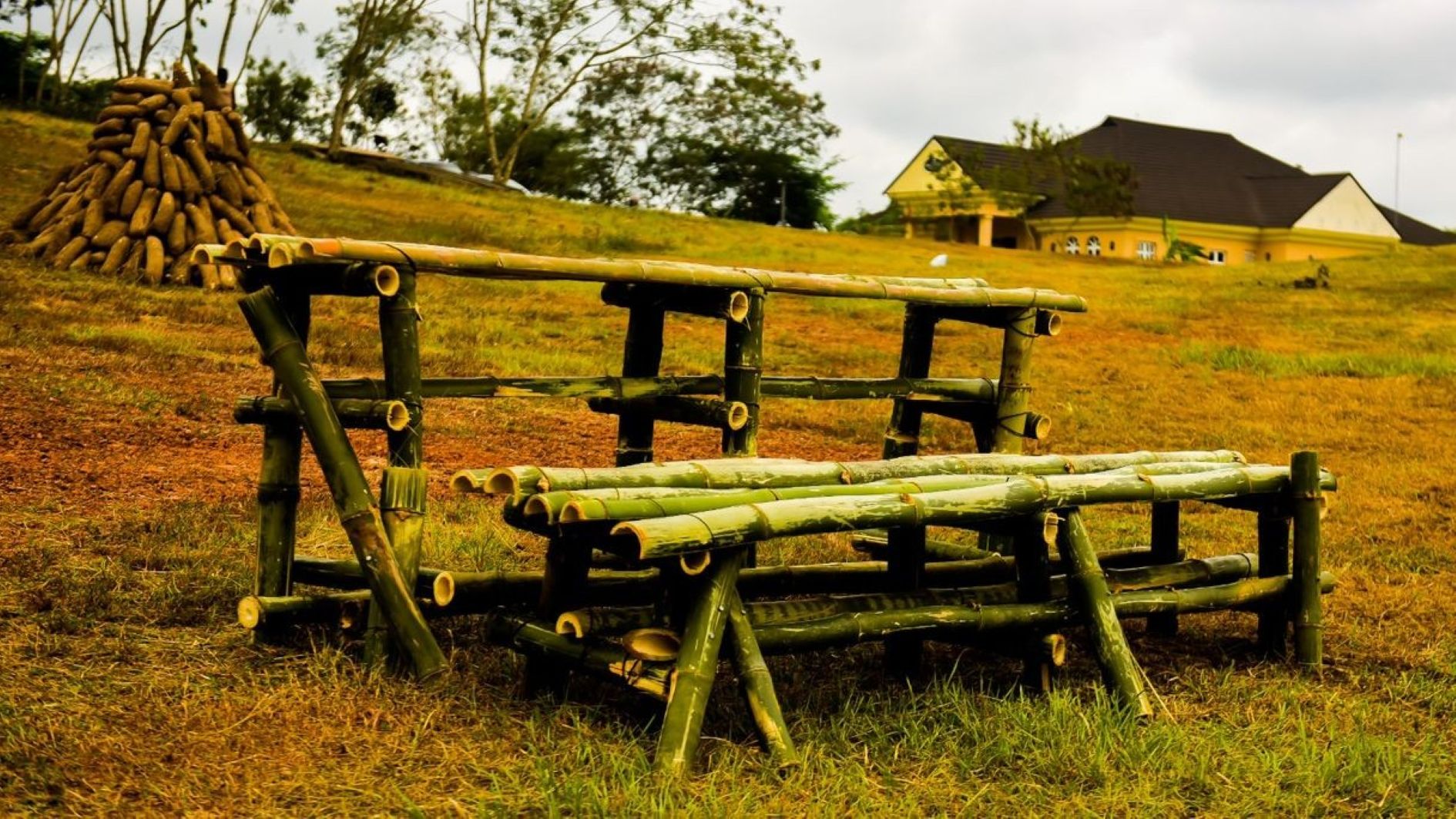
Ayodeji Tifase’s photographic record of the Ijeshu Yam Festival at Ilara Mokin, Ifedore Local Government Area of Ondo State, asks whether Nigerian heritage can survive contact with the contemporary. His answer is more generous than you might expect.
There is a photograph near the middle of this body of work that I have not been able to stop thinking about. It shows a mound of harvested yam, perhaps four feet high, photographed from ground level so that it rises against a pale Ondo sky like something built rather than piled. Behind it, dissolved into colour by a shallow focus, stand the people of Ilara Mokin. You cannot see their faces. You can only see that they are there, and that they are looking.
The Ijeshu Yam Festival is, at bottom, a community telling itself that the earth has kept its side of an agreement. Tifase has found a way to photograph that agreement without narrating it, which is harder than it sounds and rarer than it should be.
The project, produced with Work and Play Nigeria in Ondo State, documents a single day on which two things happened on the same ground. A yam festival with roots deeper than anyone present could reasonably trace, and a motorsport showcase involving drift cars, off-road buggies and a great deal of tyre smoke. On paper this sounds like a collision. Read the pictures, and it starts to look more like a negotiation.
Tifase is not a neutral party here. He is a Nigerian practitioner working between London and Nigeria, and the project carries the particular energy of someone documenting a culture he belongs to but does not live inside daily. That position can produce sentimentality. It has not done so here. What it has produced instead is an unusual evenness of attention. The camera treats a modified Nissan engine bay and a wooden mortar with pounded yam in it with exactly the same seriousness. Neither is exoticised. Neither is treated as the joke in the room.
The strongest passages are the quietest. A long bamboo table, built by hand from felled forest material, runs away from the lens into the middle distance, each place set with a calabash of egusi on a red rimmed enamel plate. At the far edge of the frame, barely resolved, the yam mound and the crowd. It is a still life that contains an entire festival, and it works because Ayodeji got low and waited for the settings to be laid rather than shooting the table as a piece of production design.

The portraiture is better still. An elder in white aso oke sits with his hands folded, eyes closed, smiling at something private, the green hills behind him reduced to a wash. Another, bespectacled, in blue and gold Ankara, looks directly into the lens with the composure of a man who has been photographed before and was not especially impressed by it. These are not decorative studies of traditional dress. They are portraits of specific people who chose to attend, and who are, the pictures suggest, weighing up whether the new thing on their land is worth their approval.
That question of approval is where the work becomes genuinely interesting. There is a frame of young men in Work and Play aprons and blue chef’s hats eating pounded yam from banana leaves at speed, cheeks full, egusi on their chins, entirely past caring how they look. Set that beside the drift car photographs, where a stripped and rebuilt 350Z carries the words Built Not Bought across its front bumper in red capitals, and a thesis starts to assemble itself. Both are acts of making. Both are performed for a watching community. Ayodeji does not spell this out, and the work is better for the restraint.
He is not infallible. The motorsport sequence is, frankly, longer than it needs to be. There are a great many frames of the same white and red drift car producing the same white smoke against the same treeline, and while several of them are technically excellent, the accumulation flattens rather than builds. A tighter edit would lose nothing and gain considerable momentum. There is a related problem with the buggy material, where the panning shots are competent but interchangeable.
More substantially, I am not entirely convinced the two halves of the day have been welded together. The heritage photographs and the motorsport photographs are each strong. The images that hold both in one frame, and there are a few, tend to be the wide establishing shots where the yam mound and the machines happen to share a horizon. Those are documents of coincidence more than argument. I would have liked to see Ayodeji push harder for the frame where an elder and an engine occupy the same depth of field and force the viewer to reconcile them. He has clearly been close enough to get it. Perhaps he was being polite.
The pandemic sits in these pictures too, unremarked. Masks pulled down under chins, face shields worn with traditional caps, hand sanitiser on a plastic table. The work does not make a point of it, which is the correct decision, but historians will find it useful in twenty years.
What Ayodeji has produced is a serious contribution to a thin archive. There is very little sustained documentary photography of festival life in Ondo State made with this level of technical care and this little condescension. The temptation with material like this is to shoot for the international gaze, to find the picturesque and stop there. He has largely resisted it. When he fails, he fails by shooting too much rather than by shooting cheaply, which is a forgivable fault in a project of this ambition.
The last image in the sequence is a wide view from a rise above the festival ground. The crowd spread out below, children seated at the front, the bamboo tables to one side, the yam mound sitting among it all without ceremony, the hills going back in layers. Nobody is performing. It is simply a great many people in a place they know, gathered around something they grew. As a closing statement it is unshowy and completely earned.
Ijeshu deserves a wall and an audience. On the evidence here, Tifase is a photographer worth watching closely.

