 Follow Us on Google News



 Follow Us on Google Discover
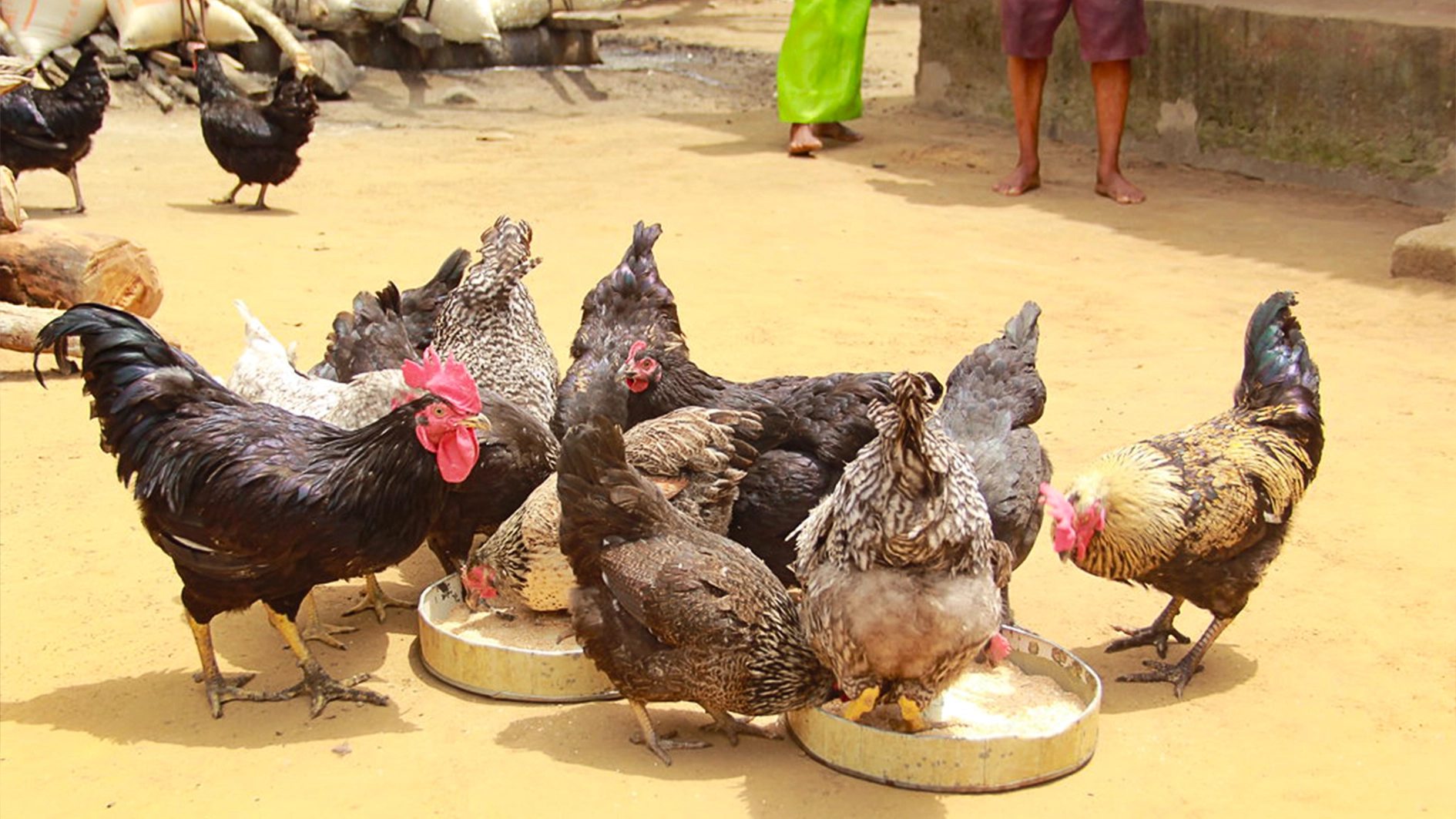
As part of efforts to strengthen livestock genetics, reduce dependence on imported breeding stock and advance Nigeria’s food-security agenda, the Federal Government has disclosed willingness to collaborate with the Federal University of Agriculture, Abeokuta (FUNAAB), to commercialise and scale up FUNAAB-Alpha, the University’s indigenous poultry innovation.
FUNAAB-Alpha is an improved breed of chicken developed through years of scientific selection and breeding. The breed, developed by Emerita Olufunmilayo Adebambo, combines the resilience of indigenous chickens with the productivity traits of exotic lines.
The result is faster growth, higher egg yield, and strong adaptability to local conditions, while retaining the disease resistance and unique taste that make local chickens so valued.
The Minister of Livestock Development, Idi Mukhtar Maiha, who disclosed this during his working visit to FUNAAB, commended the university’s contributions to livestock research, agricultural innovation, human-capacity development and national food production.
He said commercialising FUNAAB-Alpha would strengthen Nigeria’s livestock genetics and ensure that research innovations translate into tangible benefits for farmers, industries and the wider economy.
Describing FUNAAB-Alpha as a research innovation with significant commercial potential, the Minister stressed the need to move beyond research development to production, market penetration and widespread adoption.

He assured the university that the Ministry is prepared to collaborate on financing, institutional arrangements, production capacity, market development and distribution required to take the innovation to scale.
According to him, strengthening Nigeria’s livestock genetics is central to the Federal Government’s livestock transformation agenda, particularly its efforts to reduce dependence on imported breeding materials and build sustainable domestic production systems.
The minister identified feed and fodder development, genetic improvement, and animal health and disease management as three key priorities of the Federal Government’s Livestock Transformation Agenda.
He emphasised that animals could only realise their genetic potential when adequately nourished, calling for intensified research into improved fodder varieties, particularly grasses and legumes adapted to Nigeria’s environmental conditions.
On poultry production, Maiha described the sector as one of Nigeria’s most commercially developed livestock value chains, while identifying feed costs, availability of day-old chicks and disease management among the major challenges confronting the industry.
He said the Federal Government is taking steps to improve access to day-old chicks and strengthen domestic genetic development as a sustainable alternative to dependence on imported breeding stock.
The minister further stated that a transformed livestock sector would contribute significantly to food security, employment generation, wealth creation and national economic development, while creating opportunities for women, young people and other Nigerians across the value chain.
He also expressed optimism that Nigerian poultry genetics and day-old chicks could serve markets beyond the country, particularly across the West African sub-region.
Earlier, the Vice-Chancellor, Prof. Babatunde Kehinde, described the visit as significant to the university’s longstanding commitment to teaching, research, extension services and practical solutions to agricultural challenges.
Prof. Kehinde highlighted FUNAAB’s contributions to livestock production, research and training since its establishment, noting that the university had consistently developed knowledge, technologies and innovations aimed at improving agricultural productivity and addressing national development challenges.
He assured the minister of the institution’s readiness to support the Federal Government’s livestock transformation and food-security agenda through research, innovation, training and strategic partnerships.
The Vice-Chancellor also commended the minister’s practical agricultural background and interest in livestock development, expressing optimism that the visit would deepen collaboration between FUNAAB and the Federal Ministry of Livestock Development.
He described FUNAAB as a leading institution in agricultural education and research, with a strong record of practical contributions to Nigeria’s agricultural development.
During the visit, Maiha inspected the FUNAAB-Alpha Poultry Breeding Facility, where he commended the University’s work in indigenous poultry genetics. He also inspected FUNAAB’s 3.4MW Hybrid Solar Power Plant, an infrastructure investment designed to strengthen sustainable energy supply for the University’s teaching, research and operational activities.

