 Follow Us on Google News


 Follow Us on Google Discover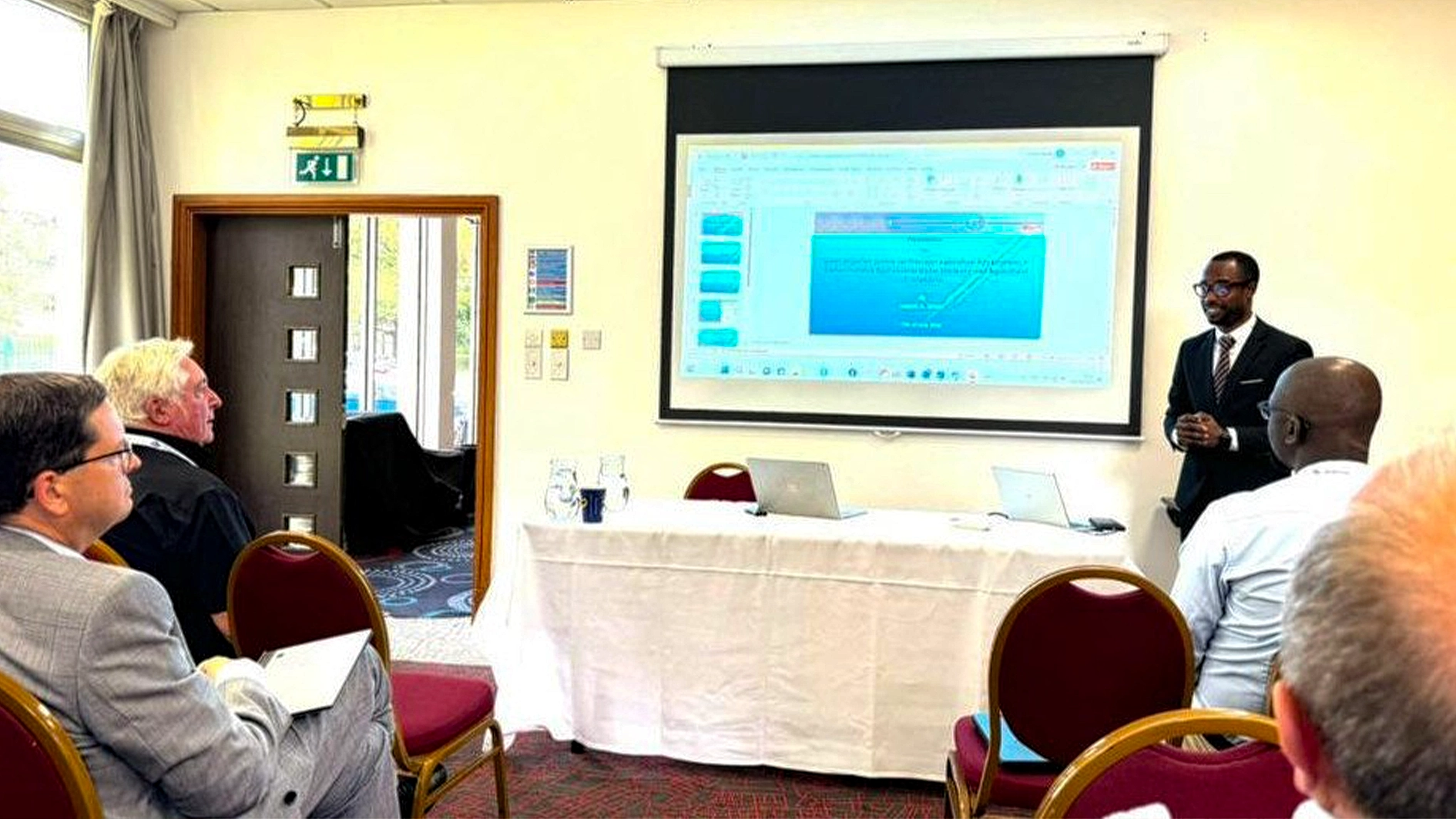
Samuel Jegede is combining economics, data science and automation to explore practical solutions in precision agriculture, with his Smart Irrigation System demonstrating how technology can be applied to improve water efficiency and support more sustainable farming practices.
The Smart Irrigation System for Precision Agriculture Applications developed from Jegede’s participation in the Node-RED Education programme, hosted by the i-UG (IBM i User Group) in the United Kingdom. He completed the programme with Merit before applying the knowledge and skills he gained to a practical agricultural challenge.
Developed using Node-RED and Internet of Things technologies, the system provides an approach to optimising water usage in agriculture. The work demonstrates how data and automation can be applied beyond conventional software development to address practical challenges in agriculture.
With the support of the i-UG and its Chairman, Michael Christopher Ryan, Jegede presented the innovation at the iPower Conference in Northampton, United Kingdom, in 2024. The presentation provided an opportunity to demonstrate the practical application of the system and engage with professionals in technology and innovation. Ryan noted Jegede’s ability to move beyond standard software development into high-impact digital automation.
The potential value of this approach extends beyond the immediate agricultural application. The UK’s wider agri-food supply chain was worth £150 billion in gross value added in 2024 and supported around 4.2 million jobs, making productivity and resource efficiency in agriculture relevant to a much broader part of the economy. The UK is also placing greater emphasis on agricultural technology, including digital and precision technologies, to improve productivity, profitability and food security.
In that context, technologies that help farmers make more informed decisions about water use can contribute to the wider goals of agricultural productivity, resilience and resource efficiency. The value of an innovation such as Jegede’s therefore lies not only in automating irrigation, but in its potential to become part of a wider agri-tech ecosystem connecting technology, farming, research and commercial opportunity.
The opportunity is also relevant across EMEA, particularly in parts of Africa where agricultural productivity, water management, food security and employment are closely connected. The World Bank identifies smarter agricultural water use, digital tools and investment in irrigation as potential drivers of higher food production, jobs and sustainable economic growth, with significant opportunity in Sub-Saharan Africa.

These wider opportunities do not represent economic results already achieved by Jegede’s prototype. Rather, they provide the broader context for why practical innovations in smart irrigation and precision agriculture are increasingly important. A scalable solution could potentially help farmers use scarce resources more efficiently while creating opportunities across the wider agricultural value chain.
Jegede’s academic background has helped shape this multidisciplinary approach. He holds a BSc in Agricultural Economics from the Federal University of Agriculture Abeokuta, an MSc in Economics from Eastern Mediterranean University and an MSc in Data Science from the University of Wolverhampton.
By bringing economics, data science and automation together, Jegede continues to explore how technology can improve systems, increase efficiency and solve real-world problems. That interest in practical problem-solving also extends beyond technology into leadership, governance and the development of young people.
For Jegede, leadership is closely connected to preparation and responsibility. He believes young people should begin developing the knowledge, character and skills needed to understand how systems work and take responsibility for the future of their societies.
His Christian faith is an important part of this vision, including his desire to see more Christians take an active role in politics and public leadership with integrity, wisdom and excellence. His broader message, however, extends to young people, emerging leaders and change-makers from different backgrounds. This interest in leadership and public responsibility has also shaped his work as an author. In August 2025, Jegede published ‘Reign of the Righteous’, a book that grew from his concern about young Christians staying away from politics and governance even though decisions in those areas affect their lives and communities.
Through ‘Reign of the Righteous’, he encourages young people to move beyond simply talking about societal problems and prepare themselves to become part of the solution. The book focuses on the knowledge, courage, character and skills needed to participate in governance and public service.
Building on these themes of purposeful living, responsibility and personal development, Jegede is preparing to release his second book, ‘The Clarity Code’, in September 2026. The forthcoming book will explore life, choices, growth and clear thinking, with practical lessons intended to help readers understand themselves better, make better decisions and approach life with greater direction.
‘Reign of the Righteous’ is available on Amazon and Selar, while ‘The Clarity Code’ is scheduled for release on those platforms in September 2026.
Across his technology work, leadership interests and writing, Jegede’s focus remains on applying knowledge to practical problems, developing people and encouraging greater responsibility for the future.

