
 Get Guardian on Google
Baze University, Abuja, has unveiled plans to train at least 600 aviation professionals and build the Federal Capital Territory’s second aerodrome in a major private-sector push to strengthen Nigeria’s aviation industry.
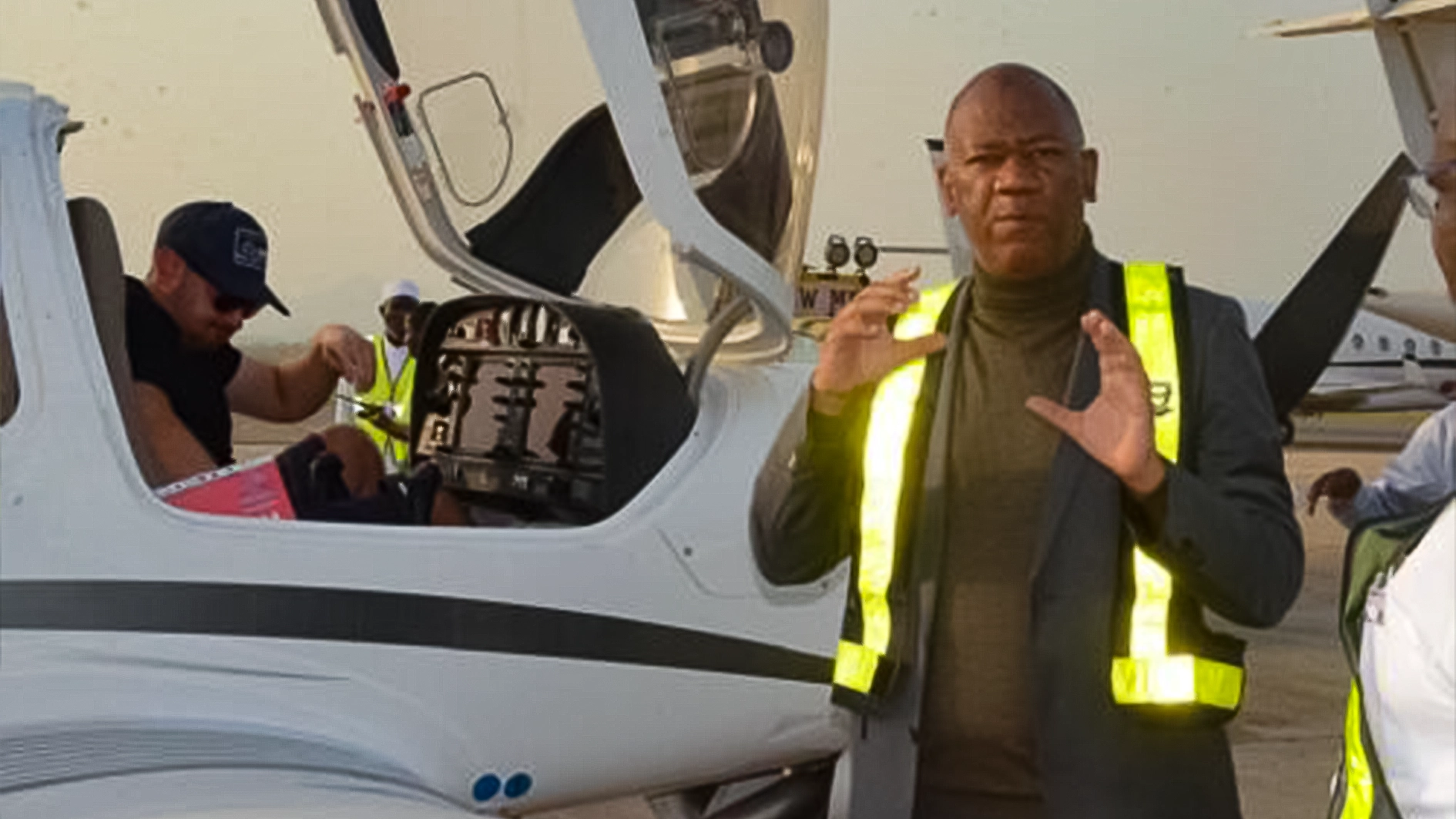
The Chancellor and Founder of the university, Senator Yusuf Datti Baba-Ahmed, disclosed this on Friday while receiving two newly acquired Diamond DA40 NG aircraft for the institution’s aviation school in Abuja.
Baba-Ahmed said the proposed aviation school, located on a 90-hectare parcel of land in Bwari, would train professionals across different segments of the industry, including pilots, air traffic controllers, aircraft rescue and firefighting personnel, aeronautical engineers and other aviation specialists, subject to regulatory approval.
He said the initiative was conceived to address the shortage of skilled manpower in the aviation sector while positioning Nigeria as a major destination for aviation education and training in Africa.
He noted the project was designed to leverage Nigeria’s strategic geographical position to strengthen the country’s aviation capacity and international standing.
“Baze Aviation is that institution that is going to make a difference in the image of Nigeria across the world. Our location on the globe is in itself an asset,” he said.

The university founder disclosed that the institution was developing a 1,800-metre-long, 30-metre-wide aerodrome, with an additional 15-metre shoulder, which would become Abuja’s second aerodrome.
“All federal capital cities all over the world have more than one aerodrome. Abuja has happened in such a way that it has achieved one today. Baze Aviation is now going to make it two,” he said.
He commended the Minister of Aviation and Aerospace Development, Festus Keyamo, for granting approval for the proposed aerodrome, describing the support of the ministry and its agencies as crucial to the development.
Baba-Ahmed also lauded the National Universities Commission (NUC) for approving the establishment of Baze Aviation School and two new undergraduate programmes, Aviation Management and Aerospace Engineering. He described the approvals as an endorsement of the university’s vision to expand specialised aviation education and develop skilled manpower for the industry.
According to him, the aerodrome project is a significant national infrastructure investment, stressing that a private institution had taken on a responsibility traditionally associated with government.
On the level of development, he said construction of the aviation school’s infrastructure had reached about 50 per cent completion between January and November, despite heavy rainfall during the period.
“From January to date, we have about a 50 per cent mark of establishing infrastructure for Baze Aviation School. Now that the rains have receded, quality will continue to grow,” he said.
He expressed appreciation to aviation regulators and government agencies, particularly the Nigerian Civil Aviation Authority (NCAA) and the Nigerian Airspace Management Agency (NAMA), for their support and technical engagement with the project.
On his part, the Vice-Chancellor of the institution, Prof. Abiodun Adeniyi, described the arrival of the aircraft as a historic milestone that positioned Baze University to make history in African aviation education.
He said the institution had become the first privately owned university in Africa to establish its own aviation training school with aircraft, distinguishing it from the University of South Africa, which he identified as the first publicly owned university on the continent to establish a similar facility.
Adeniyi said the achievement demonstrated the university’s growing influence beyond Nigeria and West Africa.
He attributed the milestone to the vision and determination of Baba-Ahmed, whom he described as the driving force behind the institution’s ambition to break new ground in education and aviation training.
Earlier, the Coordinator of the Baze Aviation School Project, Air Vice Marshal Aliyu Bello, said the vision behind establishing the institution was to develop skilled manpower for Nigeria’s aviation industry.
He disclosed that the project was conceived about four to five years ago by Baba-Ahmed, with the 90-hectare site in Bwari selected for its development.
The two aircraft, which arrived at the Hajj Terminal of the Nnamdi Azikiwe International Airport, Abuja, at 4:50 p.m. on Friday from Austria, were received by Baba-Ahmed, Adeniyi and officials of the NCAA, Federal Airports Authority of Nigeria (FAAN), NAMA, Nigerian Meteorological Agency (NiMet) and other aviation agencies.