
 Get Guardian on Google
The Confederation of African Fashion (CAFA) has begun moves to secure continental adoption of the African Fashion Industry Growth Charter, one year after Nigeria became the first country to sign the framework.
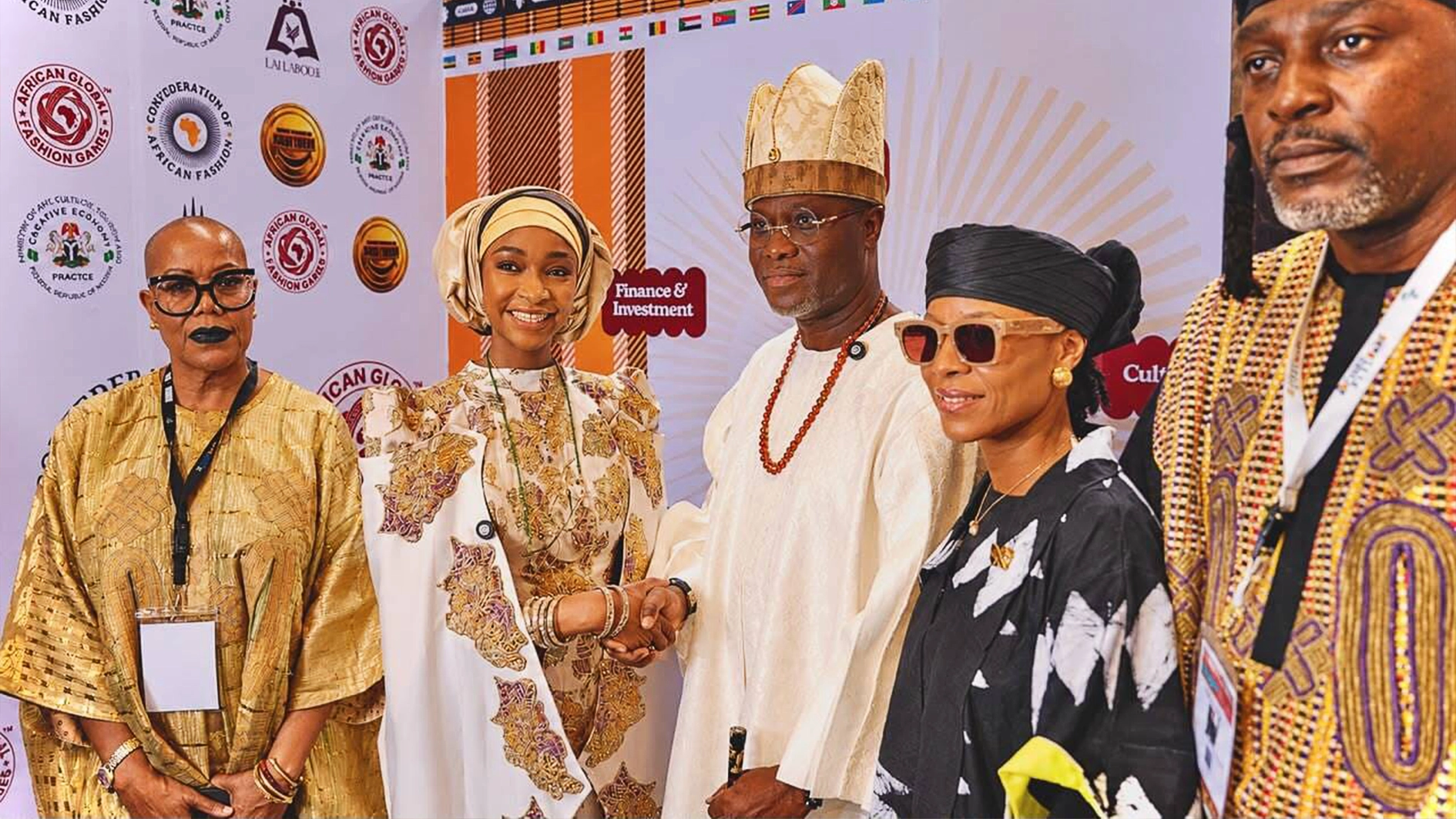
The organisation disclosed this at an event marking the Charter’s first anniversary during the opening day of CANEX WKND 2026 at the Wole Soyinka Centre for Culture and Creative Arts, Lagos.
Speaking at the event, CAFA President, Aare (Prof.) Lai Labode, said discussions were ongoing with other African countries, including Rwanda, Liberia and Ghana, towards expanding participation beyond Nigeria.
He said Rwanda was progressing towards becoming the second country to formalise its participation and the first in East Africa, while engagements with other countries were expected to continue during CANEX WKND.
Nigeria signed the Charter on November 5, 2025, through the Federal Ministry of Arts, Culture, Tourism and the Creative Economy, under Minister Hannatu Musa Musawa.
Labode said the initiative was designed to address structural challenges limiting the growth of Africa’s fashion industry, particularly inadequate manufacturing capacity, limited access to finance, weak certification systems and the continent’s dependence on imported finished textiles and garments.

According to him, Africa’s fashion economy, estimated by CAFA at about $60 billion, remains considerably below its projected potential of $500 billion.
He noted that despite 37 African countries growing cotton, the continent continued to export raw materials while importing substantial quantities of finished textile products.
“The world has never doubted Africa’s talent. It has simply never had to pay Africa for it. The Charter exists to change who gets paid,” he said.
Musawa, who cut the anniversary ribbon, described the Charter as an economic instrument intended to provide structure and common standards for the industry.
She said African designers had continued to gain international recognition without the institutional support and industrial framework required to sustain large-scale production.
“A signature only matters if something follows it,” the minister said, emphasising the need to translate the agreement into tangible economic opportunities and jobs.
CAFA also disclosed that discussions with industrial partners in Austria and Turkey were focused on establishing a central textile factory to serve African countries, with provisions for manufacturing, training, international distribution and intellectual property protection.
The organisation said it was also pursuing engagements with the African Union Commission, the African Continental Free Trade Area (AfCFTA) Secretariat and Afreximbank to secure institutional recognition, align industry standards with continental trade rules and explore financing opportunities.
Other plans include working with regional economic communities, particularly ECOWAS and the East African Community, to encourage more countries to adopt the Charter.
Meanwhile, Nigeria is expected to host the inaugural African Global Fashion Games in 2028. The proposed competition will bring participating countries together across seven disciplines covering design, craftsmanship, textile performance and innovation.
The Games are expected to be held every three years, alternating between Africa and other parts of the world.
While CAFA’s proposed continental framework seeks to strengthen the industry’s manufacturing and commercial capacity, its broader ambition will depend on the willingness of governments to adopt the Charter and translate its provisions into policies, investment and functioning industrial infrastructure