 Follow Us on Google News
 Follow Us on Google Discover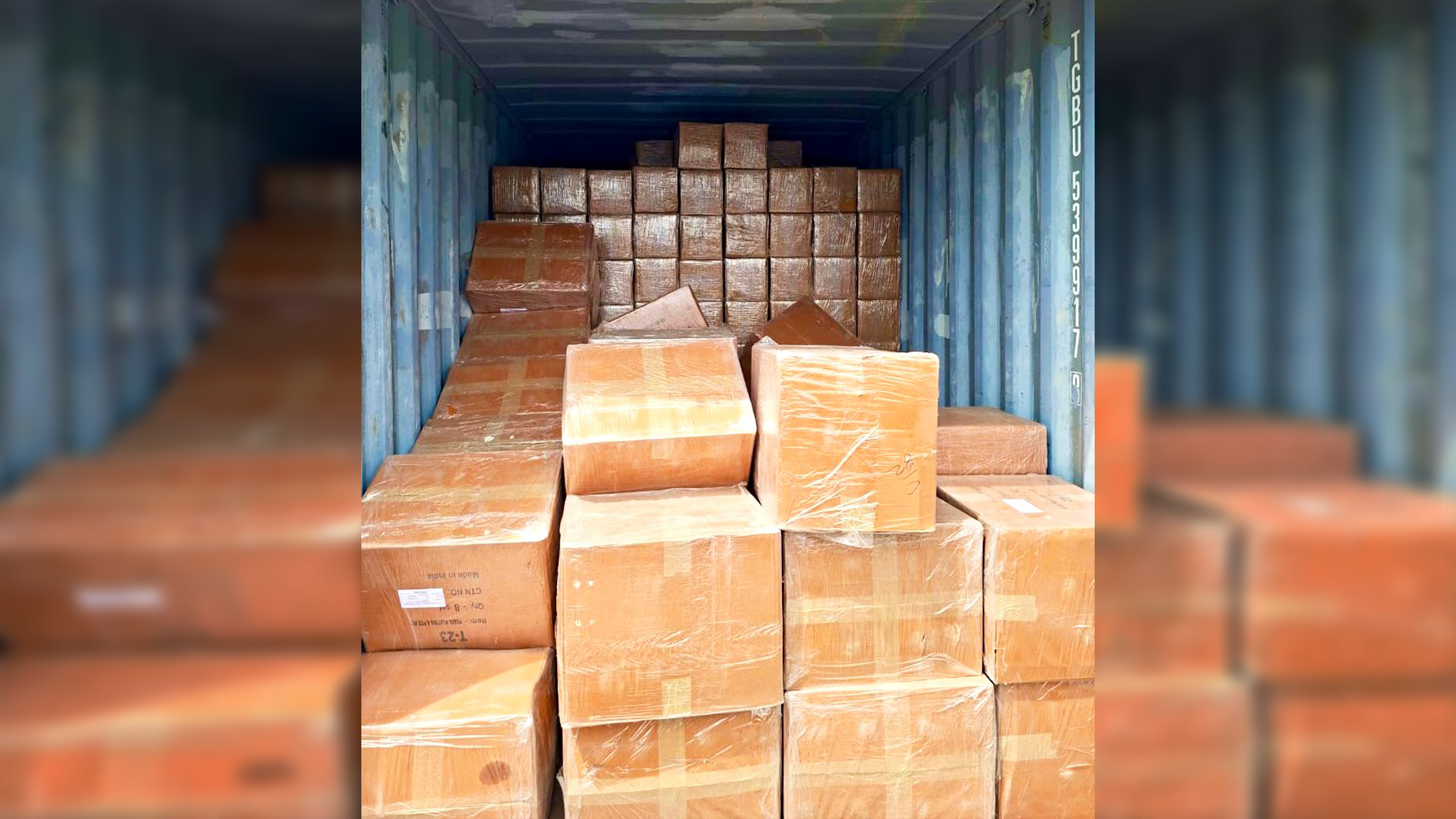
There are growing concerns that the persistent use of Nigerian ports as transit corridors for narcotics could ruin the country’s trade reputation, attract stricter destination-country inspections, increase cargo clearance delays and elevate Nigeria’s global maritime risk profile.
The Guardian gathered that transnational organised crime syndicates are increasingly exploiting maritime trade routes and containerised cargo to traffic illicit drugs, with the country emerging as a major transit point, as reflected in huge seizures recorded by regulatory and security agencies at the seaports in recent times.
The Nigeria Customs Service (NCS) and the National Drug Law Enforcement Agency (NDLEA), through sustained inter-agency collaboration, have continued to record significant seizures of narcotics along the country’s maritime trade routes, particularly at the seaports.
Official first-quarter seizure statistics obtained from the NDLEA’s Directorate of Planning, Research and Statistics showed that Apapa Port recorded 71,181.45 kilogrammes (kg) of cannabis, cocaine and codeine-based cough syrup – the highest drug interception in the period.
Port Harcourt Seaport Command followed with 25,635kg of codeine-based cough syrup, while Tin Can Island Port recorded 1,538.30kg of Cannabis.
A port-by-port breakdown of seizures in 2025 showed that Apapa Port recorded 153,028.19kg, Tin Can Island Port accounted for 30,815.21kg, Port Harcourt Seaport recorded 410,553.61kg, while the Marine Unit recorded 11,156kg.

In 2024, Apapa Port recorded 54,116.17kg, Tin Can Island Port accounted for 454,586.54kg, Port Harcourt Seaport recorded 1,227,595.42kg, and the Marine Unit recorded 9,121.49kg.
In 2023, the statistics were Apapa Port (85,491.59kg), Tin Can Island Port (654.40kg) and Port Harcourt Seaport (23.55kg).
In 2022, Apapa Port recorded 17,759.74kg of seizures, Tin Can Island Port had 1,881.80kg, while Port Harcourt Seaport recorded 143.83kg.
In 2021, Apapa Port recorded 33,540kg, Port Harcourt Seaport (40,425.30kg), and Tin Can Island Port (22,725.60kg).
However, the main drug cartels and financiers of the crimes have yet to be apprehended by authorities at either the point of loading or the destination, despite extensive investigations. Instead, it is the ship’s crew who continue to bear the consequences.
The NDLEA has secured 974 convictions of drug offenders nationwide, including the conviction of 11 major drug kingpins, who have been sentenced to a combined 254 years’ imprisonment.
However, The Guardian gathered that those arrested were distributors rather than the financiers of the illicit trade.
Head of Research, Sea Empowerment & Research Centre (SEREC), Eugene Nweke, expressed deep concern over the rising volume of illicit narcotics intercepted at the country’s seaports.
He said the trend exposes an unsettling reality with far-reaching implications, noting that drug trafficking through maritime channels fuels money laundering, organised crime, corruption, insecurity and other illicit financial activities that threaten national economic stability.
Nweke called for a shift from seizure-based enforcement to intelligence-led prevention through the deployment of artificial intelligence (AI)-driven cargo profiling, wider installation of non-intrusive cargo scanners, strengthened container tracking systems, closer collaboration among maritime regulatory and security agencies at the ports and full integration of the National Single Window (NSW) to enhance information sharing and risk management.
He also called for sustained investment in maritime security architecture, saying: “Nigeria’s ports must remain gateways for legitimate international commerce and not safe havens for transnational criminal enterprises”.
Dean, Faculty of Maritime and Security Management Studies, City University, Cambodia, Prof. Alfred Oniye, said poor implementation of the International Ship and Port Facility Security (ISPS) Code leads to significant security breaches, especially the use of vessels for drug trafficking, which poses a severe threat to maritime security.
He said the ISPS Code requires comprehensive security assessments and plans to detect and prevent such activities.
According to him, the United Nations Convention against Illicit Traffic in Narcotic Drugs and Psychotropic Substances 1988, obligates member states to take measures to prevent drug trafficking through maritime channels.
“By adhering to the ISPS Code and relevant national and international laws, maritime authorities can mitigate security risks and ensure the safe and secure operation of ships and port facilities,” he stated.
Meanwhile, the NDLEA’s Director of Media and Advocacy, Femi Babafemi, confirmed that the dominance of codeine-based pharmaceutical products and repeated attempts to smuggle large quantities of cannabis through the seaports underscored the determination of criminal syndicates to exploit Nigeria’s maritime trade routes.
He explained that the Agency has continued to deepen collaboration with the NCS and other security agencies to block trafficking routes, dismantle organised criminal networks and ensure that all persons connected with intercepted consignments are brought to justice.
Babafemi also disclosed that the Agency is intensifying intelligence gathering, strengthening surveillance mechanisms and deploying advanced detection strategies to identify emerging trafficking patterns and prevent illicit drugs from entering the country through the ports.

