
 Get Guardian on Google
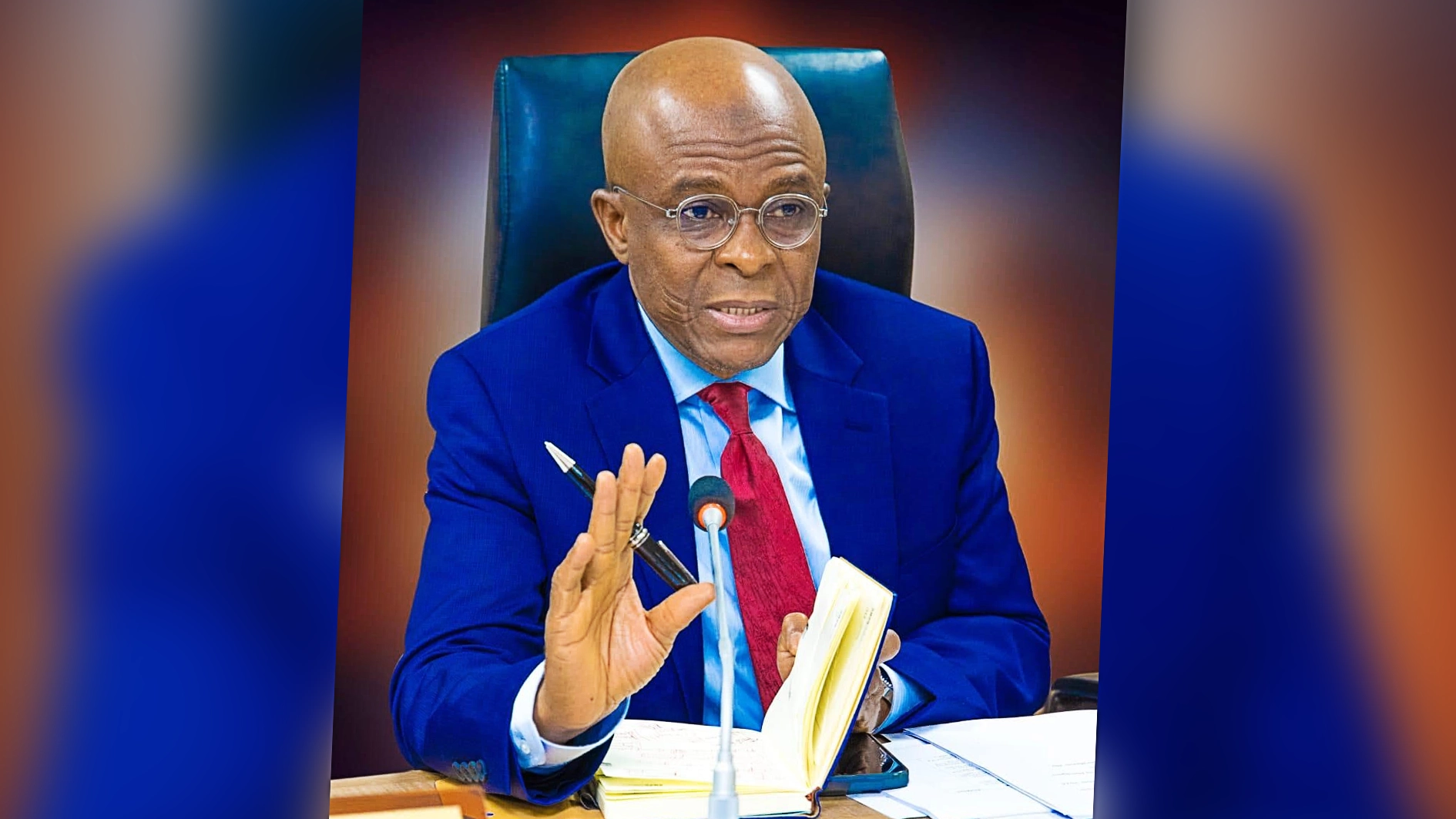
The President of the Port Management Association of West and Central Africa (PMAWCA), Dr Abubakar Dantsoho, has warned that high port charges, prolonged cargo clearance delays and expensive transportation corridors are threatening regional trade and undermining the competitiveness of West and Central African economies.
Dantsoho, who is also the Managing Director of the Nigerian Ports Authority (NPA), called for stronger cooperation among ports in the region to address the challenges, reduce logistics costs and improve the efficiency of maritime operations.
He spoke at the opening ceremony of the 46th Annual Council of PMAWCA and the Joint Gulf of Guinea Commission-PMAWCA Forum in Sipopo, Malabo, Equatorial Guinea.
He urged port authorities to prioritise strategic collaboration over destructive competition, arguing that closer partnerships would strengthen logistics resilience and ensure that the benefits of maritime trade extend beyond coastal countries to landlocked nations dependent on their ports and transport corridors.
According to him, the Atlantic coastline stretching from Mauritania to Angola serves about 20 coastal countries, while five landlocked countries, including Mali, Burkina Faso, Niger, Chad and the Central African Republic, depend directly on the efficiency of regional ports and transport networks.
“When a single port along our coast suffers congestion, it is a household or a market in Bamako, Niamey, N’Djamena, or Bangui that bears the cost,” he said.
Dantsoho acknowledged that West and Central African ports had undergone significant transformation over the past decade through the construction of deep-water terminals, public-private concessions and the deployment of modern infrastructure.
However, he said persistent structural challenges continued to undermine their efficiency and competitiveness.
He identified prolonged cargo dwell times, high port charges, expensive corridor transportation and inadequate interoperability among customs and port operations as major constraints affecting regional trade.
“Cargo dwell times remain excessively long across too many terminals, and high port and corridor transit costs continue to inflate the final price of consumer and industrial goods.
“Despite the deployment of single-window platforms, our customs and operational procedures still lack seamless interoperability, both between neighbouring ports and with hinterland administrations.
“Furthermore, our pressing requirements for dredging, infrastructure maintenance, and equipment renewal frequently outstrip our internal financing capacities,” he said.
The PMAWCA president warned that the challenges were becoming more pressing amid geopolitical disruptions along major international shipping routes, which had redirected maritime traffic and increased vessel calls along the West and Central African coastline.
He said the development presented strategic opportunities for regional ports but also placed additional pressure on infrastructure already operating close to capacity.
Dantsoho further identified climate change, rising sea levels, coastal erosion, maritime decarbonisation regulations and increasing cyber threats as emerging challenges that port authorities must address to remain competitive in the global shipping industry.
He warned that ports failing to prepare for the energy transition and new international maritime regulations risked losing shipping traffic to better-prepared destinations.
“Moreover, the maritime decarbonisation regulations currently taking shape at the International Maritime Organization will soon redraw global shipping routes and ports of call: any port that fails to prepare for this energy transition risks being bypassed altogether.
“Finally, rapid digitalisation, while indispensable, exposes our operations to sophisticated cyber threats that we can no longer afford to underestimate,” he said.
On regional cooperation, Dantsoho said neighbouring port authorities must develop complementary operational arrangements that would enable them to provide alternative capacity during emergencies, minimise disruptions and improve the reliability of cargo movement.
He maintained that a resilient port system required sustained investment in preventive maintenance, digital security and infrastructure capable of withstanding future climate realities.
“A truly resilient port is one that invests as rigorously in preventative maintenance as it does in new construction; one that fortifies its digital infrastructure against cyber risks; one that engineers its assets for the climate realities of 2050 rather than those of yesterday; and one that collaborates closely with neighbouring ports to provide reliable fallback capacity during crises.
“On this final point, let me be clear: our ports must choose strategic complementarity over destructive competition, because when we compete against one another, only external actors outside our region win,” he said.
He also called for stronger engagement between port authorities and their host communities, particularly in employment generation, skills development and the protection of local livelihoods.
According to him, the performance of regional ports should not be measured solely by infrastructure development and cargo-handling capacity but also by their contributions to the economic and social wellbeing of surrounding communities.
He urged port authorities to create more opportunities for young people and women in maritime professions while integrating local businesses into port procurement and supply chains.
“Our youth are our continent’s greatest asset. If our ports fail to offer them meaningful training and employment, we risk forfeiting our social licence to operate.
“That is why the PMAWCA Professional Training Centre in Cotonou stands, in my view, as a strategic imperative for the entire region,” he said.
Dantsoho also advocated increased investment in the blue economy, urging ports to diversify their operations beyond container handling and hydrocarbon-related activities.
He identified sustainable fishing, seafood processing, ship repair and maintenance, cruise tourism, as well as the production and bunkering of clean marine fuels as areas offering opportunities for economic expansion.
“Transitioning toward the ‘green port’ model is no longer an optional luxury; it is the foundational condition for our future competitiveness and our continued access to international climate and development finance,” he said.
On PMAWCA’s institutional priorities, he said the association had continued to implement resolutions adopted at its 45th Annual Council in Pointe-Noire, Republic of Congo, particularly the revision of its founding documents and the development of its Professional Training Centre project in Cotonou, Benin Republic.
He stressed the need to translate resolutions adopted at the association’s meetings into measurable improvements across member ports.
The PMAWCA president called for clear implementation roadmaps to address the challenges identified at the forum, insisting that member ports must be accountable for delivering on agreed commitments.
“I therefore urge that our deliberations move well beyond mere diagnosis to establish clear, shared roadmaps that are diligently executed over time. It is by the yardstick of tangible delivery that our Governments and our citizens will judge us.
“To ensure these commitments are systematically tracked and implemented, I formally propose that a dedicated progress report be tabled at our 47th Annual Council,” he said.
He reaffirmed the association’s readiness to work with the Gulf of Guinea Commission, member governments, port authorities and development partners to implement the outcomes of the forum.
“Our ports possess the technical capability, the institutional will, and, increasingly, the modern tools required to convert our shared ambitions into measurable outcomes,” he said.
He urged directors-general of member ports to demonstrate greater commitment to regional solidarity, noting that no single port could independently address the challenges confronting the maritime industry.
“The port of the future will not be defined by the height or tonnage of its cranes, but by the enduring trust it commands from its users, its regional neighbours, and its surrounding communities.
“None of us can build that port in isolation. We will build it together—from Nouakchott to Luanda or we will not build it at all,” he said.
Also speaking, the Executive Secretary of the Gulf of Guinea Commission, Mr Jose Mba Abeso, called on PMAWCA member states to strengthen maritime security and intensify the fight against illegal fishing, drug trafficking, human trafficking and other illicit activities.
He also emphasised the need to protect critical maritime infrastructure, including subsea cables and gas pipelines connecting countries in the region.
Abeso said the protection of such facilities was vital to regional safety and economic development, particularly as countries continued to expand cross-border energy and communication infrastructure.
In his remarks, the Minister of Environment and Blue Economy of Equatorial Guinea, Mr Fidel Esono Mba Eyono, described maritime resources as fundamental to international trade, food security, employment generation and the development of new economic activities.
He, however, warned that poverty, pollution, illegal fishing, uncontrolled exploitation of marine resources and migration-related pressures threatened the sustainability of the region’s marine ecosystems.
According to him, the Gulf of Guinea represents more than a geographical space, serving as a vital communication route, a source of economic solidarity and an opportunity for regional transformation.
He disclosed that Equatorial Guinea was initiating an international agenda for sustainable development to be held in 2027, aimed at creating strategic opportunities for countries in the region.
He said the initiative would promote social equality, sustainable peace, productivity, industrialisation and sustainable development across the region.