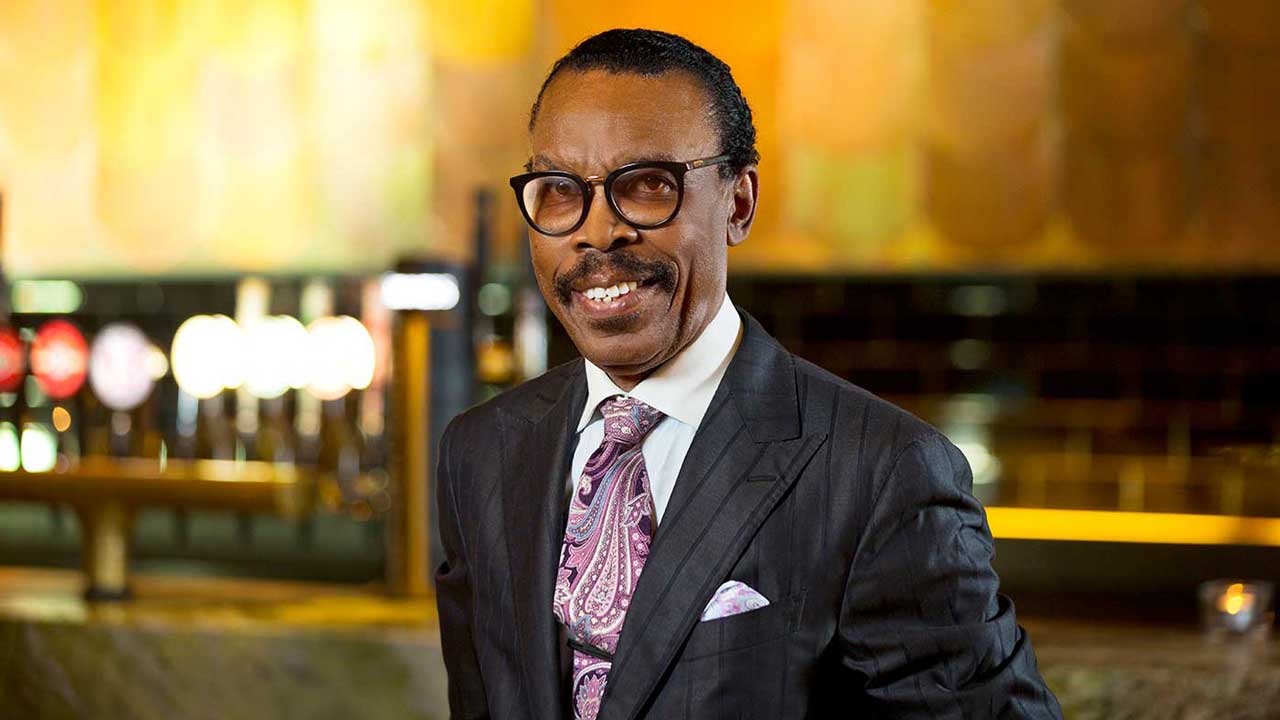
Nigeria has entered a delicate phase of macroeconomic stabilisation that must be carefully managed through tighter policy coordination, structural reforms and private sector leadership if the gains of reforms must translate to jobs, improved investment and broad-based prosperity, the Group Chief Economist and Managing Director of Research and Trade Intelligence at Afreximbank, Dr Yemi Kale, has noted.
Speaking yesterday at the Nigeria Economic Outlook 2026 hosted by FirstBank, Kale said recent improvements in growth, inflation and external reserves have created policy space, but warned that stability alone does not guarantee economic development.
Kale’s position was earlier stressed by the Chief Executive Officer of FirstBank, Olusegun Alebiosu, who admitted that improving macroeconomic conditions would support stronger bank lending in 2026, as easing inflation and lower interest rates expand credit opportunities.
The FirstBank chief said recent bank recapitalisation has improved liquidity, but warned that credit growth must be subjected to disciplined banking.
“Lending will increase, and that is positive for the economy, but it must be done properly,” he insisted.
For Kale, “Nigeria has entered a period of stabilisation. Growth is strengthening, though still fragile. We are seeing a decline in inflation trends, which is creating room for cautious monitoring and calibration.” He added that improved external reserves have strengthened buffers and helped to restore credibility in the foreign exchange (FX) market.
However, he stressed that “stability does not eliminate risk” but only more room for business to leverage the policy environment and economic opportunity for expansion.
Kale identified weak coordination among policymakers as a major constraint undermining the effectiveness of reforms, arguing that economic decisions are often taken in silos without adequate consideration of their wider impacts. He said reforms would deliver greater benefits if monetary, fiscal, trade and employment policies were better aligned.
“Before, policymakers took positions independently of other policies, and that is not the way it should work. If the central bank does this, how does it affect trade, how does it affect growth, how does it affect employment? Decisions should be taken in line with the net benefits to the overall economy, not just individual mandates that create distortion and confusion,” the ex-Nigeria’s Statistician General, who delivered the keynote at the FirstBank event, said.
While noting that macro-stabilisation creates room for long-term planning and investment, he said persistent structural challenges continue to limit Nigeria’s potential, pointing to infrastructure gaps, unreliable power supply, skills mismatches, and security and governance risks that raise transaction costs and discourage investment.
“These challenges explain why growth is often fragile and unfelt by the public,” he said.
Kale said addressing the weaknesses would unlock opportunities in economic diversification, the digital economy, agro-industrial value chains, and Nigeria’s creative and service exports. He stressed that these opportunities require clear priorities, including fiscal discipline, accelerated infrastructure investment through public-private partnerships, human capital development and predictable institutional frameworks.
He warned that in an asynchronous global economy, Nigeria must adopt adaptive strategies rather than rigid frameworks. “There is no one-size-fits-all policy path. Policy agility becomes a competitive advantage, domestic resilience is the shock absorber, and strategic positioning matters,” Kale stressed.
The FirstBank CEO noted that current market conditions favour naira assets over foreign currency holdings, noting that yields on domestic instruments now significantly outperform foreign returns.
“Keeping savings abroad in foreign currency at this point is a waste of time,” he said, urging Nigerians in the diaspora to buy Nigeria.
Alebiosu expressed optimism about Nigeria’s outlook, citing rising manufacturing activity, decentralised power generation and easing price pressures. He said stronger reserves, improved trade balances and capital inflows have boosted resilience, adding that growth is expected to accelerate after the 2026 elections.
At a panel, Deputy Managing Director of FirstBank Ghana, Osahon Ogieva, said resilience in 2026 would not be defined by rapid expansion but by the ability to withstand shocks, particularly in an election year characterised by uncertainty.
“Resilience is not about who grows fastest, but who can perform on a bad day,” he said.
Ogieva explained that banks are prioritising companies with disciplined cash flow management, sustainable revenue streams and strong governance structures.
He noted that resilient firms are actively hedging infrastructure risks, particularly power, rather than waiting for public utilities to deliver reliability.
Chief Economist at PwC, Segun Zaccheaus, urged Nigerian business leaders to monitor a small set of global indicators that would shape conditions in 2026. He identified global interest rate trends as the most critical, noting that decisions by central banks in the United States, Europe and the United Kingdom would influence capital flows into emerging and frontier markets.
Zaccheaus also highlighted oil production and price dynamics driven by OPEC+, stressing their continued importance to Nigeria’s fiscal and external balances. He added that technology, particularly artificial intelligence, would increasingly shape productivity and competitiveness, urging businesses to pay close attention to how these trends evolve globally and within Africa.
On tax reform implementation, PwC Partner for Tax Reporting and Strategy, Kenneth Erikume, warned that many companies underestimated the urgency of system upgrades required under the new tax regime.
He said payroll systems must be updated immediately to reflect revised thresholds and rates, noting that the changes would affect take-home pay differently across income levels.
Erikume said, “Payroll is the most urgent issue but beyond that, there are significant opportunities in transaction taxes, particularly VAT, if companies update their systems properly.”