
 Get Guardian on Google
The Executive Chairman of United Nigeria Airlines, Prof. Obiora Okonkwo, has acknowledged that an inaccurate explanation issued by the airline following a flight diversion to Asaba complicated what should have been a manageable operational incident.
Okonkwo said the airline’s communication team attributed the incident to bad weather in Abuja, although the aircraft had landed in Asaba because of an error in its flight documentation.
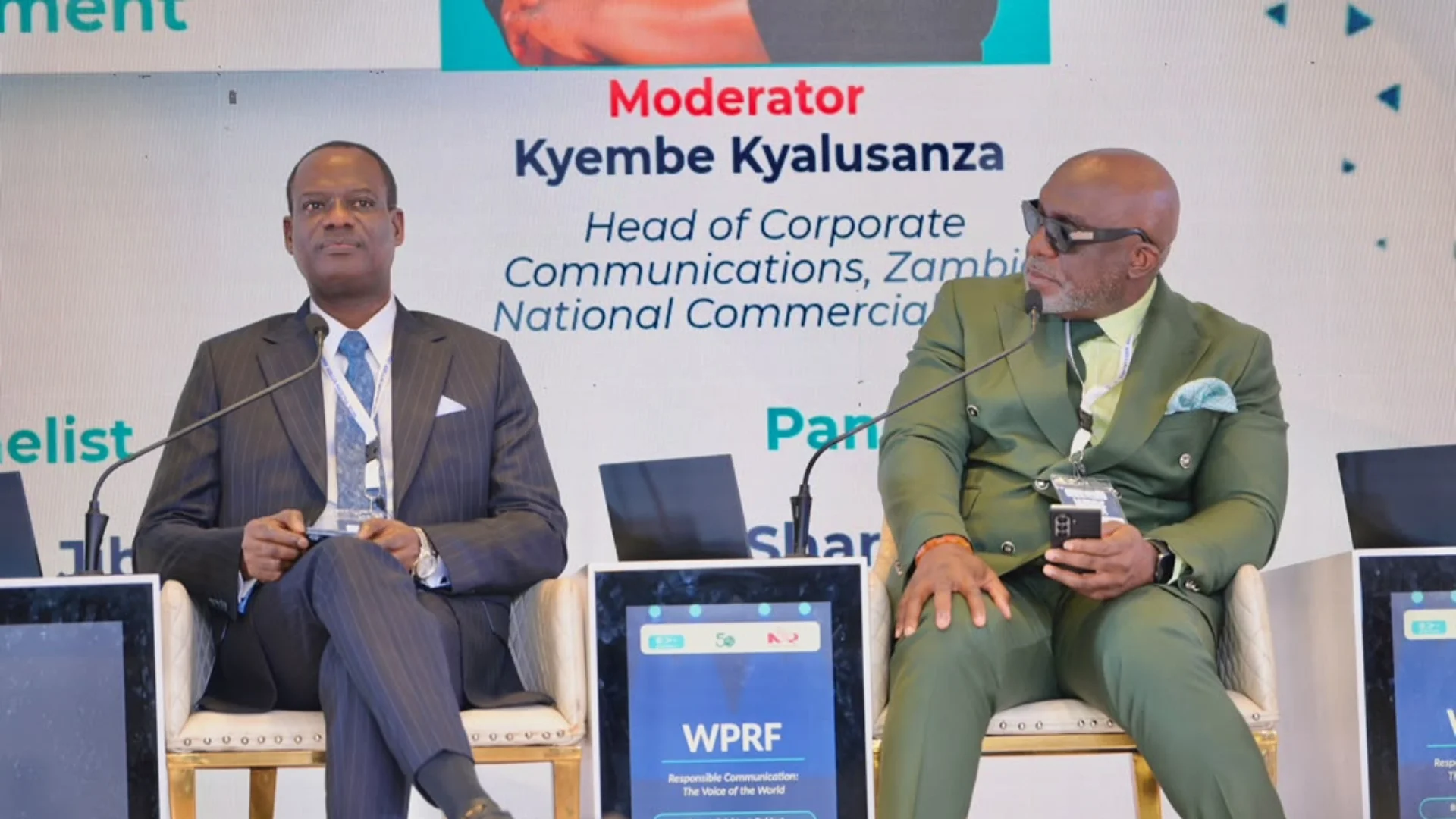
Speaking at the 2026 World Public Relations Forum (WPRF) in Abuja on Tuesday, he warned organisations against withholding or distorting information in an attempt to protect their reputation.
According to him, concealing the truth during a crisis can ultimately cause more reputational damage than the incident itself.
He made the remarks during a panel discussion titled Responsible Business Communication: Building Trust and Financing Investments for Sustainable Human Development.
Okonkwo maintained that transparency, particularly when organisations encounter operational challenges, remains essential to building public confidence.
“The best word of public relations is to tell the truth and challenge responsibly. Whenever the truth is told, it builds trust, it builds confidence, and it also shows respect for stakeholders,” he said.
Recalling the flight diversion incident, Okonkwo explained that the aircraft was scheduled to operate from Lagos to Abuja but eventually landed at Asaba Airport in Delta State.
He attributed the incident to an error by a dispatcher who mistakenly entered Asaba as the destination in the flight documentation.
According to his account, the pilots followed the destination indicated in the documents and landed in Asaba.
The cabin crew, apparently unaware of the discrepancy, subsequently welcomed passengers to Abuja, the aircraft’s originally scheduled destination.
Okonkwo said the situation became more complicated when the airline’s communication team issued an explanation that did not reflect what had happened.
Rather than acknowledge the documentation error, the team reportedly attributed the landing in Asaba to adverse weather conditions in Abuja.
He suggested that the attempt to manage public perception created an additional problem for the airline.
The incident, he argued, demonstrated how organisations could undermine public confidence when they prioritise an apparently convenient explanation over verified information.
His comments also raised questions about the importance of internal communication and fact-checking before public statements are issued during operational disruptions.
For airlines, where passenger confidence depends heavily on safety, reliability and accurate information, inconsistent explanations can generate concerns beyond the immediate incident.
Okonkwo stressed that communication teams should establish the facts before addressing the public, even when the circumstances are uncomfortable for an organisation.
The airline chairman also recounted an unusual complaint from a passenger who threatened to stop using United Nigeria Airlines after a flight departed earlier than its advertised time.
According to Okonkwo, the passenger had expected the aircraft to leave at 11:30 a.m., but it departed at 11:20 a.m.
He said the complaint initially surprised him because airline operators frequently face criticism over delayed flights rather than departures ahead of schedule.
“I had a passenger last week who sent me a message saying they will never fly United Nigeria Airlines anymore and I said, why?” he recalled.
“He said, because they left on time. He said United Nigeria Airlines advertised departure for 11:30am but departed at 11:20am, and as the chairman, I was actually worried about how to respond.”
Okonkwo said he considered responding angrily but eventually decided to send a brief apology.
“I simply sent him a message saying, ‘I apologise for United Nigeria Airline leaving on time.’ That was my answer. He never got back.”
Although he presented the experience humorously, the incident illustrated a broader concern about service providers adhering to published schedules and keeping customers informed when arrangements change.
For passengers, a departure earlier than the advertised time can be as consequential as a delay, particularly when it affects boarding arrangements or causes someone to miss a flight.
Okonkwo said effective communication must therefore remain central to how airlines manage customer expectations.
Beyond the aviation industry, Okonkwo urged organisations to recognise that effective crisis communication requires the involvement of senior management.
He rejected the assumption that public relations and corporate affairs departments should bear sole responsibility for communicating during difficult situations.
According to him, organisational leaders must take responsibility for ensuring that accurate information reaches stakeholders promptly.
“Communication is not only the responsibility of the corporate affairs department. When there is a crisis and there is a need for proper communication, leadership quality is also called into question. It becomes a collective responsibility of leadership,” he said.
He advised airlines and other service providers to make better use of their communication channels, including airport information displays, digital platforms and social media.
Such channels, he noted, should be used to provide timely updates about operational changes, disruptions and other developments affecting customers.
He also called for greater openness when services are interrupted by industrial disputes, technical problems or safety concerns.
“Do you have a strike? Announce that you have a strike. That’s why we are disrupting our services. Do you have a safety issue? Announce!” he said.
Okonkwo maintained that customers were more likely to retain confidence in an organisation when they received accurate explanations, even when the information was unfavourable.
Also speaking during the session, the Minister of Finance and Coordinating Minister of the Economy, Taiwo Oyedele, said public trust depended partly on organisations keeping their commitments and explaining departures from previously communicated expectations.
Responding to Okonkwo’s account of the passenger who complained about an early flight departure, Oyedele observed that meeting an obligation ahead of schedule did not necessarily eliminate the need for an explanation.
“Sometimes building trust requires that you be on time, not earlier and not later. And if you go earlier than you communicated previously, you must explain,” he said.
He drew a comparison with revenue projections and performance within government institutions.
According to him, exceeding a revenue target should prompt an examination of the assumptions behind the original projection rather than automatic celebration of the higher figure.
Using a hypothetical example, Oyedele said an agency that projected revenue of 10 but generated 12 should be able to explain the difference.
“I need to know whether your 10 was too conservative. Maybe it should have been 15. I also need to know whether this extra 2 is sustainable or whether it’s one-off,” he said.
His remarks highlighted the importance of accountability in public financial management, where accurate projections and explanations of performance are necessary for planning and decision-making.
The minister’s position reinforced the broader discussion on how transparent communication can influence confidence in both public and private institutions.
The session examined the relationship between responsible business communication, institutional credibility and sustainable development.
Participants discussed the importance of providing stakeholders with reliable information, particularly when organisations face situations that could affect their operations or public standing.
The discussion also underscored the role of leadership in establishing communication practices that prioritise accuracy and accountability.
Other speakers included Edith Jibunoh, Director of External Affairs at the World Bank Group, and Sharon Ezzeldin, founder of Honor Public Relations in the United Kingdom.
The session was moderated by Kyembe Kyalusanza, Head of Corporate Communications at Zambia National Commercial Bank (Zanaco).
For Okonkwo, the central lesson was that organisations should not regard transparency as a threat to their reputation.
Instead, he argued, acknowledging mistakes and communicating verified information could help preserve relationships with customers and other stakeholders.
His account of the Asaba flight incident illustrated the consequences of issuing explanations before establishing the facts.
He maintained that organisations were better served by confronting difficult information responsibly than by attempting to manage public perception through inaccurate statements.
Ultimately, he said, public confidence depends not only on how organisations perform when operations run smoothly, but also on how honestly they communicate when things go wrong.