 Follow Us on Google News
 Follow Us on Google Discover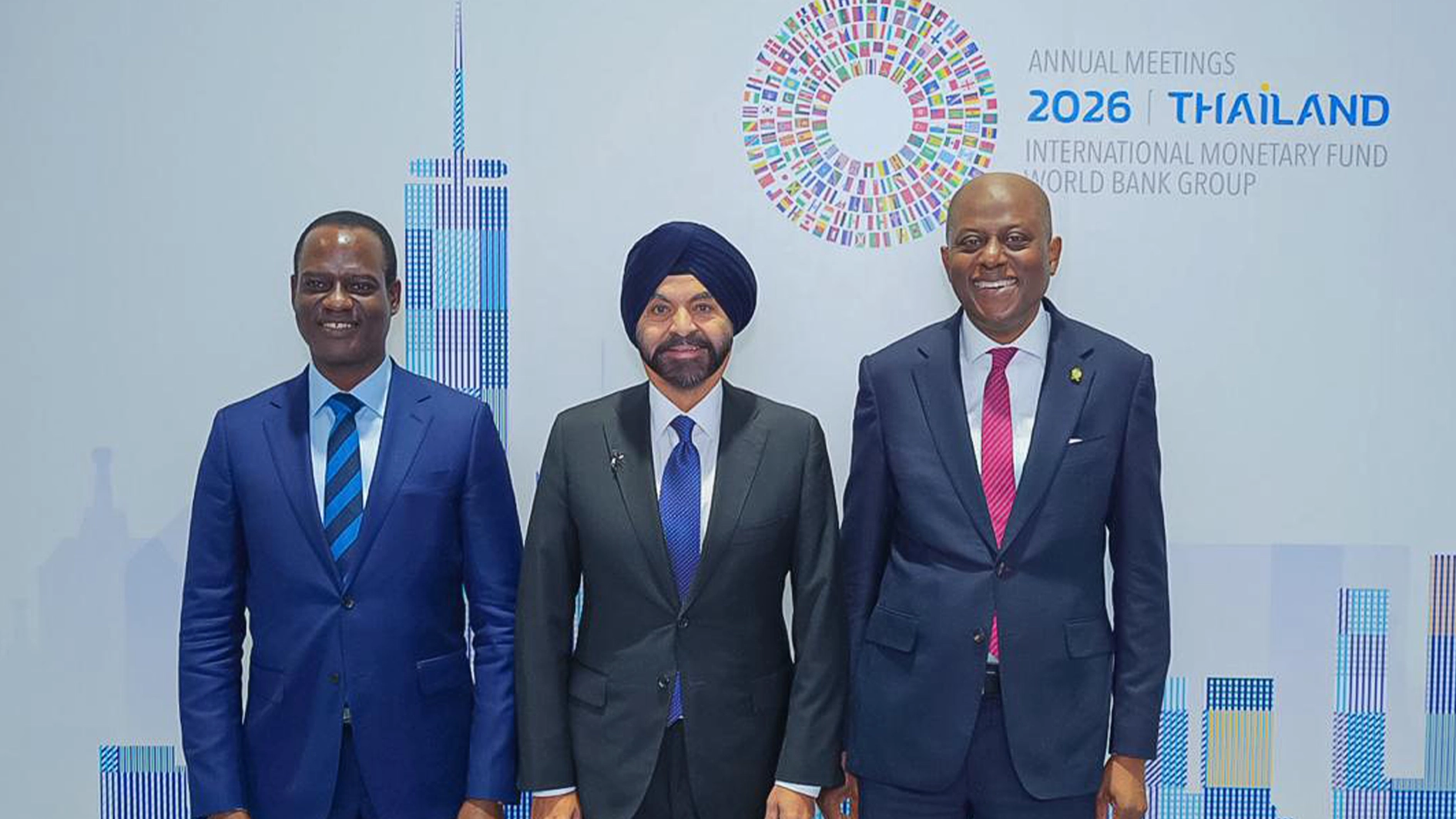
Oyedele, others pitch Nigeria’s investment opportunities at yearly meetings
The global community, especially developing countries, risks undermining inclusive economic growth and job creation with the aggressive adoption of artificial intelligence (AI), the International Monetary Fund (IMF) and World Bank warned.
The institutions, which were joined by Singaporean President Tharman Shanmugaratnam at the opening of the ongoing IMF/World Bank yearly meetings in Bangkok, Thailand yesterday, said developing countries could be under pressure to translate technological advances into productive employment.
The meetings offer the Minister of Finance and Coordinating Minister of the Economy, Taiwo Oyedele, who leads the Nigerian delegation, including the Central Bank of Nigeria (CBN) team, the opportunity to pitch investment opportunities presented by the country’s reforms to the global community.
Fiscal and foreign exchange market reforms, as well as their gains, are talking points in Nigeria’s engagement with international investors.
With projections that AI would take a chunk of entry-level jobs, there have been fears that AI adoption could increase returns on capital but widen income inequality.

Both the IMF and World Bank said countries would need to factor job protection and economic resilience into AI adoption and deployment.
The President of the World Bank Group, Ajay Banga, called for practical applications of AI to raise productivity and expand employment opportunities in developing economies.
Banga said agriculture, primary healthcare, tourism, infrastructure and manufacturing should be priority sectors where smaller, targeted AI solutions could improve productivity, support businesses and create jobs.
He urged governments to strengthen infrastructure, improve governance and reduce investment risks to attract private capital needed to generate employment at scale.
He said job creation had become central to the World Bank’s development agenda following the huge number of young people entering the global labour market yearly.
“In the coming 15 years, 1.2 billion young people are going to become 18 years of age,” Banga said, describing the growth as a potential demographic dividend if countries provide adequate healthcare, education and skills.
He said employment should not be defined solely by working for a large or small company, but should include entrepreneurship and other activities that enable people to contribute productively to society and earn a dignified living.
“The bank’s entire focus has moved towards that over the last few years. It is not that we do not build a school, or we would not build a highway, or we would not build a skilling centre or a healthcare clinic.
We have to do all those, but we have to do them with the perspective of job creation,” he said.
Banga stressed that governments should provide the enabling environment, while private businesses should remain the principal drivers of employment, estimating the private sector generates between 75 and 85 per cent of jobs in many countries.
He identified infrastructure development, tourism and value-added manufacturing as sectors with significant potential to generate employment, insisting that developing countries must use technology to expand domestic productive capacity rather than depend solely on the transfer of jobs from advanced economies.
For Tharman, economic growth alone would not guarantee sufficient employment. He cited China and India as examples of economies that are recording growth amidst relatively weak job creation.
“Growth is going to be critical to secure good jobs, but growth is not itself going to be sufficient to achieve those good jobs,” he said even as he warned that AI could widen the divergence if governments failed to act.
He urged policymakers to use AI to create quality jobs while supporting workers to build careers and develop skills valuable to modern economies.
Tharman identified manufacturing, green energy and healthcare as potential sources of high-paying jobs while calling for stronger skills development.
The dilemma, the President said, is harnessing AI to raise output without exclusion.
IMF Managing Director, Kristalina Georgieva, warned that the shift towards AI could have significant implications for public finances, particularly if household income declines relative to returns on capital.
She said governments traditionally relied heavily on taxing people and labour-related economic activities to generate revenue. If AI changes the composition of labour markets, governments will need to reconsider how they raise sufficient funds to support workers and help society adapt, she noted.
“If AI changes the structure of the labour market, and then there is less labour, more capital. What do we tax?” Georgieva asked.

