 Follow Us on Google News



 Follow Us on Google Discover
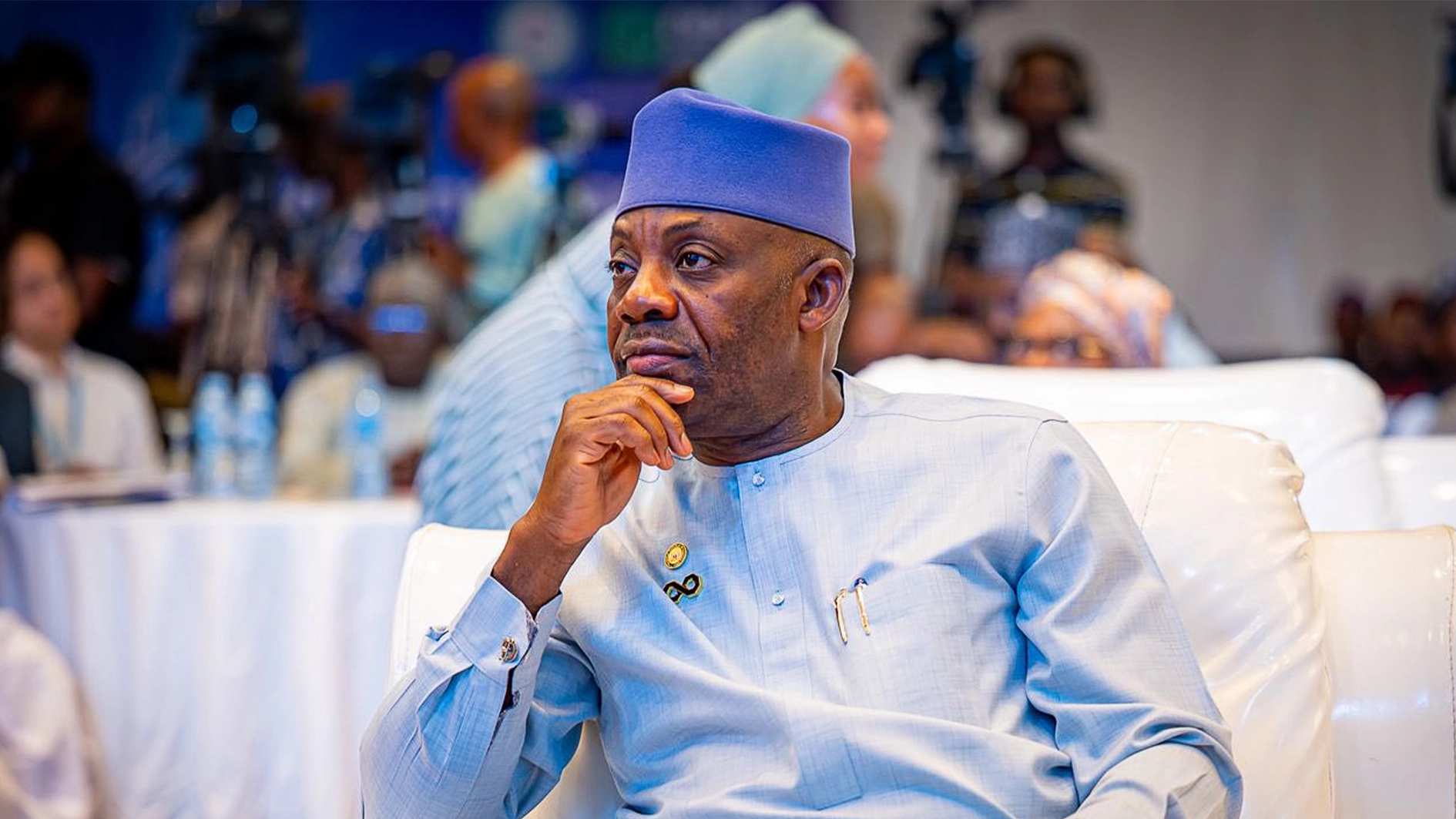
When President Bola Tinubu redeployed Dr Tunji Alausa from Health to the Ministry of Education in October 2024, the presidency was apparently seeking answers to the perennial problems that have plagued the education system for decades. Some two years later, Alausa has overseen a ministry in constant flux, with ambitious steps, policies, controversies, and reversals of decisions that have caught the eye and sometimes left the nation breathless. IYABO LAWAL explores the contours and straight lines.
Nigeria’s education sector requires emergency intervention. Dr Tunji Alausa has supervised the ministry for some two years, and his tenure has been marked by a flurry of policy announcements, high-profile reversals, and controversies that have pitted him against university unions, parents, and other stakeholders.
Alausa arrived with a structured agenda, unveiling the Nigeria Education Sector Renewal Initiative (NESRI), a six-pillar masterplan anchored on Technical and Vocational Education and Training (TVET) and skills; Science, Technology, Engineering, Mathematics and Medicine (STEMM); out-of-school children and Almajiri education; girl-child education; data and digitalisation; and education quality assurance.
One of Alausa’s first acts was to reverse the 18-year minimum admission age policy introduced by his predecessor, Tahir Mamman, declaring in November 2024 that the 18-year cap was unsustainable and setting the benchmark at 16 years, with waivers for exceptionally intelligent students.
But critics said it encourages underage university entry without maturity.
Under Alausa’s tenure, yearly admissions surpassed the one-million mark for the first time in the 2025 admission cycle. The Unified Tertiary Matriculation Examination (UTME) candidates secured admission, pushing the success rate to 50.3 per cent. However, 706,418 approved admission places remained unfilled that same year.
The Nigerian Education Loan Fund (NELFUND), established under the Student Loans (Access to Higher Education) Act signed into law on April 3, 2024, has become a cornerstone of the Tinubu administration’s education agenda. Student loan is Tinubu’s flagship, but Alausa is the implementer.

Alausa’s curriculum reform for 2025/2026 reduced subject overload, reintroduced Nigerian History, hitherto removed from primary and junior secondary curricula in 2007, and added Civic and Heritage Studies for Senior Secondary School students (SSS1–3).
The newly developed subject integrates Nigerian History with Civic Education. He also banned nursery school graduation ceremonies and the practice of bundling workbooks with textbooks, which he described as “sheer extortion” of parents.
There was also the reversal of the 2022 National Language Policy, which had mandated mother-tongue instruction in early childhood and primary education.
In November 2025, Alausa announced that English would be reinstated as the sole language of instruction, citing “mass failure rates in the West African Senior School Certificate Examination (WASSCE) and the Unified Tertiary Matriculation Examination (UTME) in certain geopolitical zones that had adopted mother-tongue teaching.
The announcement drew sharp condemnation from some stakeholders, who noted that China and India have successfully used indigenous languages in early education.
The education minister also proposed scrapping the long-standing 6-3-3-4 system in favour of a 12-year uninterrupted basic education model, eliminating the junior-secondary/senior-secondary divide. The goal is to keep children in school until at least age 16 and reduce dropout rates.
The proposal, submitted as a migration plan while retaining the current 6-3-3-4 structure, frames retention as the strategy.
Of the approximately 30 million pupils who enrol in primary school, only 10 million transition to junior secondary one, and roughly six million reach senior secondary school. Yet, many teachers and parents complained of abrupt implementation without adequate consultation, training or infrastructure.
The Nigeria Union of Teachers (NUT) warned that without better financing, the reforms would falter, citing persistent gaps in laboratories, ICT facilities, and instructional materials. Critics argue that reducing subject counts is meaningless if schools lack the capacity to deliver practical, skills-based learning.
Alausa has positioned TVET as a centrepiece of his reform agenda. Students in federal and state technical colleges now enjoy free tuition, accommodation, and feeding, with a monthly stipend of N22,500.
The government’s free TVET programme attracted over one million applications, with 160,000 trainees supported through approximately 1,200 centres nationwide.
The government has set a target of creating one million export-linked jobs and producing 10 million globally certified Nigerians by 2030 under its National Talent Export Programme.
In January 2026, Alausa unveiled the Federal Government–ASUU Agreement, ending a 16-year renegotiation stalemate. The agreement provided for a 40 per cent increase in the Consolidated Academic Allowance for academic staff, effective January 1, 2026. A new professorial credit allowance was introduced, with professors receiving an additional N1.8 million per year and academic readers N840,000 yearly.
Implementation commenced in February 2026, with some federal universities already reflecting the approved salary increase. However, by September, fresh concerns emerged about full implementation, with some institutions unable to pay the full salary package and unions threatening to strike.
The Tertiary Institutions Staff Support Fund (TISSF), a zero-interest loan scheme of up to N10 million per applicant, was launched in August 2025 and administered by the Bank of Industry (BOI). As of June 2026, the 2025/2026 cycle had been completed, with over N13 billion disbursed to 7,450 academic and non-academic staff across 153 public tertiary institutions, while over 42,000 applications were processed through the digital platform.
Universities accounted for 52 per cent of disbursements, colleges of education 25 per cent, and polytechnics 23 per cent. Female beneficiaries accounted for only 19 per cent of recipients, a disparity the ministry has acknowledged. Notably, ASUU and the National Association of Academic Technologists (NAAT) were conspicuously absent at the scheme’s launch, raising questions about union buy-in.
The proposed concession of King’s College, Lagos (a 117-year-old institution) to the King’s College Old Boys Association (KCOBA) has become one of the biggest controversies of his tenure.
Alausa held emergency talks with the Trade Union Congress (TUC) and other unions, assuring staff that they would remain civil servants, with options to transfer within Lagos, and that there would be no fee increase under the concession.
He also announced a seven-member high-level committee to review the agreement, while insisting the concession would proceed.
Under the agreement, KCOBA is expected to finance, rehabilitate, modernise, operate and maintain the institution, while admission principles for unity schools remain unchanged and the agreement does not provide for an automatic increase in school fees.
Alausa sparked national outrage when he described several disciplines, particularly in the social sciences, as “irrelevant” and suggested that NELFUND loans should not be granted to students pursuing such degrees.
The National Association of Nigerian Students (NANS) condemned the remarks, arguing that fields such as Economics, Political Science, Sociology, and Psychology are globally relevant and that the problem lies in outdated curricula, not the disciplines themselves.
The government said more than one million out-of-school children returned to classrooms in the 30 months after Alausa’s appointment, and nearly 6.7 million girls have benefited from interventions to improve access and retention.
The Nigeria Education Data Infrastructure (NEDI) has enabled the government to monitor enrolment, infrastructure, teachers, and learning outcomes across more than 240,000 schools nationwide.
The Digital National Education Management Information System (DNEMIS) has registered 32 million learners, with NEDI assigning every learner a unique National Learners Identity Number linked to their National Identity Number.
However, as of September 2026, only 124,548 schools had submitted data on DNEMIS, representing a 58.4 per cent reporting rate out of 213,235 schools across the country.
Two textbook policies define Alausa. The minister set a minimum benchmark of 70 per cent for textbooks to qualify for ranking, warning that substandard instructional materials will no longer be allowed. After receiving the report from the country’s first national textbook assessment and ranking exercise, he described books scoring 25 per cent as trash.
It is the first time Nigeria has ranked textbooks nationally, involving publishers, the Nigerian Educational Research and Development Council (NERDC), and the Universal Basic Education Commission (UBEC).
The framework seeks to cut education costs by introducing durable, reusable textbooks designed to last four to six years. This directly confronts forced yearly purchases. He also banned publishers from bundling textbooks and workbooks, which makes it impossible for younger siblings to reuse books, and mandated that the workbook be separated from the core textbook.
States like Abia, Imo, Plateau, Anambra, Osun and Edo have domesticated this by banning non-transferable textbooks and nursery graduation ceremonies.
However, publishers protest that the 70 per cent benchmark will kill the local industry, with most books scoring below 50 per cent due to poor paper quality.
Alausa also established a seven-year moratorium on new federal universities, polytechnics, and colleges of education, a necessary response to unchecked proliferation, with some universities receiving fewer than 100 UTME applications, and some none at all.
Nigeria’s first Artificial Intelligence (AI) in Education Task Force has been launched to develop guidelines and standards for teacher training and the deployment of AI solutions, alongside a training programme for 6,000 senior secondary school teachers to integrate AI in classrooms.
One of the most structurally ambitious reforms is migrating WAEC, NECO, and NABTEB examinations from paper-and-pencil tests to full computer-based testing (CBT). In December 2024, the government set a three-year timeline to complete the transition, targeting full CBT for school candidates by 2026.
Alausa explained that CBT will curb examination malpractice and align Nigeria with global best practices. Early data suggest some gains: the 2026 introduction of CBT for WAEC’s SSCE contributed to a 1.11 percentage-point reduction in malpractice, though cheating via mobile phones, AI-enabled websites, and organised syndicates persists.
However, stakeholders have consistently warned that the timeline is hasty given Nigeria’s infrastructure gaps. Critics noted that millions of pupils, especially in rural areas, have never used a computer, and many schools lack reliable electricity, devices or internet connectivity.
The Education Rights Initiative (ERI) and others have called for a phased transition, potentially extending to 2028, to avoid widening inequalities between urban and underserved communities.
Alausa has remained firm, declaring “no going back on CBT” even as technical failures and operational challenges dog the rollout. Supporters praise this resolve; critics see it as ideological rigidity disconnected from ground realities.
Another flashpoint has been the cost of national examinations. In 2026, the federal government proposed raising registration fees for WAEC and NECO senior school certificate exams to N50,000, an 82 per cent increase from N27,500. The move sparked outrage among parents and students already grappling with high inflation in education, which rose to 10.72 per cent in August 2026. Following backlash, Alausa directed a pause on the 82 per cent hike pending further review.
Since his appointment, Alausa has become one of the most visible and contested figures in Nigeria’s public sector. In under two years, he has announced reforms spanning basic education curricula, tertiary admissions, technical and vocational training, national examinations, teacher development, digital learning and education financing.
Supporters, including some federal officials and education stakeholders, argued that Alausa is the first minister in recent memory willing to take politically difficult decisions in a sector long paralysed by inertia.
Yet critics, including teachers’ unions, parents’ associations, school proprietors, and education rights groups, countered that many of his policies are rushed, poorly consulted, and prone to abrupt reversals once resistance mounts.
Educationist and Founder, Edu Consult, Gbagada, Lagos, Dr Tolu Adedeji, backed the minister’s hardline stance on quality control. For instance, Adedeji noted that the seven-year moratorium on new federal tertiary institutions was overdue, adding, ‘for years, we were licensing universities that get fewer than 100 UTME applications. Alausa is saying enough.
Adedeji also defended the decision to make Mathematics non-compulsory for Arts students, arguing it removes an artificial barrier that blocked thousands of qualified candidates.
However, ASUU National President, Prof. Chris Piwuna, insisted that the reforms are rushed and underfunded.

