 Follow Us on Google News


 Follow Us on Google Discover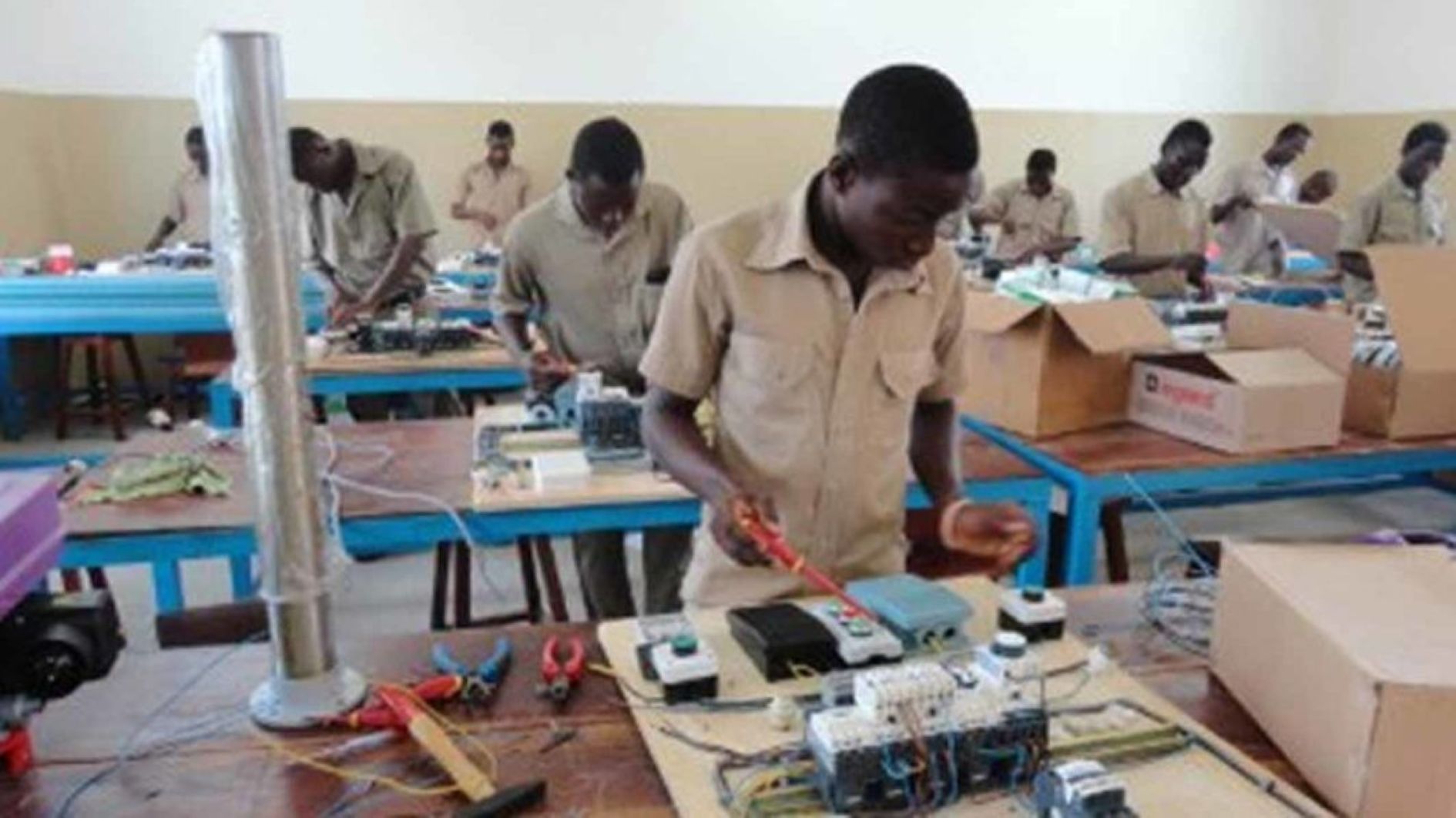
A university teacher, Prof Dagde Kekpugile, has warned that Nigeria cannot achieve meaningful industrial and economic development by merely producing graduates who hold academic certificates without corresponding practical and technical skills.
Kekpugile made the call while delivering the convocation lecture of Kenule Beeson Saro-Wiwa Polytechnic (Kenpoly), Bori, Rivers State.
The lecture, titled: ‘Mending the broken ladder: TVET and middle-level manpower development in Nigeria’, was part of activities marking the institution’s convocation ceremony.
The don, who is an engineer by training, urged students and graduands of the polytechnic to embrace Technical and Vocational Education and Training (TVET), describing practical skills as critical to addressing unemployment, reviving industries and strengthening the nation’s economy.
According to him, Nigeria must move beyond an education system that places disproportionate emphasis on certificates and theoretical knowledge.
He stressed that industries across the country require people with practical competence, creativity and employable skills that can be applied directly on the job.

“We need engineers who can design our systems, but we equally need technologists who can translate those designs into workable solutions, technicians who can operate and maintain the system, and craftsmen and artisans whose practical skills keep the industries and communities functioning,” he said.
Kekpugile challenged the students to develop practical competencies alongside their academic qualifications.
He noted that such skills could provide them with opportunities for employment, entrepreneurship, and self-reliance in an increasingly competitive labour market.
He expressed concern that technical and vocational careers are still not accorded adequate recognition in Nigerian society, despite their potential to provide sustainable employment and competitive incomes.
He said this poor perception has contributed to the continued shortage of technically skilled manpower, which in turn fuels youth unemployment, low productivity in industries, dependence on foreign experts and weak economic growth.
The lecturer argued that Nigeria’s industrialisation efforts must therefore prioritise the development of technologists, technicians, craftsmen and artisans capable of designing, operating, maintaining and repairing industrial systems.
He said without this middle-level manpower, the country’s factories, infrastructure projects and service sectors will continue to operate below capacity.
To buttress his point, Kekpugile cited countries such as Germany, China, Japan and South Korea as examples of nations that built strong technical and vocational manpower as part of their economic transformation.
He said those countries deliberately invested in TVET and integrated it into national development planning, which helped them industrialise rapidly and create millions of jobs for their youth.
He urged Nigerian youths to change their perception of vocational careers and to recognise that practical skills provide a direct pathway from education to productive employment.
“Every skill has value, and every young Nigerian student has a realistic pathway from learning to productive employment and national development,” he said.
Kekpugile specifically charged the students to value the skills acquired during their training at Kenpoly, and to continually improve their competence through practice, apprenticeships and further learning.
He maintained that greater investment in TVET by government, industry and educational institutions would strengthen Nigeria’s technical workforce, expand employment opportunities and contribute significantly to 214economic growth.
He also called on parents to encourage their wards to pursue technical and vocational education, rather than seeing it as inferior to conventional academic careers.
He said the stigma attached to vocational work must be dismantled if Nigeria is to build the kind of workforce needed for modern industry.
The acting Rector of Kenpoly, Dr George Wadike, urged students to add practical value to their academic studies and to continually improve their knowledge and competence.
Wadike said technical and vocational training could significantly improve students’ lives by equipping them with skills they can apply directly in the workplace.
He advised the students not to depend solely on theoretical knowledge, but to seek practical experience and to think creatively about how their education could be applied to solve societal problems.
He encouraged the students to “think outside the box” and develop competencies that would make them relevant in a technology- and innovation-driven economy.
Earlier, the Chairman of the convocation lecture, Prof B.B. Fakae, commended the acting rector and the institution’s management for organising the ceremony after years of backlog.
Fakae, also a former rector of the institution, described the convocation as a milestone achievement for the school.
He noted that no nation can achieve sustainable development without a strong foundation in technical, vocational, and technological skills, and urged the students to embrace practical training as part of their preparation for the world of work.
The former university administrator also attributed the progress recorded at Kenpoly to teamwork and cooperation between the institution’s management and staff.

