 Follow Us on Google News



 Follow Us on Google Discover
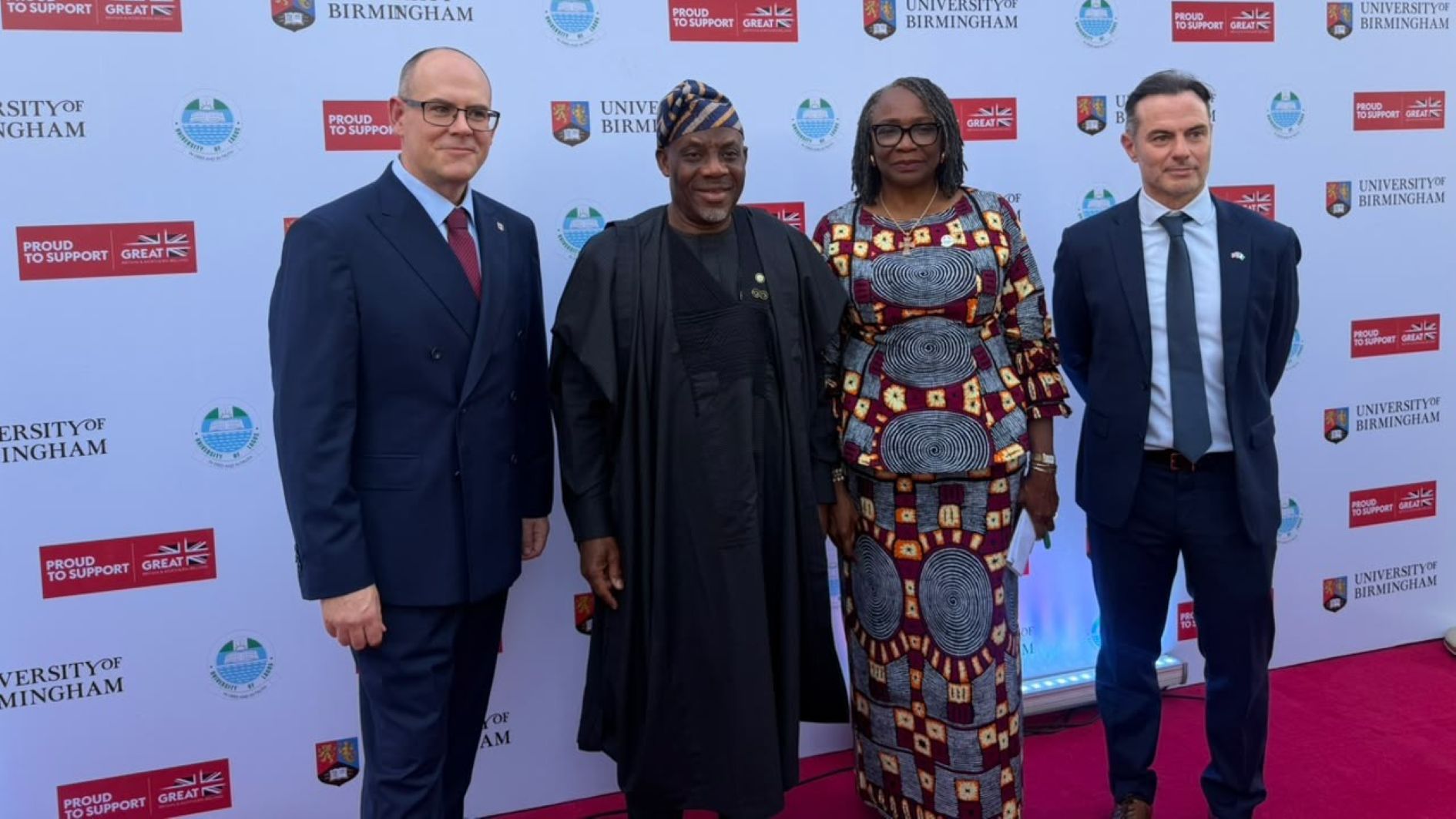
The University of Birmingham and the University of Lagos (UNILAG) have launched two joint postgraduate study programmes; Artificial Intelligence and Data Technologies and Digital Media and Communications. The official launch followed the two universities’ signing a Memorandum of Understanding in January.
The programmes were launched by Provost, University of Birmingham, Professor Nick Vaughan-Williams and Vice-Chancellor, University of Lagos Professor Folasade Ogunsola in the presence of Minister of Education Dr Tunji Alausa.
The MSc AI and Data Technologies programme combines a strong grounding in AI theory with the practical skills to develop and apply AI solutions. Through research-led teaching and real-world problem-solving, students study machine learning, deep learning, computer vision, large language models, data management and AI ethics strengthening programming, data analysis, and critical evaluation capabilities.
Students build a professional development plan and portfolio, preparing them for careers in fintech, healthcare innovation, intelligent systems design, and business analytics, in West Africa and internationally.
The MA Digital Media and Communications equips students with the knowledge, skills, and research tools to examine how we communicate in a digital world. It gives students opportunities to investigate digital cultures, reflect on key questions about power and identity in digital communications, and consider the ethical dimensions of digital media.
Students will acquire transferable skills in research methods, digital content creation, and broadcasting – engaging critically with a variety of media practices, preparing them for careers in digital communications or journalism.

Working closely with Nigeria’s Ministry of Education and National Universities Commission, the partners have developed the programmes as part of a Transnational Education Unit, based in Lagos.
Speaking during the reception to celebrate the partnership at the British Residence, in Ikoyi, Lagos, Alausa said: “Our planned collaboration and partnership with the University of Birmingham is both timely and strategic at this critical phase of Nigeria’s tertiary education advancement. It is designed to consolidate and deepen the significant gains we have made in strengthening our university system, while expanding access to world-class, high-quality education anchored in global best practices.
“This partnership reflects exactly what the University of Birmingham brings to the fore academic excellence, innovation, and global relevance. It is yet another clear demonstration of the Renewed Hope Agenda in action, translating vision into tangible outcomes for our students, institutions, and national development.”
Speaking after the launch in Lagos, Professor Nick Vaughan-Williams said: “We’re proud to launch these programmes with our partners at UNILAG. Together we are supporting Nigeria’s tertiary education and talent needs, which are central to its ambitions for economic growth.
“Universities have a critical role in preparing graduates for rapidly changing global economies – supporting skills development, entrepreneurship, and employment opportunities. Our joint postgraduate programmes will equip students with the tools to build exciting careers and contribute to Nigeria’s future success.”
On her part, Professor Ogunsola said: “The University of Lagos and the University of Birmingham’s Transnational Education (TNE) collaboration reflects UNILAG’s broader vision of reimagining partnerships built on mutual respect, co-creation, and shared responsibility. This will create more opportunities to share experiences based on lived realities and experiential learning through equitable engagement between the two Institutions.
“It also represents a major step towards globalising Nigeria’s higher education. It is a critical step toward enhancing global visibility, modernising curricula, and strengthening research fields such as AI, digital media and communications, health sciences and engineering focusing on transnational education that provides world class training in Nigeria.”
The British Deputy High Commissioner in Lagos, Jonny Baxter, said: “These new joint degree programmes demonstrate how our universities can work together to deliver world-class education that responds to the needs of a rapidly changing economy.
“As Nigeria continues to grow as a technology and innovation hub, strengthening skills in areas such as Artificial Intelligence, data science, and digital communications will be critical. This partnership reflects the strength of the UK-Nigeria relationship and our shared ambition to create opportunities for young people, foster innovation, and support sustainable economic growth.”
Country Director, British Council, Nigeria, Donna McGowan, said: “By bringing high-quality UK education closer to home, this expands opportunities for shared learning, promotes knowledge exchange, and helps develop the skills and talent needed to drive Nigeria’s future growth and prosperity. Enabling Nigerian students to access UK postgraduate degrees in-country offers a more affordable and accessible pathway to quality international education whilst contributing to national development.”

