
 Get Guardian on Google
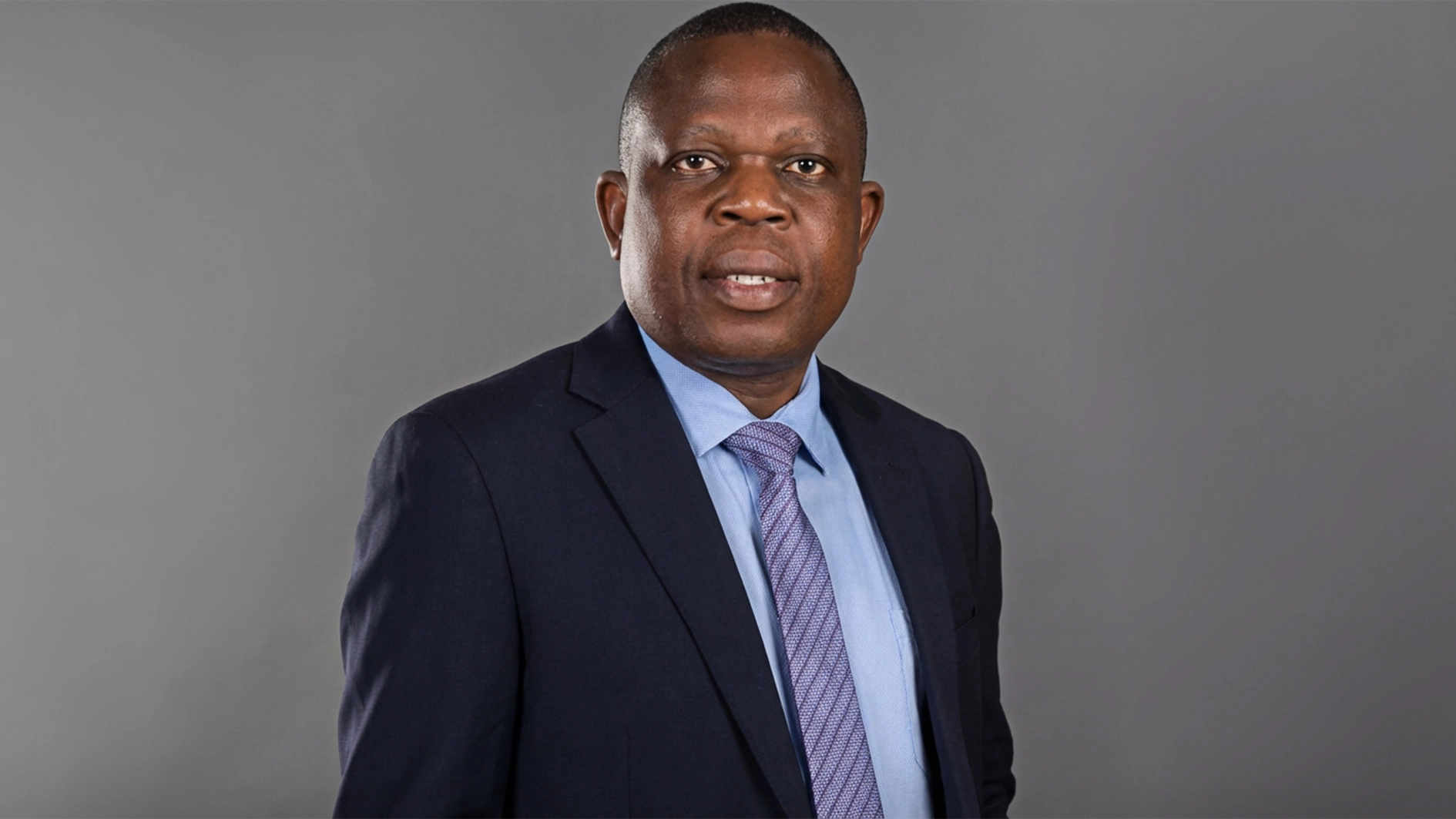
By Tim Akano
There is something tragic about a continent that sits on gold, lithium, cobalt, uranium and copper, yet imports the finished products of its own soil and borrows to educate its children. We are rich beneath our feet and poor above them. The Africa Finance Corporation values Africa’s minerals at $29.5 trillion, about a fifth of the world’s total, with $8.6 trillion still undeveloped, roughly 2.5 times the continent’s annual GDP.
Africa holds almost a third of the world’s critical mineral reserves but produces just 12 per cent of the output. These are estimated gross in-situ mineral values, not realised wealth. The real question is how much economic value Africa captures after extraction, processing, manufacturing and trade.
I liken Africa to a giant ATM, stuffed with wealth, with no password, no guard and no lock. Anyone may walk up, insert a card, withdraw and leave. Only one group is denied access: the people whose inheritance it holds.
The Withdrawals Are Real
UNCTAD estimates that $88.6 billion leaves Africa every year as illicit capital flight, nearly as much as aid and FDI combined. Between 2000 and 2015, $836 billion left, making Africa a net creditor to the world. And we call this development.
Nobody Was Rented Into Riches
Foreign capital helps. But the giants did not wait for strangers. Through the 1990s, Chinese-related capital, much of it channelled through Hong Kong, Macau and Taiwan, accounted for a substantial share of China’s foreign investment. China did not merely wait for foreign capital; it mobilised its own business networks and built domestic industrial champions.
South Korea nurtured Samsung, Hyundai and LG through state-guided credit. Sovereignty is not a flag, an anthem or a seat at the United Nations. It is the power of a people to decide their own economic destiny.
America, Britain, Europe, China and India scrutinise foreign investment in strategic sectors. They welcome capital without surrendering the keys. To tell Africa that guarding its interests is hostility to the world is folly.
Africa must recognise that we are entering an era of greater regionalisation and more selective globalisation. Africa needs African capitalists who think and act globally, not commission agents for foreign multinationals. (Africa does not need another hundred investors merely looking for concessions.
It needs a hundred African industrial champions like Aliko Dangote. Consider what one such builder looks like. Dangote’s Lagos refinery is Africa’s largest and the world’s largest single-train refinery. His cement operations span 11 African countries.
But there is something even more instructive: he has moved beyond building an African industrial giant to inviting Africans to own a piece of it. His refinery’s 10% public offering has closed, attracting investor demand reportedly three times the amount offered. This is what African capital mobilisation should look like: Africans financing, building and owning the industries that will shape their future.
The Myth of the Rescuer
Since the 1960s, Africa has been among the most intensively “helped” continents on earth: aid, loans, advisers, conferences and rescue plans without number. So why, six decades on, does poverty concentrate here more than anywhere? The number of extremely poor people in Sub-Saharan Africa nearly doubled, from 282 million in 1990 to 464 million in 2024.
The answer is uncomfortable. Help designed elsewhere, financed elsewhere and measured elsewhere builds dependence, not KNOW-HOW. Foreign investment is useful, but it is an investment, not a development philosophy. Africa has not lacked helpers. It has lacked CAPACITY. So the question must change, from how many foreign investors we attract to how many globally competitive African companies, powered by made-in-Africa technology, we build and manage.
Who holds the Pin?
Let us be honest. The ATM has no password because too many people, at home and abroad, have memorised the PIN. They include kleptocrats who profit from opaque concessions, regulators who approve what they should reject, and customs officers paid to look away.
The Nigerian Paradox
In eight days, Abuja made two different borrowing proposals to the National Assembly. On 27 October, it sought approval for $20.52 billion and €1.05 billion. On 4 November, it withdrew that proposal and submitted a revised request for approximately $7.7 billion. Public debt stood at ₦166.79 trillion in June 2026, against ₦87.38 trillion in June 2023, though part of that rise reflects the naira value of foreign-currency debt.
The 2026 budget sets aside about ₦15.5 trillion for debt service, roughly 45% of projected revenue, while the IMF puts interest payments alone above half of federal revenue. The revised borrowing request does not erase the country’s existing debt burden or the cost of servicing it.
You cannot borrow your way to greatness. And you cannot rise on a borrowed kidney. Every transplant ends in a lifetime of anti-rejection drugs. For a borrowed economy, the drug is called debt service. If Nigeria must transplant, let the donor be Nigerian: our pension money, our diaspora investment, our Dangotes.
The Ten Commandments
To wake the African elephant from her slumber, we need ten commandments:
1. Lock the ATM. Create independent investment-security commissions to scrutinise beneficial owners, sources of funds and strategic risks. Classify mineral assets as restricted, partnership-only or open. Africa must have the courage to say yes, no or not on these terms.
2. Put Pension Money to Work. African pension funds and insurers hold about $775 billion, and AfDB counts over $2.1 trillion once sovereign funds and central banks are included. Yet in some countries, 70 to 80% of institutional portfolios sit in government debt. AfDB says redirecting just 5% would unlock over $100 billion, against an annual transformation financing gap above $400 billion. Pension money is workers’ deferred wages, so protect the pensioner first, with independent trustees, diversified investments and strict fiduciary rules. Then let those savings help build the factories that will employ their children.
3. Mobilise the Diaspora. The AU puts the African diaspora at up to 200 million people. In 2025, they sent home $124.2 billion, about 1.8 times Africa’s $70 billion in FDI. But remittances are survival capital. We must turn them into ownership capital. Let us create an African Diaspora Industrialisation Fund (ADIF), with a target of $1 trillion in capital mobilisation over a decade, championed by a coalition of African capitalists. Start with bonds, then equity, under independent trustees, strict fiduciary safeguards and dual audits. It should back African-owned enterprises in pharmaceuticals, electric vehicles, batteries, data centres, semiconductors, AI, renewable energy and advanced manufacturing. China shows the destination.
4. Build African Samsungs, Toyotas and Hyundais. Use patient capital, strategic procurement and export finance to nurture companies that compete globally and retain their intellectual property on the continent. Africa must stop being merely a marketplace for other people’s inventions. We must become a factory of ideas, technology and globally competitive brands.
5. Establish Natural Resources Forensic Audit Commission. Review land, mineral, forest and other strategic concessions. Investigate illegality, expose beneficial ownership, and renegotiate or revoke agreements that violate Africa’s long-term interests, with due process, respect for lawful rights and transparent arbitration. Publish a new list of strategic minerals that must be processed in Africa: lithium, cobalt, uranium, gold and crude oil.
6. Turn Quarries into Factories. AFC calculates that $2.8 trillion of iron ore could become $25.4 trillion of steel, and $874 billion of bauxite $15.4 trillion of aluminium. Those are gross values, not profits, and refining margins can be razor-thin, so the strategy must be selective. But look at cobalt.
The DRC mined about 73% of the world’s supply in 2025, yet China is the leading refiner. Whoever controls more of the refining and manufacturing value chain captures more of the wealth. The quarry must become a factory, the factory an industry, and the industry a global brand.
7. Establish the Pan-African Commodity Exchange (PACE). What is missing is a continental platform that sets credible African benchmarks for the commodities we produce. Analysts suggest starting with gold and copper. The DRC’s move from a cobalt export ban to quotas in 2025 shows that Africa can already shape a market. I propose launching PACE in 2027, with six regional hubs: Lagos, Nairobi, Cairo, Kigali, Johannesburg and Yaoundé. Africa must have a stronger voice in determining the prices, trading standards and market rules governing its own resources.
8. Build One Market. Intra-African trade was only 14.4% of the total in 2024, against 60% or more in Europe and Asia. All 54 African countries have signed the AfCFTA, and 48 had ratified it by August 2025.
The roads, railways, ports, payment systems and customs posts must now catch up with the signatures. We cannot build continental prosperity with 54 economic islands.
9. Create Wealth for Generations Yet Unborn. Establish well-governed intergenerational wealth funds that invest in education, science, technology and infrastructure. Stop robbing the cradle of tomorrow to feed the gluttony of today’s elites. Our mineral wealth must finance not only today’s budgets but also the opportunities of generations yet unborn.
10. Re-Imagine, Re-Invent, Re-Work Our Education. A nation rises or falls on what it teaches. Africa spends about 0.5% of GDP on research, against a world average of 2.2%, and contributes about 1% of global research output despite holding over a tenth of humanity. The World Bank estimates that 89% of ten-year-olds in the region cannot read a simple sentence. Convene an African Universities Commission.
Take a saw to degrees built for a vanished economy, and replace them with programmes that teach graduates to discover, mine, refine and package the minerals beneath our feet with made-in-Africa tools. Our scholars should draw accurate maps of their respective African countries, write the algorithms and set the pace. On true-scale maps, 14 Greenlands fit inside Africa. Yet generations of African students have grown up seeing their continent through a projection that dramatically distorts its size. We must correct not only our maps, but also the mental maps through which we understand our place in the world. An education that cannot solve Africa’s problems must urgently reinvent itself.
The Generation That Has No Voice
At almost every investment negotiation, one constituency is missing: the unborn. They cannot object when minerals leave unprocessed, forests vanish or land is committed for decades. We are not the owners of Africa’s inheritance. We are its trustees. The measure of a leader is not how many investors arrive. It is how much productive wealth, technology and ownership remain when the leader leaves. Africa does not need to shut its doors to the world. It needs to stop leaving them unlocked. We are not asking the world to stop investing in Africa. We are asking Africa to stop investing in its own irrelevance. We must move from digging wealth out of the ground to building wealth out of knowledge; from exporting raw materials to exporting finished products; from begging for capital to mobilising our own; from being the world’s quarry to becoming its factory, laboratory and marketplace. Africa is not poor. Africa is under-owned, under-industrialised and under-organised.
The world’s biggest ATM must finally have a password. And that password must be African ownership, African ingenuity and African enterprise. Let the world come to Africa. Let the world invest in Africa. Let the world trade with Africa. But let no one own Africa’s future except Africans. Welcome the world. Keep the keys.
Akano, a technopreneur, geopolitical analyst and public intellectual, writes from Lagos. He is founder, New Horizons Africa Group; Out-of-School/Almajiri/Vulnerable Children-to-Tech Foundation; and Tim Akano Foundation. Convener, Semiconductor Africa and One Africa Initiatives. [email protected] www.timakano.com