 Follow Us on Google News



 Follow Us on Google Discover
…Stakeholders urge FG to unlock local pharmaceutical production, identify priority medicines
…As World Bank projects $40bn health economy opportunity
Nigeria’s heavy dependence on imported pharmaceutical ingredients is threatening the country’s health security, with stakeholders warning that disruptions in global supply chains could leave millions of Nigerians vulnerable to shortages of essential medicines.
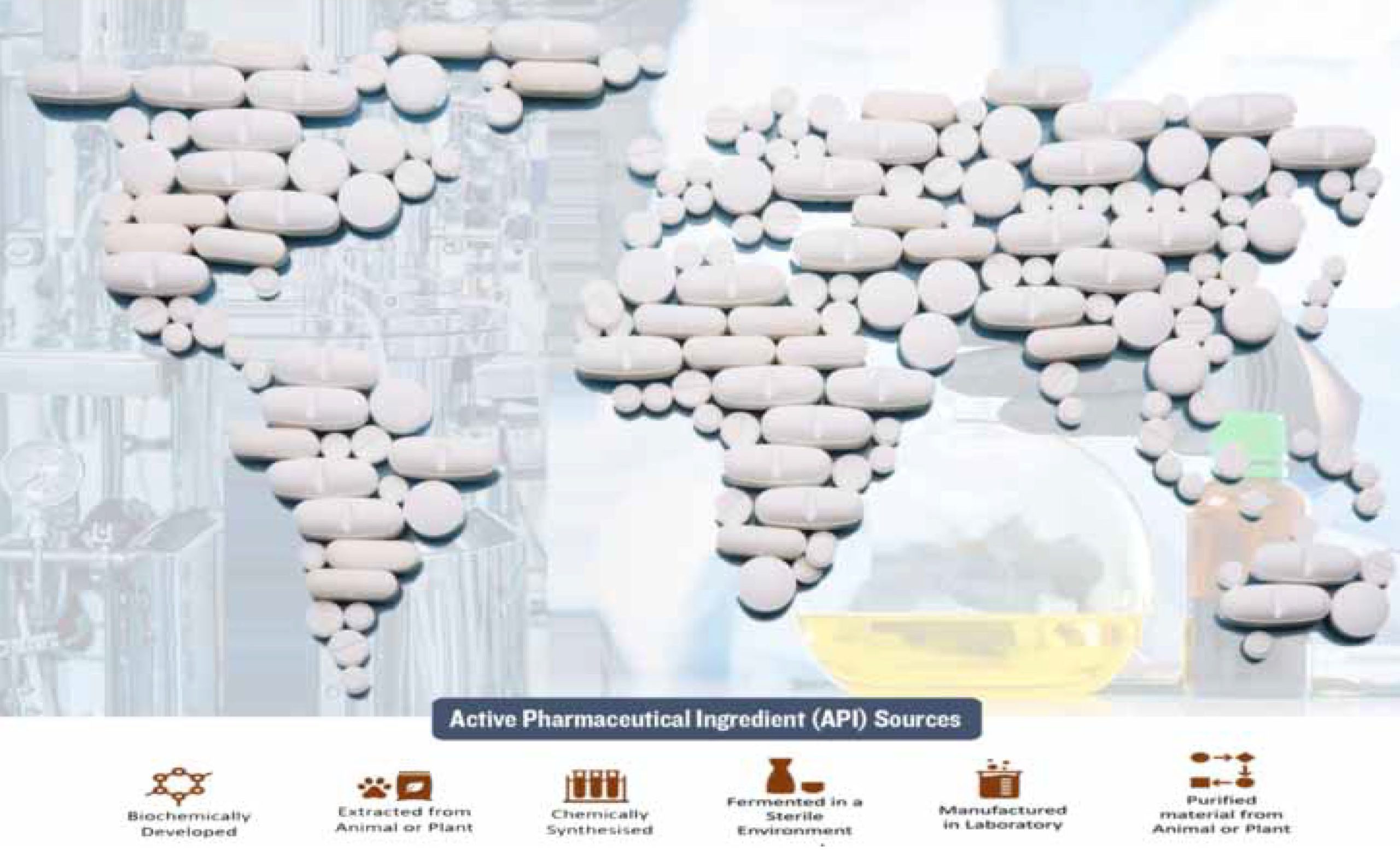
They therefore called for urgent investments in local production of Active Pharmaceutical Ingredients (APIs), the critical components responsible for the therapeutic effectiveness of medicines.
At a high-level stakeholder workshop on Accelerating Domestic Active Pharmaceutical Ingredient (API) Production for Priority Essential Medicines in Nigeria, organised by Nigeria Health Watch in collaboration with the World Bank Group and the International Finance Corporation (IFC) in Abuja on Friday, stakeholders argued that Nigeria’s pharmaceutical manufacturing capacity would remain vulnerable as long as local manufacturers continued to depend almost entirely on imported APIs, particularly from China and India.
Speaking at the workshop, Permanent Secretary, Federal Ministry of Industry, Trade and Investment, Dr Chris Isokpunwu, described domestic API production as a strategic economic imperative connecting public health, industrialisation, investment, trade and national security.

He said Nigeria could not achieve sustainable health security while depending heavily on external sources for critical pharmaceutical inputs.
According to him, developing local capacity would strengthen medicine supply chains, reduce exposure to international disruptions and foreign exchange pressures, create skilled employment and retain more economic value within the country.
Isokpunwu, however, stressed that local production must be commercially viable and internationally competitive, requiring predictable government policies, reliable infrastructure, affordable financing, technology transfer and an enabling regulatory environment.
He recalled the ministry’s earlier initiative to establish the Health Industries Corporation of Nigeria (HICON), conceived as an institutional framework to attract investment into the production of APIs, pharmaceutical products, medical equipment, herbal medicines and diagnostic devices.
Isokpunwu stated that the vision remained relevant as the government pursued initiatives, including the Presidential Initiative for Unlocking the Healthcare Value Chain, to stimulate domestic manufacturing.
The permanent secretary urged stakeholders to identify priority APIs based on Nigeria’s essential medicines needs, rather than attempting to manufacture every pharmaceutical ingredient at once.
He also identified the African Continental Free Trade Area (AfCFTA) as an opportunity for Nigeria to expand its pharmaceutical manufacturing market beyond domestic consumption and become a regional supplier.
Also speaking, the Managing Director of Nigeria Health Watch, Vivianne Ihekweazu, noted that the country’s dependence on imported pharmaceutical ingredients exposed it to exchange rate volatility and unpredictable international supply chains.
She recalled the COVID-19 pandemic, when disruptions to global supply chains exposed the vulnerability of African countries that lacked domestic capacity to produce essential medicines, diagnostics and other critical health products.
Ihekweazu observed that the 2024 executive order aimed at improving local manufacturers’ access to pharmaceutical ingredients had yet to translate into the level of progress required.
She explained that the workshop, convened with the World Bank Group and IFC, was designed to identify the obstacles preventing domestic API production and establish practical strategies for developing a sustainable pharmaceutical manufacturing ecosystem.
Ihekweazu emphasised that medicine security was an essential component of health system resilience, adding that access to affordable medicines could not be guaranteed without addressing the industrial and investment challenges affecting local production.
In his presentation, World Bank Group and IFC representative, Olumide Okunola, highlighted the enormous economic opportunities Nigeria could unlock through investments in its health industry.
He said research and modelling suggested that Nigeria’s health economy could unlock more than $40 billion in economic value, representing close to eight per cent of the country’s Gross Domestic Product (GDP).
According to him, the broader health industrial economy also presents opportunities to generate millions of additional jobs through pharmaceutical manufacturing and related industries.
Okunola disclosed that Nigeria currently has about 200 pharmaceutical manufacturers, but their production capacity remains below 40 per cent due to challenges including inadequate infrastructure, financing constraints and regulatory bottlenecks.
He noted that despite the country’s large population, established pharmaceutical manufacturing base and petrochemical resources, local manufacturers still depend on imported APIs to produce even basic medicines such as paracetamol.
Okunola warned that any major disruption to international supply chains could cripple domestic pharmaceutical production.
Using Bangladesh and India as examples, Okunola said Nigeria could learn from countries that had adopted deliberate industrial policies and investment incentives to strengthen pharmaceutical manufacturing.
He particularly advocated a coordinated approach involving industrial parks, shared infrastructure, reliable power supply, regulatory reforms and incentives to attract private investment.
He also called for stronger collaboration between health and industrial policies, noting that Nigeria must deliberately connect its essential medicines priorities with local API manufacturing.
Also speaking, the National Coordinator of the Presidential Initiative for Unlocking the Healthcare Value Chain (PVAC), Dr Abdul Muqtar, said the initiative was working with pharmaceutical manufacturers to identify and prioritise APIs that align with Nigeria’s public health needs.
He disclosed that PVAC was also collaborating with the Nigeria Sovereign Investment Authority on excipient manufacturing, stressing that local pharmaceutical production required a comprehensive approach encompassing access to capital, skilled manpower, technology transfer and market development.
Muqtar noted that the initiative was working with a local manufacturer to facilitate access to funding from the European Investment Bank (EIB), alongside technical expertise for pharmaceutical manufacturing and technology transfer.
The National Coordinator who was represented by Dr Zara Abba-Aji, further disclosed that PVAC had established an operational pooled procurement platform, Medipool, to stimulate demand and support local pharmaceutical manufacturers.
Meanwhile, Chief Executive Officer of Bloom Public Health, Prof. Chimezie Anyakora, described domestic API production as the next critical stage in the development of Nigeria’s pharmaceutical industry.
He said the country had progressed from importing finished medicines to manufacturing pharmaceutical formulations and must now move further up the value chain by producing the active ingredients locally.
According to him, Nigerian universities and research institutions must begin preparing the specialised workforce required to support the emerging industry.
Anyakora also called for stronger public participation in safeguarding medicine quality, arguing that the responsibility for tackling counterfeit and substandard medicines should not be left to the National Agency for Food and Drug Administration and Control (NAFDAC) alone.
An independent pharmaceutical consultant, Ethan Guillen, observed that even the United States remained heavily dependent on imported APIs, particularly from China and India.
He said the COVID-19 pandemic had demonstrated the risks of concentrating pharmaceutical supply chains in a few countries, making diversification of production an important global health security priority.
The stakeholders agreed that Nigeria’s challenge was no longer simply about having pharmaceutical manufacturing facilities but building the industrial capacity to produce the critical ingredients needed to sustain them.
They called for a clear implementation roadmap identifying priority APIs, investment requirements, infrastructure needs, fiscal incentives, regulatory measures, responsible institutions and timelines.
They maintained that the ultimate success of the initiative would depend on actual investments, operational production facilities, job creation and improved access to affordable, quality essential medicines rather than policy announcements alone.