 Follow Us on Google News


 Follow Us on Google Discover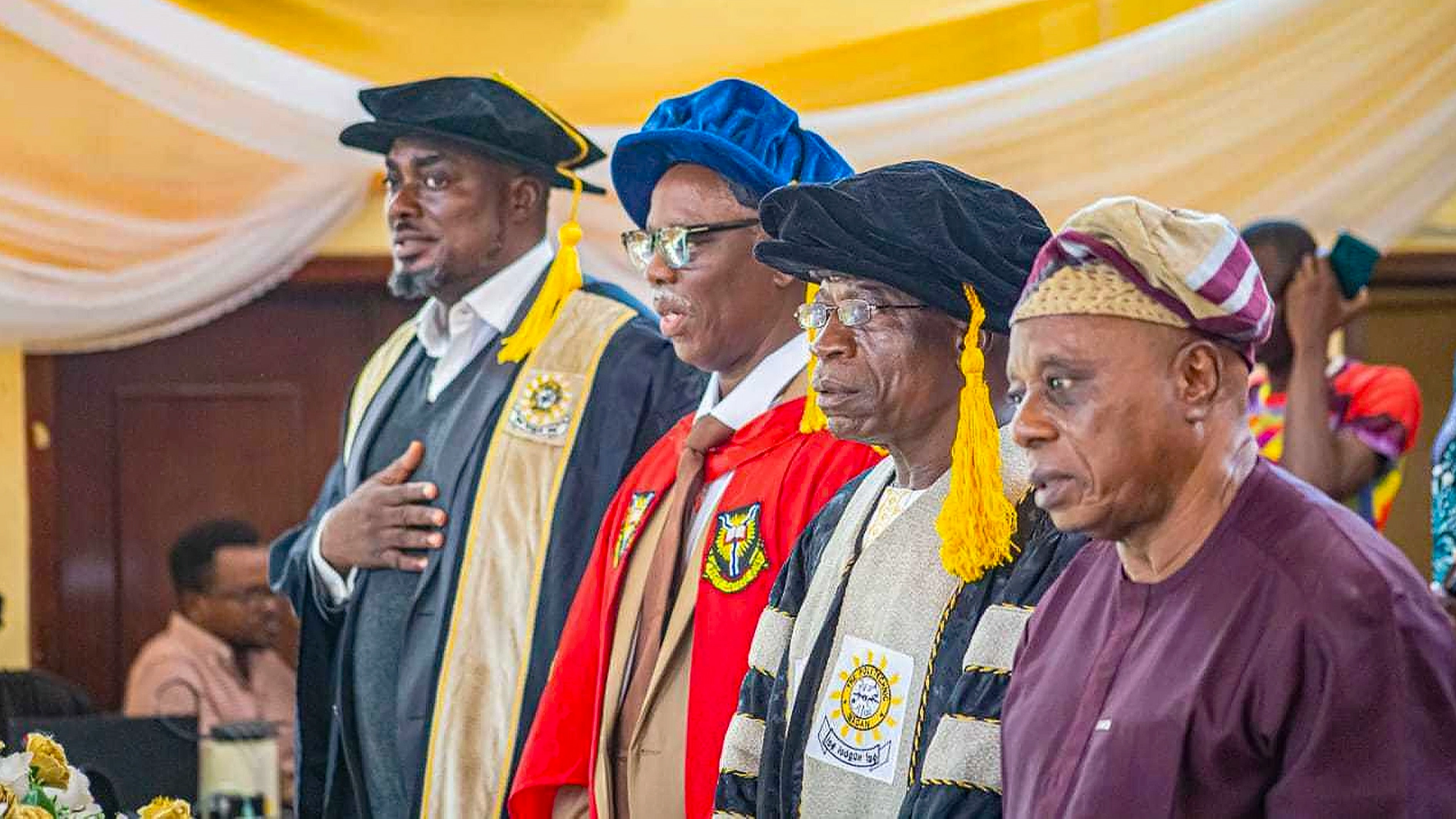
The Dean, Faculty of Engineering, The Polytechnic, Ibadan, Dr. David Adewuyi Oke, has warned that unchecked development could undermine public health, ecological resilience and the well-being of communities, urging government and relevant agencies to strengthen environmental monitoring and enforcement.
Oke gave the warning while delivering the institution’s 14th Inaugural Lecture titled, “Materials and Environment: Safer Communities from Environmental Engineering Perspective,” at the North Campus Assembly Hall of the institution in Ibadan, Oyo State.
The lecture attracted many senior academics and guests, including the Chairman of the Governing Council of the institution, Prof. Lanre Nassar; the Rector, Dr. Taiwo Lasisi; the Registrar, Dr. Taiwo Olajide; the Bursar, Mr. Abiodun Kolawole Adegbola; Chief Librarian, Mr. Olukunle Akinbola Osunrinade; the Chairman, Inaugural Lectures Committee, Mr. Femi Ipadeola; and other notable men and women of erudition, across different spheres, from within and outside the institution.
The Inaugural Lecturer said the country’s rapid urbanisation and industrial growth must be accompanied by effective environmental safeguards to prevent development activities from creating long-term risks to communities.
According to him, Environmental Impact Assessment (EIA) should not be treated merely as a regulatory requirement but as a scientific and engineering tool for anticipating environmental impacts, designing mitigation measures and promoting sustainable infrastructure development.
He said case studies involving oil spillage remediation at the NNPC Depot, noise pollution in Bodija Market, Tin Can Island Port and the Lagos-Ibadan Railway demonstrated how development without adequate environmental safeguards could affect ecological balance and public health.

Oke said environmental hazards, including noise pollution, contaminated water and indiscriminate tree felling, required greater public awareness and effective mitigation.
He urged environmental engineers to strengthen EIA frameworks through the deployment of Geographic Information Systems (GIS), remote sensing and real-time data analytics to improve environmental assessment and monitoring.
The don also called on government agencies to enforce environmental regulations through periodic audits and transparent reporting systems, stressing that the existence of laws alone could not guarantee environmental protection.
“We have environmental laws and regulations, including Environmental Impact Assessment requirements, but the question is: how effectively are these laws being monitored and enforced?
“That is where we need to do more. Having laws in place is not enough; there must be effective monitoring, compliance and enforcement to ensure that environmental standards are upheld,” he said.
Oke advocated greater integration of emerging technologies, including Artificial Intelligence (AI), GIS, Internet of Things (IoT) and renewable energy systems, into environmental management.
He said the technologies could help Nigeria balance rapid urbanisation and industrial development with ecological stewardship and sustainable development.
The engineering scholar further called for greater community participation in EIA processes, saying public awareness, education, local engagement and advocacy would promote shared responsibility for environmental protection.
He stressed the importance of protecting trees, noting that indiscriminate tree felling could have serious environmental consequences, while trees help absorb carbon dioxide and release oxygen.
Speaking after the lecture, the Chairman of the institution’s Governing Council, Prof. Lanre Nassar, called for stronger collaboration between academia and industry to ensure that research and innovation translated into practical solutions to Nigeria’s developmental challenges.
Nassar said inaugural lectures should provide opportunities for scholars to showcase their contributions to knowledge while creating platforms for collaboration between academic institutions and industries.
He urged industries and companies to attend inaugural lectures and engage with researchers whose findings and innovations could help solve organisational and national challenges.
In his remarks, the institution’s Rector, Dr. Taiwo Lasisi, said research and innovation remained critical to solving real-life challenges and advancing technological development.
Lasisi said inaugural lectures should demonstrate how scholars’ academic and research journeys could produce knowledge applicable to society.
He urged the public to make greater use of research outcomes from academic institutions, noting that innovations in areas such as artificial intelligence and renewable energy could contribute to solving developmental challenges.

