 Get Guardian on Google
As the world celebrates Diabetes Day on November 14, Nigerians living with the condition are confronting a painful reality. For many, staying alive has become an expensive daily struggle. With treatment bills running into hundreds of thousands of naira monthly, inadequate health insurance, medication shortages and rising living costs, patients are being forced to choose between their health and their families’ survival, GBENGA SALAU reports.
In Nigeria, the ability to receive medical treatment is often closely tied to the ability to pay for it.
For a worker earning a modest salary, a trader struggling to sustain a business or a farmer dependent on seasonal income, an unexpected illness can upset the entire household’s financial calculations.
The problem is compounded by the low penetration of health insurance, which leaves many Nigerians without a dependable financial safety net when illness strikes.
Consequently, families frequently resort to personal savings, assistance from relatives, loans and the sale of assets to meet medical expenses.
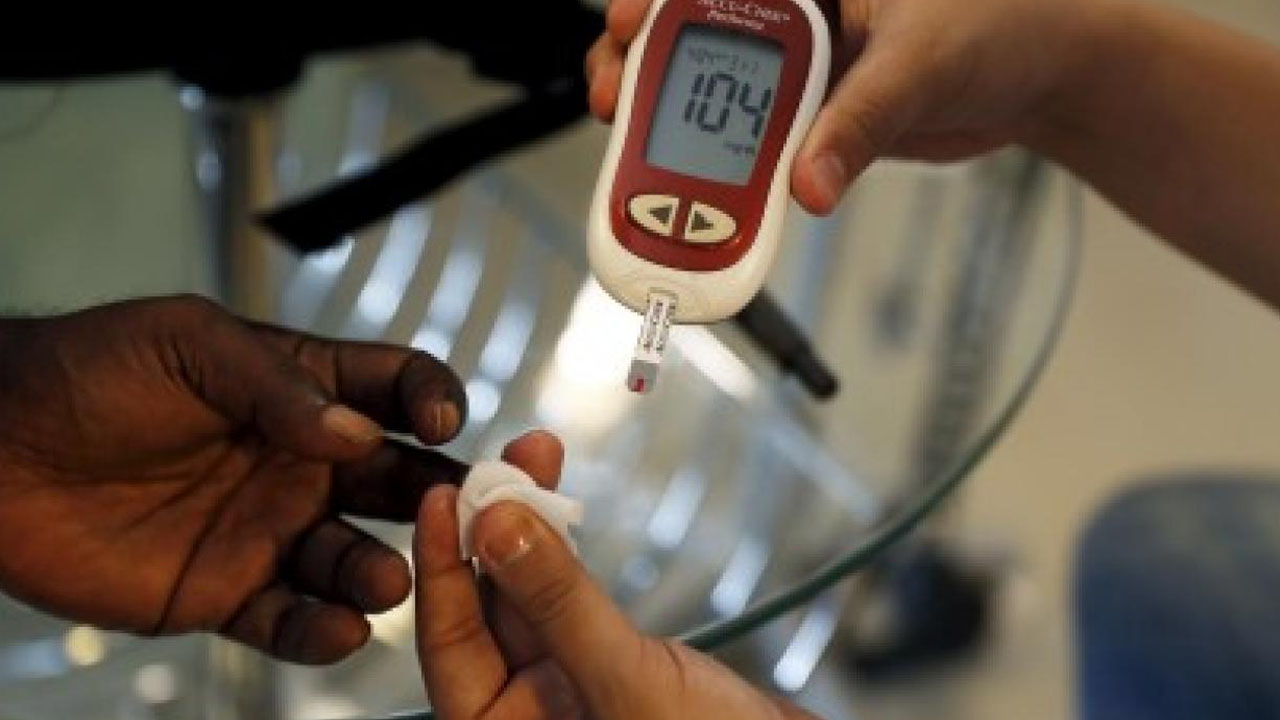
For those living with diabetes, the burden is particularly relentless. Every month brings another round of expenses for medication, insulin, laboratory tests and consultations, with no guarantee that the next prescription will be affordable.
When financial resources run out, some patients reduce their medication doses, skip investigations or compromise their nutrition, increasing their vulnerability to complications.
This is the difficult reality confronting Nigerians as the 2026 World Diabetes Day is celebrated.
Themed, ‘Early Action on Diabetes’, the campaign encapsulates how early diagnosis and timely intervention can improve health outcomes and reduce the long-term cost of care.
But in a country where healthcare financing remains heavily dependent on out-of-pocket payments, the experiences of affected Nigerians offer a sobering reminder that the country’s struggle with diabetes is not merely a medical challenge; it is also a question of poverty, inequality and the failure of financial protection to keep pace with healthcare needs.
Speaking on the country’s low health insurance contributing to late detection, diagnosis and effective management of diabetes, especially among the low income and vulnerable population in Nigeria, a Public Health Expert, Dr Jerome Mafeni, said there is low health insurance penetration, aside, there is insufficient coverage, which is the bigger challenge.
“Right now, the way the insurance coverage is designed, particularly the public health insurance, you will know that the coverage is not targeted at specific conditions. Rather, it’s more for curative purpose, focusing more on primary and basic healthcare than on specific medical conditions. And that, for me, in itself, is the shortcoming of the health insurance scheme.
“But I guess that it is easier for the actuarial agents to more easily calculate, you know, what should be, the relevant amount that should be charged for providing care when it’s focused on specific medical conditions.
“So, that’s the bigger challenge. Therefore, what happens is that even those who are enjoying some form of health insurance coverage, which is very little compared to the entire population, do not get, maximum benefit for that coverage because of the way that the National Health Insurance Scheme is designed. As a consequence, they are still having to support with out-of-pocket expenses whatever little that their existing coverage provides,” Mafeni stated.
For the second Vice President Diabetes Association of Nigeria and National Coordinator Network of persons living with Diabetes in Nigeria, Bernard Enyia, living with diabetes is not just a medical challenge, it is a relentless financial battle that follows him into every aspect of his family life.
Monthly, he spends about N150,000 for medication, another N15,000 for consultations and about N20,000 for laboratory tests and blood sugar monitoring.
Transportation takes another N15,000. In total, his routine monthly expenditure is about ₦200,000, excluding the additional costs of hospital admissions. So, when hospitalisation becomes necessary, the financial demands increase considerably.
But Enyia does not earn a regular salary. He relies on proceeds from his cocoa and small poultry farms, family support and honoraria received from diabetes medical outreaches to finance his treatment.
Sometimes, he has to choose between purchasing his medication and meeting his children’s school fees. At other times, he sells any of his personal items or borrows money at high interest to keep his treatment going.
Perhaps, the most troubling aspect of his experience is his admission that he sometimes skips or rations medication when money becomes unavailable.
“I sometimes sacrifice my children’s school fees for treatment because I need to stay alive to take care of the family,” he explained.
Enyia’s experience is not an isolated account of individual hardship. It reflects a wider challenge confronting people living with diabetes in Nigeria, where the cost of managing a chronic condition can consume household resources, exhaust savings and push families into debt.
Diabetes is a chronic condition that occurs when the body cannot produce enough insulin or effectively use the insulin it produces.
Without proper management, persistently elevated blood glucose can damage vital organs and lead to serious complications, including kidney failure, blindness, cardiovascular disease, stroke and lower-limb amputation. The scale of the challenge is considerable.
According to the International Diabetes Federation’s 11th edition of the Diabetes Atlas, published in 2025, approximately 589 million adults aged 20–79 were living with diabetes worldwide in 2024. The figure is projected to rise to 853 million by 2050.
Nigeria is also facing a substantial burden. The IDF estimates that approximately 2.99 million Nigerian adults aged 20–79 were living with diabetes in 2024, representing an age-adjusted prevalence of about 3 per cent. More concerningly, an estimated 78.7 per cent of cases in Nigeria are undiagnosed, according to the Atlas.
This means that millions of people may be living with the condition without knowing it, potentially missing opportunities for early intervention and treatment.
The global picture is equally disturbing. The IDF estimates that diabetes was responsible for approximately 3.4 million deaths worldwide in 2024.
However, in Nigeria, the challenge does not end with diagnosis. For those who already know their status, the struggle to sustain treatment is increasingly becoming a test of financial endurance.
For a consultant endocrinologist, Professor Femi Fasanmade, the financial difficulties confronting Nigerians living with diabetes are widespread, particularly among those without health insurance.
Although he acknowledged there are no specific estimates of the number of patients unable to afford consistent treatment, he described the situation as very common.
According to him, the average monthly cost of medication alone is approximately ₦100,000.
This is particularly worrying in a country where many households are already struggling with the rising cost of food, transportation, accommodation, education and other basic necessities.
The financial burden becomes even more complicated when patients require insulin, oral medications, regular laboratory investigations, specialist consultations and screening for complications.
Fasanmade observed that many patients cannot afford the recommended laboratory investigations and therefore limit their monitoring to blood sugar tests.
This creates a dangerous gap in diabetes management because controlling blood glucose is only one component of comprehensive care.
Patients also require appropriate monitoring of kidney function, cholesterol levels, blood pressure, eye health and other indicators, depending on their clinical needs.
When financial limitations prevent these investigations, complications may go undetected until they become serious. This is why Mafeni said there are huge negative implications for paying out of pocket.
In his words: “When people are having to rely significantly on out-of-pocket expenses to pay for their medical care, the consequences are that, one, the care may not be optimal because the amount of resources available to spend out-of-pocket, to take care of one’s, long-term medical needs, may be grossly insufficient. And so you will find individuals looking for shortcuts. They may either buy the drugs in insufficient quantities. They may take them not according to doctor’s prescription. They may look for alternative medical therapies that are said to work. So, they may go to a herbalist, a native doctor, and get roots and herbs as an alternative so as to be able to keep down their costs. And so the conditions themselves are not well-managed.
“Number two, because the conditions are not well-managed, the individuals will report plenty of sick time, going off work. They won’t work optimally at whatever work or trade that they are engaged in because of the fact that they are not optimally healthy. And so that affects individual productivity and national productivity. And then, because they are also having to take monies out-of-pocket, monies that would otherwise have been used for family growth, such as paying for school fees, paying for home development, even feeding the family may be diverted because some of that resource is being used by individuals to try to stay alive.
“That has consequences on the children, on the larger family, and for the country because there is less that is saved in the system to use for development purposes. So individuals have very, very little savings and no cushion for when they are faced with the sudden shocks that require resources,” Mafeni stated.
Speaking on the consequences on paying out of pocket on public health, Mafeni said: “For public health, primarily, the major consequence is that we will have the health facilities being overwhelmed with providing advanced care that could easily have been avoided. There will be the extra cost on the public sector for providing care, particularly when people have entered into complications and require either major surgery or major interventions to keep patients alive.
“There will be extra burden on the workforce, which is already very short and very constrained because they’re doing so much more work than they should otherwise have been doing, and so it makes the system more inefficient. And so from a public perspective, the country will be burdened with spending so much more resource that could otherwise have been reprogrammed for other purposes.”
Fasanmade said doctors encounter patients interrupting treatment or abandoning medical appointments because of financial difficulties almost daily. He identified poor treatment adherence as a major contributor to hospital admissions, warning that inadequate management can lead to stroke, kidney failure and foot gangrene.
For some patients, the financial demands of diabetes management have become so overwhelming that treatment competes directly with household survival.
Offum Matthew Akung spends between ₦35,000 and ₦40,000 monthly on diabetes medication alone. Although he is a beneficiary of the National Health Insurance Scheme, he said the arrangement has not provided the relief he expected because several of the medicines he requires are not covered.
As a result, he must find additional money to purchase them. He described his experience as terrible, explaining that he sometimes has to divert money meant for family upkeep towards medication. The financial pressure has also forced him to skip medication when he cannot afford it.
Also, Scholastica Onot Effiong faces a similar predicament. She spends approximately N135,000 or more every month on medication, laboratory investigations and insulin injections. The cost of monitoring her blood glucose has become particularly challenging.
Effiong disclosed that she sometimes reduces the frequency of her fasting blood sugar tests, which she ordinarily needs to conduct three times weekly, because of the cost of test strips.
While admitting to reducing her insulin doses when she cannot afford the required treatment, Effiong said she has no savings. and sometimes, has to eat whatever food is available, rather than the food she would prefer for managing her condition.
Her experience illustrates how the cost of diabetes extends beyond medication to encompass nutrition, monitoring equipment, transportation and other essential aspects of daily living.
Fasanmade explained that the cost of care increases as patients develop more comorbidities.
This is understandable because someone managing diabetes alongside hypertension, cardiovascular disease or kidney complications will generally require more consultations, medications, investigations and specialised interventions.
Reason a professor of medicine, Obi Okoro, argued that a good healthcare system should ensure that most uncomplicated diabetes cases can be managed by general practitioners, with specialist care available when clinically necessary.
He also warned that inability to pay for necessary interventions can produce negative health outcomes, including premature deaths.
Okoro questioned whether all the expenses patients are required to bear in Nigeria are justified.
Nigeria’s National Health Insurance Authority has a benefit package and an official drug list that includes several diabetes medicines, including different insulin preparations and oral medications such as metformin.
However, the existence of medicines on an official list does not automatically guarantee that every patient can obtain the specific medicine prescribed, in the required quantity, at the time it is needed.
Actual access depends on the applicable insurance package, provider arrangements, medicine availability and the implementation of the scheme.
Enyia’s experience in Cross River State illustrates this implementation challenge. Enyia said he has little confidence in the effectiveness of the health insurance arrangement available to him because medicines are sometimes declared unavailable, leaving patients to purchase them from private outlets.
According to him, there is little incentive to enrol in an insurance programme that cannot reliably provide the medicines needed for treatment.
He also lamented that existing coverage does not adequately accommodate insulin and some other oral medications, forcing him to finance much of his treatment independently.
The concerns expressed by Enyia are supported by published research. A 2023 study published in the West African Journal of Medicine, examining healthcare utilisation among people with type 2 diabetes in Nigeria, provides an important insight into the limitations of existing financial protection.
The study involved 304 patients and found that only 34.2 per cent of the patients had health insurance.
Approximately 46.8 per cent made additional payments for medicines outside their insurance coverage.
About 70.1 per cent had diabetes-related complications, nearly 19.7 per cent had been hospitalised because of diabetes-related complications within the preceding 12 months.
The researchers concluded that low insurance coverage and high out-of-pocket payments were major barriers to effective diabetes management in Nigeria.
These findings are particularly significant when considered alongside the experiences of Enyia, Akung and Effiong.
Also, an earlier Nigerian study published in 2016 also found that the average monthly expenditure on diabetes treatment among its study participants was approximately N56,245.
It reported that patients relied heavily on household savings and financial assistance from relatives, while some resorted to borrowing, skipping appointments and even interrupting their children’s education to finance treatment.
According to Fasanmade, poor treatment adherence is a major reason patients are admitted to hospitals with complications that could potentially have been prevented or delayed through consistent management.
The World Health Organisation identifies diabetes as a major cause of blindness, kidney failure, heart attacks, stroke and lower-limb amputation.
It also stresses that timely diagnosis, medication, lifestyle interventions and screening for complications can help prevent or delay many of these outcomes.
An important dimension of diabetes management that is often overlooked is nutrition. People living with diabetes are frequently advised to adopt healthier eating patterns, control carbohydrate intake, reduce excessive consumption of sugary foods and drinks, and maintain a balanced diet.
Effiong’s admission that she sometimes eats whatever food is available because she cannot afford the food she needs highlights the contradiction between medical advice and economic reality. While financial access and health system deficiencies dominate the experiences of the patients interviewed, Okoro also emphasised the importance of individual responsibility in diabetes prevention and management.
He noted that diabetes has a genetic component, particularly in some populations, and argued that the condition can often be delayed or prevented in the case of type 2 diabetes through appropriate lifestyle interventions. He challenged people to take greater responsibility for their health through discipline, healthy living and adherence to medical advice.
Referring to former President Olusegun Obasanjo as an example of someone who has remained active and taken charge of his health, Okoro recalled the former president’s controversial remark that only stupid people die of diabetes. However, this position raises an important question about the balance between personal responsibility and structural barriers.
While healthy eating, physical activity, weight management and adherence to prescribed treatment are important, they cannot replace access to affordable healthcare.
Fasanmade believed mandatory health insurance would make a significant difference. He argued that compulsory health insurance could protect families from the financial burden of raising money to treat complications that may arise when diabetes is poorly managed.
His position is consistent with the broader objective of universal health coverage, which seeks to ensure that people receive the healthcare they need without suffering financial hardship. However, mandatory enrolment alone will not solve the problem if the benefits are inadequate or medicines are unavailable.
Okoro’s recommendation that basic diabetes care should be included in health insurance packages reinforces the need to prioritise essential services and ensure that patients receive appropriate treatment before complications become advanced.
Enyia believes government should explore alternative funding sources to support diabetes care.
One proposal he strongly supports is the passage and implementation of legislation increasing taxes on sugar-sweetened beverages, with proceeds channelled into diabetes prevention and intervention programmes.
He argued that revenue generated from such taxation could provide government with additional resources to support patients and reduce the cost of treatment.
Enyia also called for diabetes intervention programmes to be properly captured in federal and state government budgets.
His argument is that diabetes should no longer be treated as a peripheral health issue that depends largely on individual charity, occasional medical outreaches or the goodwill of families. Instead, it should receive sustained public funding.
On interventions government should prioritise to ensure that people living with diabetes, especially those in the informal sector, can access affordable and uninterrupted healthcare regardless of their income or insurance status, Mafeni noted that though there is no care that is free anywhere in the world, government should subsidise treatment and management programmes for non-communicable diseases in general with a special focus on diabetes.
“If a government provides some of those subsidies, then individuals who are visiting facilities, because they know that the programmes are subsidized, they can visit a facility and receive, for example, free screening or screening at very subsidised prices.
“The government can also have special deals with the drug manufacturing companies to develop the drugs, for instance, diabetes medication at highly subsidised prices because of the fact that they are procuring those commodities at scale. And so, because of their procuring at scale, then the unit costs can significantly go down and that will also bring down the per unit costs of medication and so that when people go to facilities and even if they have to pay, they don’t have to pay the true costs, but they can pay the government subsidized costs for these medications. For me, those are the kinds of interventions that are required.
“Then of course, there will be the need to increase the community education programmes. We need to be able to get people to go out into the communities to educate the community. There are communities particularly the rural areas can very, very easily identify the early signs of diabetes and present themselves early for care so that they would not wait until when there’s a complication before people are presented for care.”
He also believed that expanding health insurance coverage will always help because just by the mere fact of providing access for individuals to care at subsidised or minimal cost in itself provides opportunities for individuals to have their diabetes discovered early and management to commence early before complication setting.
“And perhaps as we expand the coverage, we should also simultaneously be redesigning what the coverage itself is supposed to provide to the beneficiaries who subscribe. And I am in great favour of mandatory health insurance coverage. If we could make it a law that every individual should be covered mandatorily, and if you are not covered, you are going against the law, then that in itself will forcibly increase enrollment and force those who are in charge of national health insurance system to be more responsive and more accountable. Right now, this progressive slow increase is not really serving the populace optimally whether at the federal state or local levels,” Mafeni said.