Nigeria’s persistently high maternal mortality rate has again taken centre stage, with renewed calls by the Nigerian Union of Journalists (NUJ) for the Federal Government to urgently prioritise and fund family planning as a matter of national survival.
The union warned that without decisive investment in reproductive health before 2030, the country will continue to record thousands of preventable maternal deaths, with far-reaching social and economic consequences.
Speaking against the backdrop of worsening health indicators, NUJ President, Alhassan Yahaya, said family planning must no longer be treated as a peripheral health issue but as a central pillar of national development. He cautioned that failure to act would perpetuate a vicious cycle of maternal deaths, weak health outcomes and economic stagnation, undermining Nigeria’s prospects for sustainable growth.
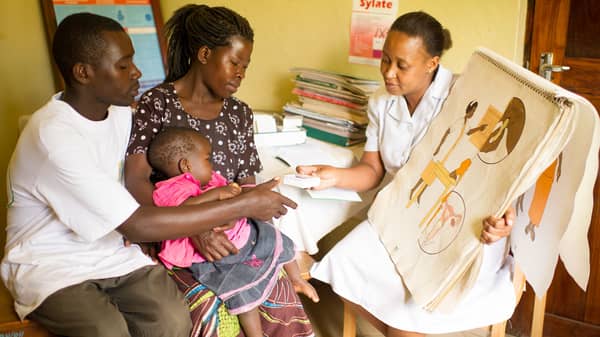
Yahaya anchored his call on the Made Possible by Family Planning campaign under FP2030, a global movement promoting universal access to reproductive health services. He stressed that family planning goes far beyond contraception, noting that it directly impacts women’s safety during childbirth, child survival, and long-term national productivity. According to him, access to quality reproductive health services enables women to deliver safely and remain healthy enough to care for their children during the critical first 1,000 days of life, a period vital to child development and broader societal wellbeing.
He warned that Nigeria’s heavy dependence on donor funding poses a serious threat to the sustainability of maternal health gains, particularly as international partners reduce or freeze support.
Yahaya urged the Federal Government to take full ownership of FP2030 commitments by increasing domestic funding, ensuring the timely release of funds and strengthening transparency and accountability in their utilisation.
“Funding delays and mismanagement are killing women. We must stop treating family planning as an afterthought. It is proven that family planning reduces maternal deaths by about 40 per cent. That statistic alone should compel our leaders to act,” he said.
The NUJ president argued that meaningful progress toward universal health coverage would remain elusive unless family planning is fully recognised and funded as a cornerstone of national development. He proposed innovative healthcare financing models, including dedicating a percentage of government contracts across sectors to health funding. He questioned why large infrastructure or agriculture projects could not contribute a defined share to healthcare, warning that over-reliance on annual budgetary allocations had repeatedly failed the system.
Yahaya also aligned with global calls to leverage taxation to strengthen healthcare financing. He advocated increasing the statutory allocation to the Basic Health Care Provision Fund from one per cent of consolidated revenue to five per cent, describing the move as a potential game-changer for healthcare delivery.
“This single step could transform our healthcare system. The era of total dependence on donors is over. Nigeria must take responsibility for its own future. Without alternative funding, universal health coverage will remain a mirage,” he said.
He further identified basket funding as a pathway to equitable healthcare access, explaining that pooled resources could reduce out-of-pocket spending, expand insurance coverage and ensure communities directly benefit from health investments. However, he stressed that such reforms would require strong governance, competent management and reliable systems.
Beyond government action, Yahaya urged the private sector to play a more active role, describing health investment as both a moral obligation and an economic necessity. He noted that productivity across all sectors would remain fragile without a healthy population.
He also underscored the responsibility of journalists and broadcasters in driving the family planning agenda, stressing that sustained sensitisation and behaviour change require strategic communication, quality content and long-term investment in public awareness campaigns.
Reaffirming NUJ’s commitment to advocacy, Yahaya described maternal deaths as a national tragedy rather than mere statistics. He warned that every life lost represents a systemic failure and insisted that Nigeria must act with urgency. “Maternal mortality is not just a statistic; it is a national tragedy. Every life lost is a failure of our system, and we must act now,” he said.