
 Get Guardian on Google
The Florence Ayodele Ajao Foundation (FAAF) has called for urgent action to tackle the growing burden of diabetes through early detection, affordable care and increased public awareness.
The foundation also advocated better access to affordable nutrition and regular blood sugar checks to help patients manage the condition and prevent complications.
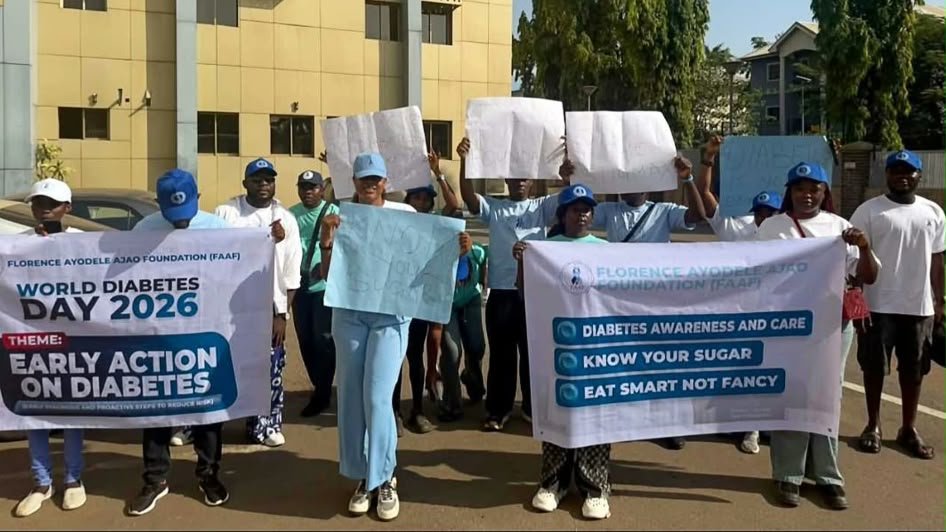
Its founder, Olayinka Deborah Ajao, made the call at an event organised by the foundation in Abuja to mark the 2026 World Diabetes Day, with the theme, “Early Action on Diabetes”.
She said FAAF was introducing food support and glucose monitoring devices for people living with diabetes as part of efforts to make disease management more accessible.
According to her, the initiative would provide patients with locally sourced and affordable food options that could help them manage their blood sugar levels without placing additional financial pressure on them.
Ajao noted that many patients struggled to maintain recommended diets because of the rising cost of food, stressing that affordable alternatives could make a difference when combined with prescribed medication.
“We are trying to tell people that there are some locally sourced foods that are cheaper and available in the market. We are giving them these foods to help manage their sugar levels through portion control and moderation,” she said.
She added that the foundation would distribute glucometers to beneficiaries to enable them to check and record their blood sugar levels regularly.
Ajao, however, clarified that FAAF would not provide medication, explaining that its intervention would focus on nutritional support, awareness and emotional encouragement for patients.
She said the foundation was established in honour of her late mother, Florence Ayodele Ajao, who lived with diabetes before her death.
The founder disclosed that losing a friend to the condition in 2021 further strengthened her resolve to promote awareness, adding that she had sustained the campaign since November 14 of that year.
According to her, the foundation initially concentrated on visiting patients in hospital diabetes wards to offer emotional support and encouragement but would expand its interventions following its formal launch this year.
She identified ignorance and stigmatisation as major challenges confronting people living with the condition, urging Nigerians to demonstrate empathy and kindness towards affected persons.
Ajao also said the foundation incorporated cardiopulmonary resuscitation (CPR) training led by Obe Charity Foundation into its activities to equip participants with basic emergency response skills.
Speaking at the event, a medical practitioner, Dr Chinasa Tony, urged Nigerians to undergo regular medical checks, particularly those with a family history of diabetes.
Tony, who said her passion for diabetes awareness was influenced by the loss of two loved ones and her mother’s experience with the condition, described it as manageable with appropriate medical care and lifestyle adjustments.
She identified healthy eating, regular exercise and portion control as important measures for preventing and managing the condition.
“Diabetes is not a death sentence. It can be prevented, controlled and managed,” she said.
The medical practitioner advised patients to adhere to prescribed medications and ensure that insulin treatment was properly monitored to prevent dangerously low blood sugar levels.
She also urged Nigerians to check their blood glucose levels regularly rather than wait until symptoms developed before seeking medical attention.
Also speaking, a counselling psychologist and resource person at the event, Chibuzor Stella, highlighted the psychological challenges associated with the condition, including denial, anxiety, depression and feelings of hopelessness.
She said early detection helped patients understand their health status, accept their condition and take appropriate steps towards managing it.
According to her, acceptance was the first step towards effective self-management, followed by medication adherence, appropriate nutrition and proper medical care.
Stella urged family members and caregivers to provide emotional support rather than subject patients to constant criticism and restrictions.
She also cautioned healthcare professionals against adopting an excessively harsh approach when advising patients, saying this could increase anxiety and discourage them from managing their condition.
“Medical personnel should not be like food police. You see most of them saying, ‘Don’t, don’t, don’t,’ thereby putting fear, anxiety, depression and a state of hopelessness in the patient,” she said.
She advocated counselling for patients struggling with medication adherence or dietary restrictions, adding that healthcare workers should encourage moderation rather than resort to intimidation.
Earlier in the day, participants embarked on a morning road walk as part of activities to promote awareness and encourage healthier lifestyles.
World Diabetes Day is observed annually on November 14 as the leading global awareness campaign on diabetes mellitus.
The World Health Organisation (WHO) estimates that nearly three out of every four adults living with diabetes in Africa are unaware of their condition, exposing millions to potentially life-threatening complications.
Globally, one in nine adults is currently living with the condition, while the number is projected to reach 853 million by 2050.