 Follow Us on Google News


 Follow Us on Google Discover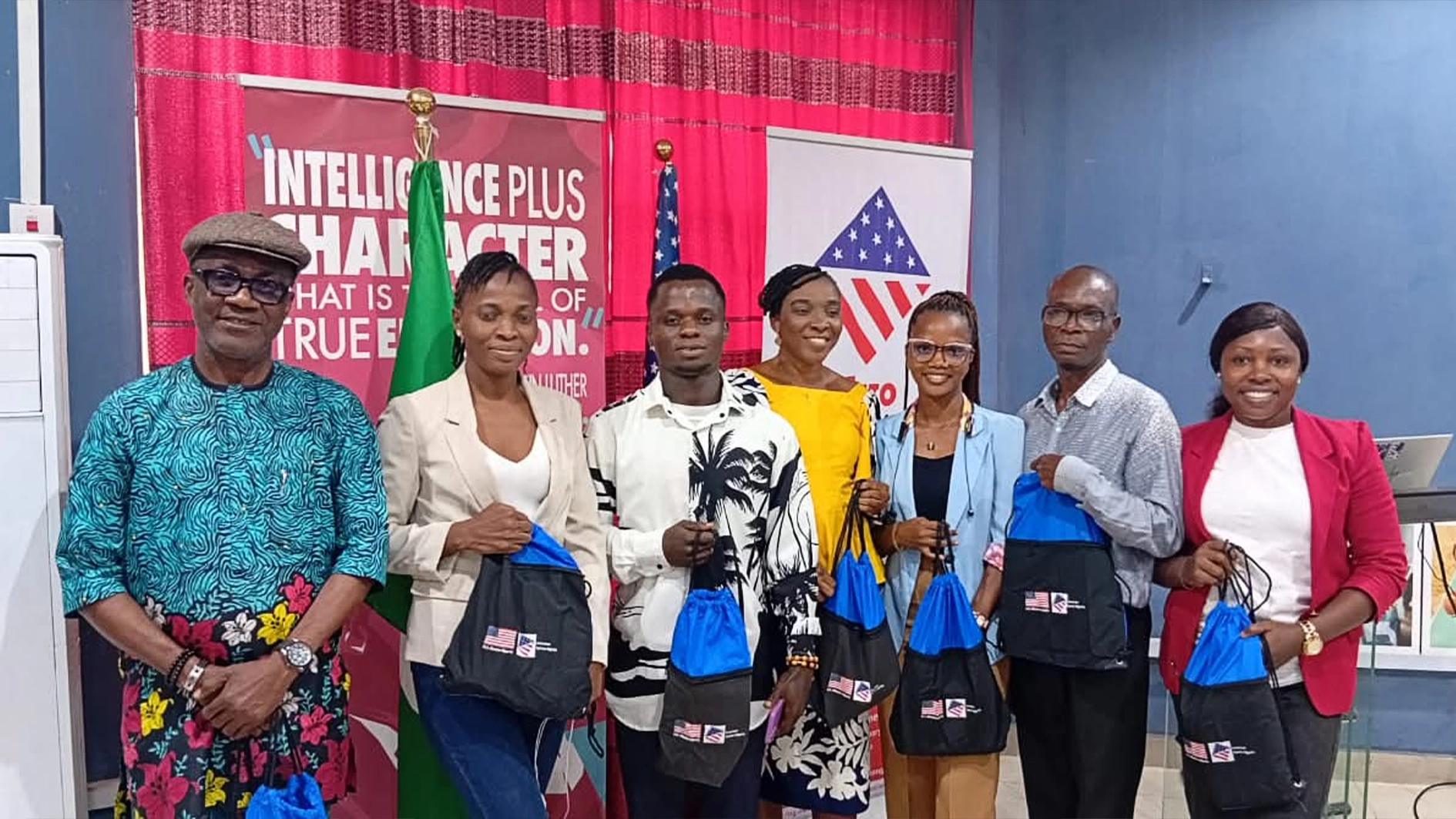
• AI is transforming reputation, communication
As part of efforts aimed at empowering journalists with emerging technologies, the United States Consulate General, Lagos, recently organised a two-day capacity-building programme for media men in Lagos and other selected states, focusing on the application of Artificial Intelligence (AI) in modern news production.
Titled, ‘AI for journalists: U.S. technologies transforming news production,’ the training equipped participants with practical knowledge of emerging technologies reshaping news gathering, content production and audience engagement, as well as strategies for integrating AI into newsroom workflows without compromising professional journalistic standards.
The programme also highlighted the growing importance of AI literacy in journalism as news organisations worldwide increasingly adopt technology to enhance newsroom efficiency, improve content production and expand audience reach.
The lead facilitator for the first session, Chris Coates, is the Senior Director of Local News at Lee Enterprises.
Coates, who spoke on ‘tools, trust and the human advantage’, argued that AI replaces tasks, not journalists. He also corrected the impression that AI will lead to job losses. He demonstrated how generative AI can be integrated safely into journalistic workflows to ingest and interrogate massive documents such as navigating huge documents that has thousands of pages to get story, instructing journalists to ask targeted, investigative questions rather than relying on surface-level summaries, while warning that AI is never a source and all outputs must be rigorously context-checked.

Saying ChatGpt was well ahead of others, he also recommended Claude and others. He cautioned against against depending on free versions of any tool because they cannot provide quality and accurate information like paid versions.
Coates also advised journalists to purchase the tools and avoid the free ones that will make errors and mistakes. He stressed human-AI collaboration, as AI is a tool to automate gruelling manual labour like transcription and data crunching, thus freeing up journalists for critical thinking, ethics, and boots-on-the-ground investigative reporting.
Concerning AI replacing tasks and not journalists, he said the difference is how you ask(context-goal-focus). This is where it helps: documents, data, busywork. This is not replacing reporting. Use it responsibly: not a source, always reviewed. This gives you time back for reporting. Training matters more than tools.
The speaker for the second session, Ken Kiunga, the Google News Initiative Trainer for Sub-Saharan Africa’s (SSA)session focused on practical, hands-on integration of digital tools. He took participants through advanced AI tools such as Google Gemini, GoogleTrends, Gems, Gemini Canvas, NotebookLM, and Deep Research. The session covered document analysis, investigative verification, and using AI-powered generation for visual storytelling, video production, and graphic aids.
Kiunga further outlined the specific tech toolkit introduced by Google’s trainer, NotebookLM for document anchoring, Deep Research for sourcing, and visual models for multimedia engagement.
Organised through the Public Diplomacy Section of the US Consulate General, Lagos, the initiative is designed to expose journalists to practical applications of AI in newsroom operations while strengthening their capacity to adapt to the rapidly changing digital journalism landscape.
Meanwhile, the Lagos State Commissioner for Commerce, Cooperatives, Trade and Investment, Folashade Ambrose-Medebem, has disclosed that Artificial Intelligence (AI) is transforming reputation and communication in the nation’s marketing communication ecosystem.
Speaking at the 12th edition of the Women in Marketing Communications Conference and Awards (WIMCA) held in Lagos recently, she, however, cautioned, “do not compete with AI: Understand it, question it, use it. In fact, ask silly questions. In my view, there is no such thing as silly questions.”
Saying the technology must be properly understood, she stressed the place of judgement, empathy, intuition, imagination and emotional intelligence.
To her, marketing communications professionals must blend career growth with personal growth.
She further cautioned, “you shape perception, protect corporate reputation. But influence comes responsibility. You must remain teachable.”
Themed, ‘Grow, give, glow: Building resilience for distinction,’ WIMCA convener, Joshua Ajayi, in his welcome remarks, said, “we are not just hosting an event, we are helping write what the marketing and communications industry looks like for the women coming up behind us.”
Speaking on the theme, he noted, “growing means you are still always willing to learn new things, even after you’ve mastered ten other things. Giving is the part people underrate: Showing up for another woman’s success the same way you would want someone to show up for yours.
“Resilience, in this context isn’t really about grinding your teeth and surviving another hard year, it’s somewhat like architecture; building something that can take pressure without collapsing; that bends instead of snapping; and that leaves enough room for the next woman to build on top of it,” he stated.
There were panel sessions on various topics such as, Managing disruption, burn out and bias; Artificial Intelligence and the new realities of marketing to women; Grow, give, glow: Emotional Intelligence for peak performance and distinction; Career excellence: Growing beyond briefs and targets; Wealth, financial security, and your career journey.
The event brought together leading female professionals and stakeholders across the nation’s marketing communications and business landscape.

