 Follow Us on Google News


 Follow Us on Google Discover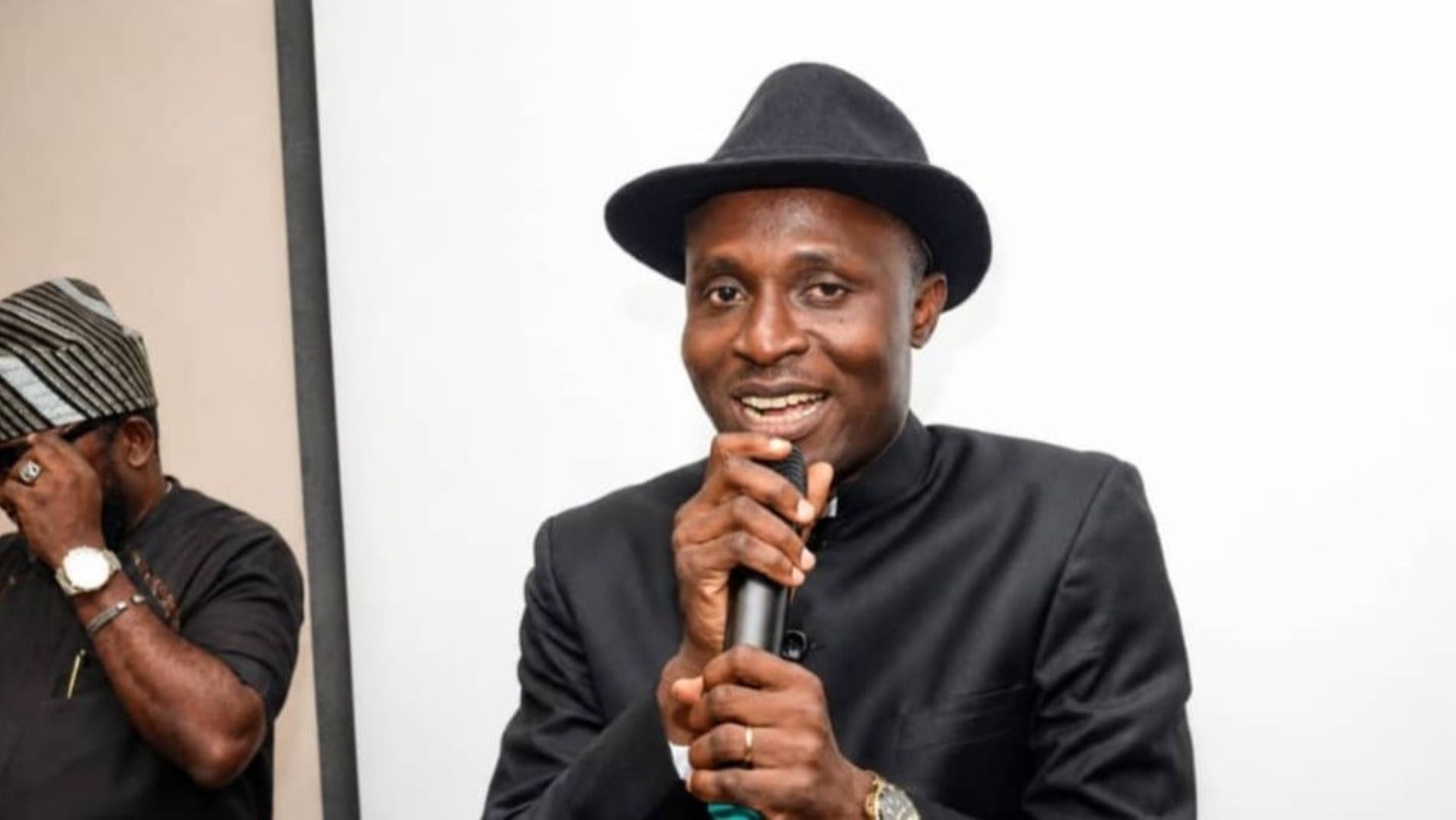
“The problem of leadership in government for years has kept Nigeria in perpetual debate whether we are truly a country or a nation.”
Many scholars have argued tentatively, that, Prof. Chinua Achebe’s theory of Nigeria’s problem, which is squarely the failure of leadership alongside sensational hypocrisy and arrogance of most political classes, since the return of democratic rule in 1999. A clear indication that they were selected by their godfathers, and not by true election. In this regard, citizens have been trapped in poverty, lamentations and seem helpless in enjoying good governance.
Unexplainably, every four years, while yearning for a change, Nigerians troop out to vote for their choice candidates, but their hope ends by arrogant institutional breach of trust, and those who ordinarily cannot government communities end up ruling us. A system that has caged development since the advent of democracy, not excluding past military rules. These are main concerns raised by eminent Nigerians in this memoir.
And so, how we got to this stage of complete loss of conscience is what no one can boldly explain or define.
The kind of leadership the country has paraded since the return of democracy in 1999 has not truly given citizens the kind of effective leadership. This is because elections are not true reflections of results declared because of rigging and manipulations and the attitude of some political class. The courts on their own worsen the situation by declaring who governs us rather than the electorates deciding through the ballots who should govern citizens. And that is why, year in, year out, more citizens are impoverished, unemployed, and regrettably, insecure, due to insecurity and lack of quality leadership.
It is a known fact that the primary responsibility of every government is the security and welfare of its citizens as enshrined in the1999 constitution as amended. The problem of leadership in government for years has kept Nigeria in perpetual debate whether we are truly a country or a nation.

These are also fundamental questions raised by most of the contributors in this memoir, they include, Alhaji Abdulfatai Dawodu, MFR, Senator Anthony Adefuye, the Olugbon of Lagos, Mr. Dennis Amachree, MON, Ex-DSS Director, Mr. Sam Omatseye, Chairman, Editorial Board of the Nation Newspaper and fierce columnist, Prof. Patrick Egbule, Ex-Vice Chancellor, University of Agriculture and Environmental Sciences, Imo State, Prof. Andrew Obafemi, former National President, Nigerian Cartography Association, Chief (Dr) Nzeribe Okegbue, Security Expert and administrator, JP, Dr. Kabir Adamu, Mark Orgu, the Editor, and Mr. Joe Ejiofor, policy analyst and Deputy Registrar, Yabatech.
The Memoir and Insights
On his part, Prof. Patrick Egbule, argued in the Memoir, that the responsibility for safeguarding elections rests with governments, electoral commissions, security agencies, political parties, civil society organizations, the media, the judiciary, and citizens. According to the Professor of Agricultural Economics, he noted that through transparent electoral administration, secure technology, effective law enforcement, civic education, responsible political conduct, and respect for democratic principles, nations can guarantee peaceful transfers of power, strengthen democratic governance, and promote lasting political stability and national development. Mr. Dennis Amachree, was of the view that to achieve a peaceful transition in 2027, the country’s leadership, security institutions, and the Independent National Electoral Commission (INEC) must commit to giving Nigerians a process they can see, verify, and fully believe in.
Our Respected elder celebrant, Sen. Anthony Adefuye chronicles his journey to politics and the role of the church (St. Dennis Catholic chur, Akoka), played in making his dream a reality, and also stated why he chose not to contest the election again after he won the 1992 Lagos East Senatorial district. The Senator also reaffirmed his consistent view on why the parliamentary system of government remains the solution to the country’s challenge while supporting state police and credible election in 2027. This is even as he fearlessly noted that most people that go into politics after their time are to steal and enrich themselves, while stressing that those that want to make real money go into business, not politics and that was why he remained in business.
Alhaji Abdulfatai Dawodu, MFR, an advocate of effective local government administration, wrote extensively on why local government is vital to solving government challenges. In his words, he said, to make the local governments meaningful, viable and respected, the planned regional development commissions should be scrapped immediately. The proposed duties of the regional development commissions should be shared between the local and state governments and backed up by appropriate laws; Local government council revenues should be well defined and councils should be allowed to levy taxes and duties, and collect the same within the economic plan of the state.
Also, in his interview with Afrikanwatch Crew, he highlighted that at the time, the country had independence, he was 25 years, with high expectations that the country would fly higher, but the case was the reverse.
Alhaji Dawodu noted that the time of Awolowo ,Azikwe and Ahmadu Bello’s regime and the rest of them are better than what we have now. Those people were prepared for independence, and they had their thoughts on how to make Nigeria great. It wasn’t corruption that placed them there, it was nationalism. They were all prepared and they tried their best. He also narrated his encounter with the late MKO Abiola and how they had relied on IBB to intervene on Abiola’s court case before the 1993 election.
“We were at Abuja for the final campaign, and the election was near Saturday. Now, after completing the last campaign in Abuja , we retired to our various hotels. It was there that my assistant, Hajia Fassi Lawal (From Kano state), called to inform me that the election will be cancelled. She was staying with the wife of Abiola at their own side of the hotel, Hilton, So these women were always following the wife. She said there would be a court session to decide by 9:00 p.m. That they will not hold the election on Saturday and this call was on a Thursday. Abiola’s wife, Kudirat, collected the phone and I asked if our presidential candidate could get in touch with Gen, IBB, to settle this matter or get to his friends abroad. She said they have tried and that Abiola already contacted Babagida and he said that if it was a court case that he didn’t want to get involved”
The Iconic and ace columnist, Mr. Omatseye, spoke on the election of 1979. 83, but queried the British for Nigeria’s independence. When asked how the country got independence, he said: What independence? Who gave us independence? The people who gave us independence, did they ask our permission if we wanted to be put together as a nation? The British people, did they ask. The British just wrapped us together. And said; this is Nigeria. Did the Igbo man say that he wants to live in a country with Urhobo man or Itsekiri or Urhobo man or Hausa Man.? He argued that the country is yet to have true nationalists.
Prof. Andrew Obafemi, in his contributions, was more of an appeal. Nigeria is our beloved country, and we must all strive to contribute together our quota to its progress irrespective of its numerous challenges. We cannot afford to remain distracted any longer and continue only to watch the wrong footage and negative impacts of insecurity and elections devoid of integrity and credibility in our nation. Let our renewed hope be that peaceful and credible elections in a secured environment is possible and should be guaranteed.
Dr. Nzeribe Okegbue, was of the view that, democracy demands that contestants respect established rules, reject violence, discourage inflammatory rhetoric, and demonstrate the maturity to accept credible electoral outcomes or pursue lawful channels for dispute resolution.
Orgu, dealt with the failure of leadership from 1967-till date, and boldly argued that institutional loyalty to individuals rather than to the rule of law has made leadership impotent and infertile while concluding however that the ruling class must change their character towards leadership from the local to state and federal and show humility, compassion and commitment to citizens welfare.
Mr. Ejiofor on his contribution affirms that, electoral reforms should be supported by competent institutions with adequate funding, continuous voter education, and the political will to enforce electoral laws without bias.
This Memoir is therefore recommended for all Nigerians who are in search of truth about a country ravaged by weak and corruptible leadership.
Orgu is the Editor-in-Chief, Afrikanwatch Network, ([email protected])

