

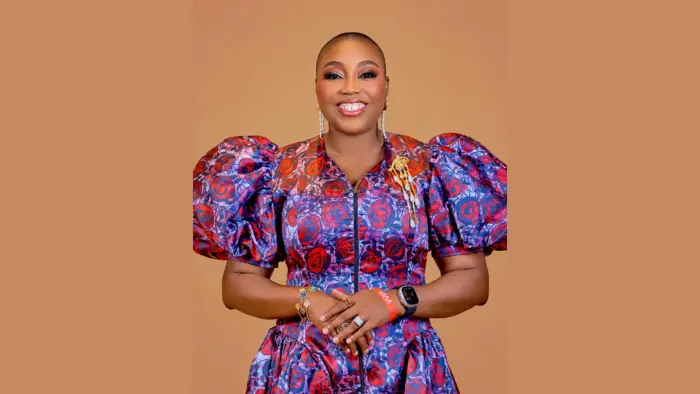
Kiki Okewale is building more than a fashion business; she is creating opportunities for women, championing African craftsmanship, and redefining how the world sees Nigerian textiles. As a pioneering fabric manufacturer and creative director, she has turned bespoke fabric printing into a platform to celebrate African identity, heritage, and luxury. Her influence extends beyond the textile industry.
Through Women High Achievers Trybe (WHATRYBE), she has built a community of more than 10,000 women, fostering mentorship, collaboration, and shared success. As co-founder of Women Radio 91.7FM, she has helped amplify women’s voices, while her Stitches of Hope Foundation has equipped more than 5,000 women and girls with skills to build sustainable livelihoods. From representing Nigeria at the prestigious Thai Silk Festival to empowering women to achieve economic independence. In this interview, she speaks on her passion for cultural pride and her commitment to ensuring that more women have the skills, platforms, and opportunities to thrive.
What inspired you to become an entrepreneur in the fabric printing industry?
My journey into fabric printing began with a need I had encountered repeatedly through Hope Fashion Group. We would introduce a fabric that our customers loved, and when they wanted to purchase it again, or when new customers wanted the same design, we could no longer find it in the market. For a fashion business that values distinctiveness, this presented an important question: how do you maintain the uniqueness of your offerings when you do not have control over the availability of the fabrics you work with? That experience got me thinking beyond sourcing fabrics to creating them. Rather than continue to depend entirely on what was available in the market, I saw an opportunity to develop the capacity to print our own designs and, in doing so, have greater control over exclusivity, consistency, and availability.
That thinking eventually led to Fabric Printing Global. What interests me about the business is that it addresses a need within our own fashion operations while also providing a service to other designers, fashion businesses, and customers who want to bring their creative ideas to life. More broadly, it reflects how I approach entrepreneurship. I am interested in understanding the entire value chain of an industry, identifying where the gaps are and finding ways to build businesses that address those gaps. That thinking has informed the wider ecosystem we are developing across fabric printing, fashion production, and related offerings.
What has been your biggest challenge as a woman in business?

One of the biggest challenges is having to navigate expectations that have very little to do with your actual competence. In business, a woman can find herself having to establish her credibility repeatedly, even when her experience and results should speak for themselves. There is also the practical reality of building a business in Nigeria. Access to affordable capital, infrastructure, reliable power, foreign exchange, and the general cost of doing business are challenges for entrepreneurs. But women can face additional difficulties, particularly where access to collateral, business networks and investment opportunities is concerned.
I have learnt that being good at what you do is important, but it is not always enough. You must understand your numbers, build the right relationships, negotiate well and be willing to make difficult decisions. You also have to develop the confidence to occupy your space without feeling that you need to constantly justify your presence. I do not believe every difficulty a woman encounters is necessarily because she is a woman. That would be too simplistic. But where gender creates an additional barrier, we should be honest about it. The goal is not to make business easier for women by lowering expectations. It is to ensure that women have a fair opportunity to compete, lead, and succeed.
How has your work helped promote African culture through fashion?
Fashion is one of the ways we communicate who we are. Our textiles, patterns, colours, and creative traditions carry stories about our history, our communities, and how we see ourselves. When African fashion is developed and presented with intention, it does more than create beautiful clothing; it gives our culture visibility and commercial value. My work across fashion and fabric printing has given me an appreciation for the relationship between creativity and production. We have talented designers and creatives who understand how to translate African influences into contemporary fashion. What matters is building the capacity to produce quality products consistently, so that our creativity can compete in wider markets.
What inspired you to establish Women High Achievers Trybe?
WHATrybe came from a very personal place for me: my belief in sisterhood and the difference women can make in one another’s lives. I have always felt that there is something powerful about women having a community where they can show up as themselves, share their experiences, and know that the people around them genuinely want to see them do well. We all have moments when we need encouragement, perspective, a listening ear, or an opportunity that we may not have been able to access on our own. But sisterhood, to me, is much more than friendship or being present for one another during difficult times. It is also about recognising the value we each carry and being intentional about creating room for one another to grow.
A woman’s experience, knowledge, or connection may be exactly what another woman needs to take her next step. And sometimes, the most valuable thing we can do is share what we have learnt rather than allow another woman to struggle through something we have already figured out. That was the spirit behind Women High Achievers Trybe. I wanted to create a
