 Follow Us on Google News
 Follow Us on Google Discover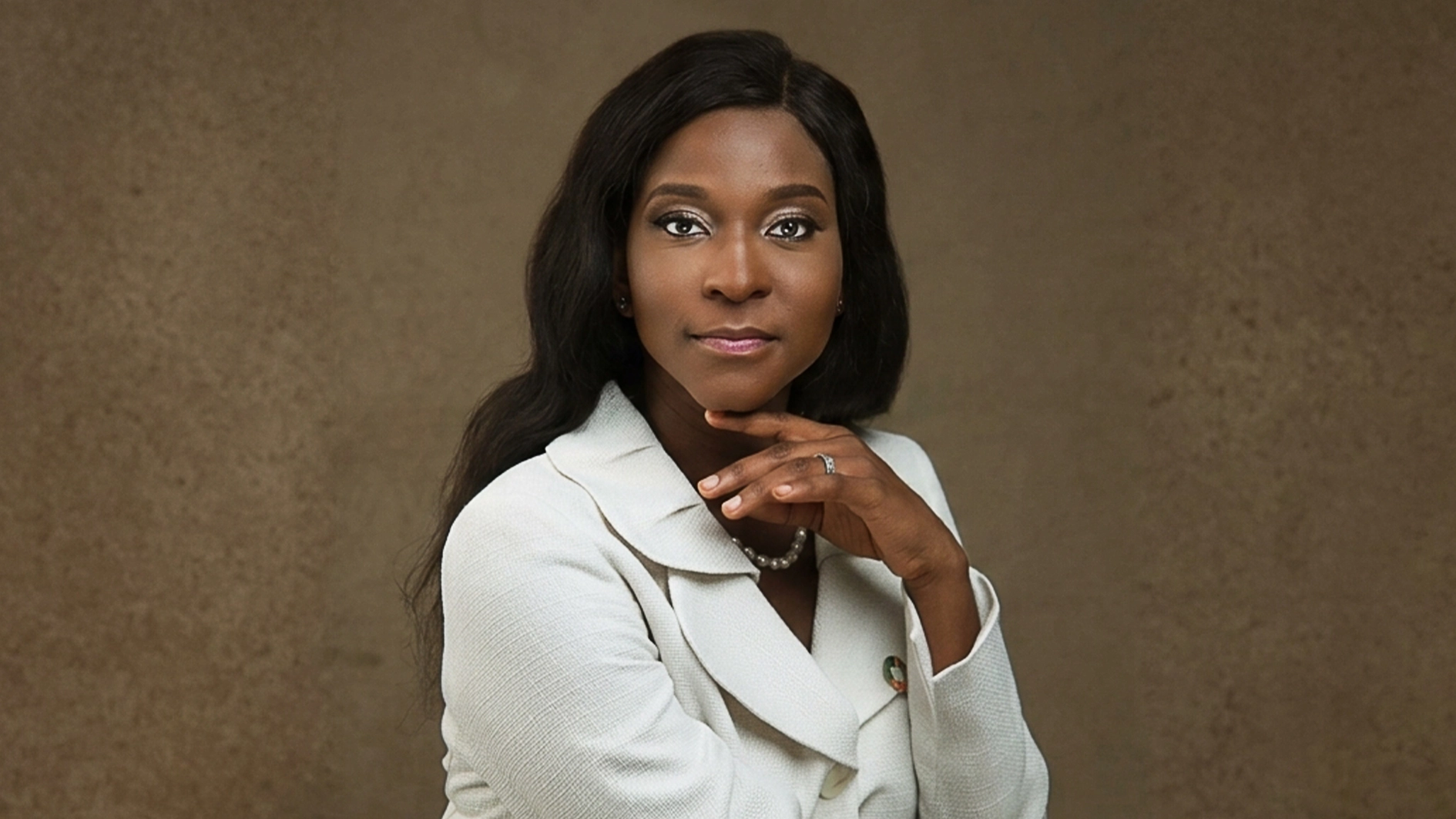
Titilola Vivour-Adeniyi is the Executive Secretary, the Lagos State Domestic and Sexual Violence Agency (DSVA). In this interview with TOBI AWODIPE, she speaks about DSVA’s five years journey, the highs and lows of working with different agencies to support survivors, the role of men and boys in preventing sexual and domestic violence, how Lagos State’s stronger, coordinated ecosystem responds to domestic and sexual violence, among other issues.
It’s been five years since the Lagos State DSVA initiative was set up; looking back to when you became Executive Secretary, what were challenges you met and what would you describe as the agency’s most significant achievements so far?
When I assumed office five years ago, we were dealing with a problem that was widespread, deeply underreported and, in many instances, hidden behind culture, stigma, fear and silence. Beyond responding to survivors, we also had the responsibility of building a new agency, strengthening public confidence and creating a coordinated system where survivors could access protection, psychosocial support, healthcare and justice. Five years later, one of our greatest achievements is that Lagos now has a much stronger and more coordinated ecosystem for responding to domestic and sexual violence. We have strengthened survivor support and referral pathways, deepened collaboration with stakeholders while increasingly taking prevention into communities and classrooms. But perhaps the achievement I am most proud of is the shift from simply asking, ‘How well do we respond when violence happens?’ to also asking, ‘How do we stop it from happening in the first place?’ That has driven our work with children and young people, schools, men and boys, religious and traditional leaders, communities and other institutions. We have made significant progress, but we are certainly not declaring victory. The next phase is about institutionalising prevention so deeply across Lagos that protecting people from violence becomes everybody’s responsibility.
Domestic and sexual violence often thrives in silence, with survivors unwilling or unable to report abuse. In the last five years, have you seen a change in how residents understand and respond to these issues?
Yes, I believe there has been a significant change. Five years ago, one of our biggest challenges was silence. Many people did not recognise certain behaviours as abuse, and even when they did, fear of stigma, economic dependence, family pressure or simply not knowing where to seek help prevented them from speaking up.
Today, we are seeing greater awareness. People are more willing to have conversations about domestic and sexual violence, communities are more willing to intervene and importantly, survivors increasingly know that there are institutions and pathways available to support them. We have also deliberately taken the conversation closer to people through schools, communities, workplaces, religious and traditional institutions and through our engagement with men and boys – this is because awareness shouldn’t happen only when a terrible incident makes the headlines. But we still have work to do. Silence is one of the greatest allies of abuse. We still encounter families that want to ‘settle’ serious cases privately, survivors who fear being judged and communities where harmful behaviour is excused in the name of culture, marriage or family reputation. So, for me, the real cultural shift we are working towards is one where the question changes from ‘What will people say if I report?’ to ‘Why should anyone be allowed to do this without consequence?’ This requires all of us. Violence thrives when survivors are ashamed and perpetrators are comfortable. We must reverse this: survivors must feel supported, and perpetrators must know that society will no longer shield them.
Behind every statistics is a person with a deeply traumatic experience; what are some of the cases or moments from your years leading the agency that have stayed with you personally?
There are many cases that stay with you, particularly those involving children. As professionals, we are trained to be objective but you never completely lose the human response to seeing a child whose sense of safety has been violated, or a survivor who has endured abuse for years before finally finding the courage to seek help. What has also stayed with me are the moments of recovery. Seeing someone who first came to us frightened and uncertain gradually regains their confidence, rebuild their life and realise that what happened to them does not have to define their future. Some of these women have gone on to be advocates, employers of labour and are thriving in their various endeavours. Those moments remind you why this work matters. And then there are the difficult cases where you inevitably ask yourself, ‘Could this have been prevented? Were there warning signs? Did somebody know and remain silent?’ Those questions have profoundly influenced my thinking about prevention. After five years, I have learnt that behind every file on our desk is a human being whose life may have changed forever. Our responsibility is not simply to process a case but to ensure that when someone entrusts us with perhaps the most painful chapter of their life, the system responds with dignity, compassion and action.
The agency has become increasingly visible in responding to cases of sexual and domestic violence. How have you worked to build a system that goes beyond receiving complaints to ensuring survivors get justice, medical care, psychosocial support and protection?
One of the most important lessons we have learnt is that a survivor does not need a collection of services. They need a system that works together. So, when someone reports to DSVA, our responsibility goes beyond receiving that complaint. Depending on the circumstances, that survivor may need immediate protection, medical attention, psychosocial support, legal assistance, Police intervention, shelter or support through the justice process. Our role is to help connect those pieces around the survivor. That is why we continue to strengthen our multi agency approach, working closely with our key partners. We are also very conscious of secondary trauma. A survivor should not have to repeatedly relive perhaps the worst experience of their life simply because different institutions are working in silos. Ultimately, the survivor should not have to navigate government, government must organise itself around the survivor. That is the system we are continuing to strengthen.
One of the biggest criticisms of efforts against sexual and gender-based violence is that awareness has increased, but conviction and justice remains slow. What are the biggest obstacles to securing justice for survivors and what needs to change?
Awareness without accountability is not enough. Justice in SGBV cases can be complex. Some of the challenges include delayed reporting, which can affect the collection and preservation of evidence; survivors withdrawing from the process because of family pressure, stigma, fear or economic dependence; difficulties securing witnesses; and the time it can take for cases to move through investigation and prosecution. This is why our focus has been on strengthening the entire justice pathway, not simply encouraging people to report. Whilst we strive to continue to ensure stronger investigations, timely medical and forensic intervention, proper documentation and evidence preservation, effective prosecution, survivor support throughout the process and continued collaboration between the Police, health sector, prosecutors, Judiciary and DSVA, there is however another dimension. Justice is not only about securing a conviction. A survivor must be safe, supported, treated with dignity and given the opportunity to rebuild their life. At the same time, perpetrators must know that violence has consequences. So, what needs to change? We need to continue reducing delays, strengthen coordination between institutions and make the process less traumatic for survivors, while preserving the fairness and integrity of the justice system. It takes enormous courage for a survivor to break the silence. Our responsibility is to ensure that the journey towards justice does not become another form of trauma.
You have spent almost a decade leading an agency that deals daily with some of society’s most painful realities; has this affected you personally and how do you protect your emotional and mental wellbeing?
This work has affected me deeply. I don’t think you can spend years listening to stories of violence, particularly cases involving children and remain completely untouched by them. You cannot listen to pain every day and pretend it leaves no imprint on you. There are cases you leave at the office physically, but emotionally, they sometimes follow you home. Over time, I have learnt that you cannot pour endlessly without also finding ways to replenish yourself. For me, that means being deliberate about boundaries, leaning on my faith and family, having a strong support system, and creating moments where I can disconnect and simply be a girl, wife, mother, friend and human being. I have also learnt not to carry every outcome personally. We give every survivor the best support we can, but there are aspects of their journey that we cannot control. That can be difficult to accept when one cares deeply about the work. At the same time, the work has given me a tremendous perspective. When you encounter people rebuilding their lives after extraordinary trauma, you develop a different appreciation for resilience, family, safety and even the ordinary things we sometimes take for granted. So yes, the work takes from you, but it also gives you a profound sense of purpose. And whenever the emotional weight becomes heavy, I remind myself that somewhere, someone is safer because this Agency exists. That makes the work worth doing.
Leadership here requires managing government institutions, law enforcement agencies, families, civil society organisations and survivors themselves. What has this taught you about getting different institutions to work together?
One of the biggest lessons leadership has taught me is that complex social problems do not respect institutional boundaries. A survivor’s needs may cut across different institutions and no single institution. So a significant part of leadership for me has been learning how to build relationships around a shared outcome rather than individual mandates. We may wear different uniforms, report to different institutions and have different responsibilities, but the person seeking help should experience one coordinated system. It has also taught me that collaboration cannot simply exist on paper. You have to build trust, clarify responsibilities, create referral pathways, communicate constantly and sometimes, pick up the phone and personally remove a bottleneck. Leadership in this space requires both institutional authority and relationships. There will be disagreements because different institutions see issues through different lenses. The question I always return to is: What is in the best interest of the survivor? That has a remarkable way of bringing everyone back to the same table because at the end of the day, the survivor should be at the heart of our operations. Ultimately, leadership has taught me that you cannot build sustainable change by trying to own all the credit. The truth is survivors do not experience government in departments. They simply need help and our job is to make institutional boundaries invisible to the person who needs the system most.
There are still cultural beliefs that encourage silence, protect family reputations or even return to abusive situations. How difficult has it been to challenge these deeply rooted attitudes and where have you seen the greatest progress?
It has been one of the most difficult parts of the work because we are not simply trying to change laws or processes. We are trying to change beliefs that, in some cases, have been passed from one generation to another. We still encounter situations where a survivor is encouraged to endure abuse because of the children, where families are more concerned about protecting their reputation than protecting the survivor, or where violence is excused in the name of culture, religion or preserving a marriage. That is why our prevention work increasingly goes beyond telling people to report. We are engaging the people who shape social norms: traditional and religious leaders, parents, schools, community leaders, men and boys, and young people themselves. I have seen progress, conversations that were once considered private family matters are increasingly being recognised as issues of safety, dignity and rights. More people are willing to speak up and importantly, we are seeing community stakeholders as well as religious clerics become advocates themselves. But lasting cultural change takes time. We cannot simply tell communities that their thinking is wrong. We have to engage, educate and build new social norms together. For me, the greatest opportunity is with the next generation. If we can teach our children that violence is not discipline, control is not love, silence is not respect, and enduring abuse is not the price of keeping a family together, then we can change much more than today’s statistics.
What role do men and boys need to play in the fight against domestic and sexual violence? Do you think enough is being done to address perpetrators and prevent violence before it happens?
Men and boys are absolutely central to this conversation. We cannot talk seriously about ending Gender Based Violence if men are only brought into the conversation as potential perpetrators. Men must also be part of the solution. We need fathers raising boys who understand respect, consent and emotional responsibility. We need men challenging harmful conversations among their friends and colleagues. We need positive male role models showing younger men that masculinity is not defined by control, aggression or dominance. This is what birthed the Kings Club initiative, as far back as 2018 where with the partnership of the Ministry of Education, we developed a curriculum on promoting positive masculinity which is being mainstreamed in various courses in schools. There are currently over 4000 Kings Club members across the six education districts. These efforts are also complemented by the Lagos Boy Child Initiative (LBCI) a flagship initiative of Dr. Ibijoke Sanwo-Olu, the wife of the Lagos State Governor. We regard this initiative as an important preventive component of the State’s broader response to Sexual and Gender-Based Violence. This is by educating boys on positive masculinity and responsible relationships, while simultaneously protecting boys who are themselves victims, thereby addressing SGBV at its root. We also need to do more around perpetrators.
Accountability is essential, but prevention requires us to understand and address the behaviours, attitudes and social norms that enable violence, while never excusing the individual responsibility of those who perpetrate it. That is why our approach increasingly involves engaging boys and young men early, working with schools and communities, and bringing men into prevention conversations. We do this through our Men Wey Sabi Initiative, where we have men perform roles socially ascribed for women including cooking, tending to the children and so on. This is with a view to encouraging healthy relationships and breaking gender stereotypes which have been proven to encourage the perpetuation of GBV. Ultimately, women cannot carry the responsibility for ending violence that is perpetrated against them. Men must speak to men. Boys must see better examples. And all of us must challenge harmful behaviour before it escalates into violence.
Technology and social media have created new forms of abuse, including cyberbullying, online harassment and the non-consensual sharing of intimate images. How is the agency adapting to these forms of violence?
Technology has changed the way we live and communicate, but unfortunately it has also changed the way abuse can occur. Violence no longer requires physical proximity. A person can be intimidated, humiliated, stalked or sexually violated through a phone. We are increasingly encountering concerns around cyberbullying, persistent online harassment, threats, impersonation and the non-consensual sharing of intimate images. The impact can be devastating because once harmful content enters the digital space, survivors can feel that they have lost control over who sees it and where it goes. Our response therefore has to evolve with the problem. Lagos State in December 2025 launched the Lagos State technology facilitated sexual and gender based violence prevention policy and inaugurated the Technical Working Group (TWG), whose mandate is to ensure full implementation of the policy. The TWG, leveraging on the provisions of the policy, continues to strengthen public education, particularly among young people, around digital safety, consent and responsible online behaviour, while working with relevant law enforcement and other stakeholders where investigation, protection or legal intervention is required. But prevention is critical. Young people must understand that consent applies online just as much as it does offline. Receiving an intimate image does not give you permission to share it. Ending a relationship does not give anyone the right to threaten, shame or expose another person. We also need parents and schools to understand the digital environments children inhabit. Sometimes the signs of abuse are sitting inside a child’s phone long before an adult notices that something is wrong.
Technology will continue to evolve and so will the forms of abuse. Our responsibility is to ensure protection and prevention evolves just as quickly.
What would you say has been your most difficult decision and what has been your proudest moment?
I would say some of the most difficult decisions have involved cases where the law, family dynamics, survivor choices and safety concerns intersect. In this work, decisions are rarely abstract. There is a real person at the centre, and sometimes the options before you are all difficult. One lesson I have learnt is that leadership is not always about having the perfect answer. Sometimes it is about making the most responsible decision available, guided by law, evidence and the safety and dignity of the survivor. My proudest moments are actually harder to reduce to one event. I am proud that we have helped build DSVA from an institution finding its feet into an agency with stronger systems, partnerships and public visibility. But buildings, programmes and statistics are not what give me the greatest satisfaction. It is seeing a survivor who once came to us frightened and broken begin to rebuild their life. It is seeing a child protected. It is seeing institutions that once worked separately now picking up the phone and working together because a survivor needs help. It is also seeing increased faith, public trust in the State’s GBV response architecture. And perhaps what makes me proudest as a leader is seeing the people and systems around me grow. Leadership cannot simply be about what works because you are in the room. It must be about building something that continues to work when you are no longer in the room. In the past 12 years, I have been privileged to have been given the opportunity to mentor quite a number of young men and women and I am always encouraged when I see the progress they are making. That, for me, is legacy.
What is your vision DSVA future and what would success look like for you by the time you eventually leave office?
My vision is that DSVA becomes so deeply embedded in the institutions and communities of Lagos that its impact is bigger than any individual who leads it. I want to see an agency that remains strong, professional and survivor centred, but also one that increasingly shifts the conversation from response to prevention. For me, success is fewer people experiencing violence in the first place. That means prevention becoming part of how we educate our children, how families raise boys and girls, how workplaces operate, how communities respond to warning signs and how religious and traditional institutions use their influence. It also means strong systems, data, partnerships and referral pathways that endure beyond any particular administration. By the time I eventually leave office, I would like to look back and see an institution that does not need me to function. I want to see a strong team, sustainable systems, prevention firmly institutionalised and a generation of Lagosians who understand that violence is neither normal nor acceptable. And on a very human level, I hope we reach a point where fewer children need rescuing, fewer survivors need shelters and fewer families have to experience the devastation that violence leaves behind. If I leave DSVA more visible, that is good. If I leave it stronger, better. But if we leave Lagos safer, that, to me, is success. That is the legacy I hope we are building.
After years of listening to and helping survivors and confronting the realities of abuse, what is the one thing you wish every resident understood about domestic and sexual violence?
Violence rarely starts with the most extreme act. It can begin with controlling who you speak to, isolating you from family and friends, constantly humiliating you, monitoring your phone, controlling your finances, threatening or making you afraid in your own home. Too often, we excuse these early warning signs as jealousy, anger, discipline or even love until they escalate. I also wish people understood that domestic and sexual violence is not a private matter. When we know that someone is being abused and our first instinct is to protect the family name, preserve a marriage or avoid embarrassment, our silence can leave someone in danger. After all these years, I have seen the terrible consequences of people waiting too long to speak, report or intervene. So my message is simple: do not normalise warning signs or look away, do not wait for violence to become fatal before taking it seriously.
Remember, every domestic violence case is a potential murder case. To anyone experiencing abuse, please know that asking for help is not something to be ashamed of. There is a system ready to listen and support you.
QUOTES
‘We should teach our children that violence is not discipline, control is not love, silence is not respect, and enduring abuse is not the price of keeping a family together’
‘We need men challenging harmful conversations among their friends and colleagues. We need positive male role models showing younger men that masculinity is not defined by control, aggression or dominance.’

