 Get Guardian on Google
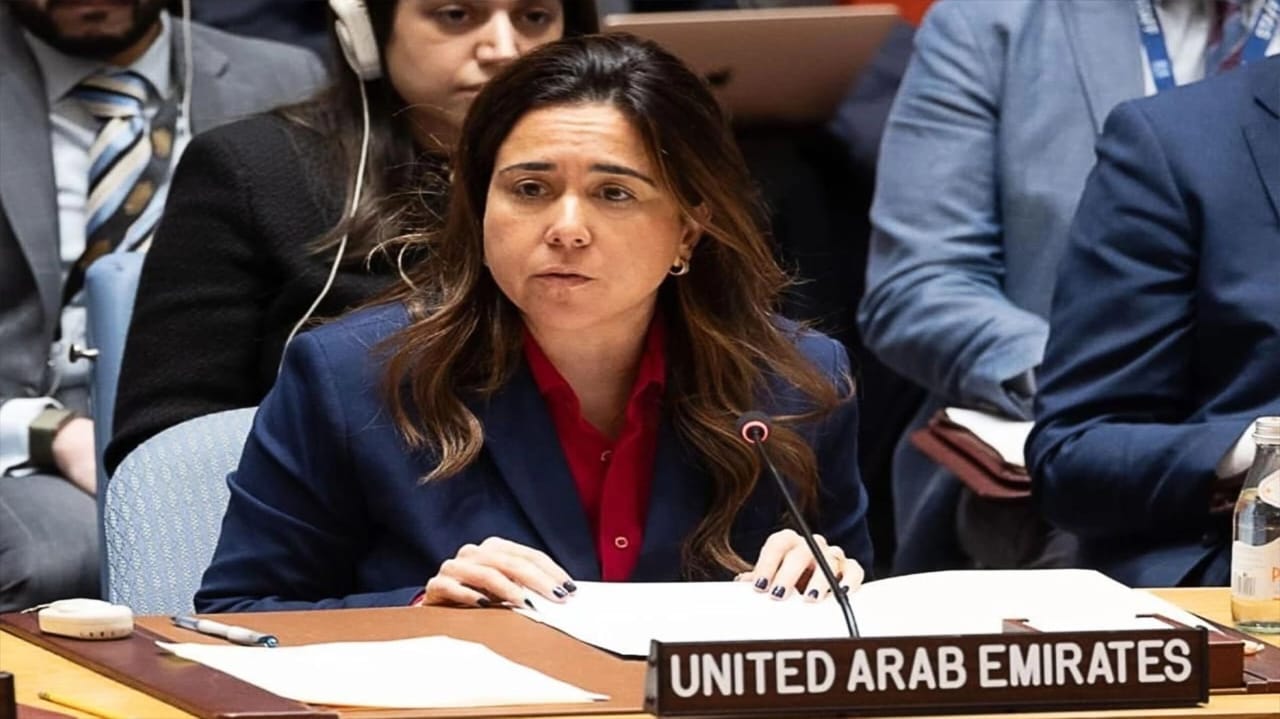
One of the candidates vying to become the next United Nations Secretary-General, HE Lana Nusseibeh, opened up about her vision and the drive behind it in this interview.
1) Your Excellency, you have had a successful diplomatic career representing the United Arab Emirates including previously at the United Nations. Why have you decided now is the right time to run for the position of UN Secretary-General?
Over the past few years, I have worked directly on some of the conflicts that have tested international diplomacy most severely, from Gaza and the negotiations around Rafah to Iran and Russia-Ukraine.
I also spent two years on the UN Security Council where a significant number of the conflicts it deals with are in Africa. From protecting civilians caught between armed groups in the Central African Republic to the spread of extremist violence across the Sahel, I came to know these issues closely. It was during that time that I saw how often the Council was gridlocked, and understood how much is at stake when diplomacy stalls. These crises are not foreign to me, whether they are in Europe, the Middle East or Africa.
Those experiences reinforced something I have believed throughout my career. Military power can change facts on the ground, but it rarely produces a durable political outcome on its own. Sooner or later, every conflict comes back to the negotiating table. We need to keep the channels open and keep looking for agreement, even when it seems very far away.
In the decade I spent inside the United Nations, I have seen what it can achieve when determined diplomacy and political will come together. I have also seen the cost when it is absent, late or unable to act.
That combination is a large part of why I decided to run now.I also come from a country and a region that knows what long-standing conflict costs, and what it takes to move from poverty to prosperity within a single generation.
That experience shapes how I see Africa: not as a region to which international priorities are applied, but as one that should help set them.
And I believe Africa is going to set the agenda for the coming decades, for the global economy and for the future of this Organisation. As Secretary-General, I would put Africa at the centre of the UN’s priorities, not at its margins.
We are living through a period of deep geopolitical division and multiplying conflict. I believe the next Secretary-General needs to be an active diplomat, prepared to take political risks for peace, while also reforming the institution so it is more focused and able to deliver.
I remain stubbornly optimistic about diplomacy. But optimism has to come with urgency.That is the Secretary-General I am offering to be.
2) Do you think the UN is in need of reform and, if so, in which areas?
Yes, absolutely, in many ways the way the UN works has not kept up with the demands of the present. Any serious reform effort needs to have three elements:
First, it must be laser-focused on objectives: What are we actually trying to achieve? This is not only about bureaucratic streamlining or changing the organogram. We need to think carefully about the areas where the value-add of the UN to lead is clear, and where it will play a more valuable role supporting what others are leading on.
Second, prioritisation is key. Today the UN Secretariat is responsible for around 4,000 active mandates, and about 85 per cent have no date for review or completion. When everything is a priority, nothing is a priority. For every major programme, I would therefore ask some basic questions. What are we trying to achieve? What does it cost? What difference is it making? Is the UN actually the best institution to deliver it?
And third, something that is often missed in the discussion about reform is that it needs to be carried out with the countries that make up the UN, including those most directly impacted by its work. The priorities and agency of African countries must help define what success for the organization looks like.
I see the current reform effort, known as UN80, as the floor, not the ceiling.
3) What is your vision for the UN and how best do you think it can approach major global security issues which you have placed at the centre of your agenda?
I think the Secretary-General has to be an actor, rather than a spectator to the world’s crises.
A Secretary-General has no army and no vote. She has independence, access, and the power to convene. I would use these capabilities relentlessly to support peace.
That conviction comes from experience. I have worked on conflicts where the comprehensive political solution simply was not available. But that did not mean diplomacy had nothing useful to offer.
You look for the first agreement. A humanitarian corridor. A prisoner exchange. A local truce. None of those things ends a war. But each can reduce suffering, test whether commitments can hold and create space for something larger. It is quiet, patient work, always with the agreement of those involved and respect for each country’s sovereignty.
That is also why conflict prevention matters so much to me. We should not wait until a crisis has become a war before working to end it.
That is especially pressing in Africa. From Sudan to the Sahel to the Democratic Republic of Congo, I do not come with the illusion that any Secretary-General can quickly undo conflicts whose roots run so deep.
Their causes are layered and intertwined with regional and international dimensions, climate pressures and poverty. Many people, above all Africans, have worked on these crises for years, and I would build on that work, not start again. What I would bring is renewed urgency, sustained attention at the highest level and fresh resolve to see that work through.
The deeper the roots of a conflict, the more it demands persistence, and the more it matters that we keep working to find a way forward. I would get on the ground early and urge African leaders to join me, pooling our ideas and political capital. In my first 100 days, I would endeavor to work hand in hand with the countries affected, with their own strategies as well as the UN’s. I would do everything within the power of the office to help.
And the UN does not have to lead every process. Sometimes the African Union, a regional organisation or another mediator will have greater trust or leverage. The case for this makes itself: Africa is at the centre of the UN’s peace and security work. Africa provides around half of all UN peacekeepers, and around 70 per cent of the world’s peacekeepers serve in Africa south of the Sahara. Africa cannot simply be a subject on the UN’s agenda.
It must be at the table, shaping it, and as Secretary-General I would make sure it is. Resolution 2719 is a good example of the partnership. I supported its adoption while serving on the Security Council. It provides a framework for predictable UN financing of qualifying African Union-led peace operations. As Secretary-General, I would work with the AU to help identify where it should first be put to use.
The principle is simple. Where others are best placed to lead, the UN should be ready to get behind them.
4) How would you support African interests as Secretary General, including those linked with the UN Sustainable Development Goals, which in your manifesto you say have seen “deeply uneven” progress?
I would start by listening to what African countries themselves say they need. I grew up in a country that went from a pearl-diving economy to an AI economy in about 50 years. What made the difference was that the country owned its own development agenda. That is the ambition Africa has for itself, and the UN’s job is to back it.
My years at the UN, including on the Security Council, reinforced for me that regional organisations cannot simply be treated as implementing partners for decisions made elsewhere. They bring knowledge, relationships and political legitimacy that New York cannot replicate.
I think the same principle should apply to development.
Over the next 25 years, more than 600 million people will be added to Sub-Saharan Africa’s working-age population. That is an extraordinary opportunity, but it also tells us why jobs have to be much closer to the centre of the development agenda.
The UN already has expertise across trade, investment, energy and development. I want it organised more effectively around priorities African countries have set themselves, rather than asking countries to navigate a collection of separate programmes. That means aligning the UN’s work with Africa’s own ambitions: processing more of its resources at home, trading more across the continent, and securing reliable energy and food. The UN’s development work has to start from what countries themselves want, not from documents negotiated in New York.
That means helping governments mobilise investment, championing fairer debt solutions and supporting regional transport, energy and trade corridors that can connect markets and create opportunity.
Technology is increasingly part of that story too. Africa has around 60 per cent of the world’s best solar resources but attracts less than 3 per cent of global energy investment. AI will depend on energy, connectivity, data and computing power. Countries that will live with these technologies should have a meaningful voice in shaping them.
Africa is also central to the world’s supply of critical minerals. The aim must be to capture more of that value at home, so that natural wealth becomes shared prosperity.