
 Get Guardian on Google
Former Vice President Atiku Abubakar has questioned whether President Bola Tinubu’s recorded interview at the Presidential Villa was part of a $4.5 million lobbying arrangement undertaken on behalf of Nigeria, demanding the release of the full, unedited recording.
Atiku also challenged the Presidency to explain the circumstances surrounding the interview, including the involvement of a United States-based consultant allegedly linked to a firm contracted to work for the Nigerian government.
In a statement issued by his Director of Strategic Communication, Phrank Shaibu, Atiku said US filings identified Diana London as a consultant to DCI Group AZ on work for the Republic of Nigeria through Aster Legal.
He noted, however, that although the filings recorded a $4.5 million retainer paid to DCI Group, they did not establish whether the interview was among the services covered by the payment.
Atiku criticised the Presidency for promoting the recorded encounter under the title Sitting on a Flat Mandate, describing it as a publicity production rather than a credible presidential interview.
“When Tinubu is ready for an interview, he should let Nigerians know. He cannot invite a strategist registered to work for his government, record a publicity production and advertise Sitting on a Flat Mandate as ‘coming soon’, like a trailer from 51 Iweka Road, Onitsha,” he said.
“Hungry Nigerians are not here to market his failed movie. They have suffered through Part One of Tinubu’s government, and they will not sit through a sequel.”
Atiku also questioned why London allegedly deleted social media posts praising Tinubu’s administration and Nigeria’s partnership with the United States.
He said Nigerians deserved an explanation for the deleted posts and questioned whether the interview would retain difficult questions and uncomfortable answers.
“Someone who could delete her own public praise of this government without an explanation has given Nigerians reason to wonder what will survive the editing of her interview. Will difficult questions and awkward answers remain in the final cut? Or will Nigerians be served a carefully redacted, defensive account that mutilates the facts?” he asked.
The former vice president urged the Presidency to address the concerns by releasing the complete recording without editing.
He accused the Tinubu administration of turning an opportunity for public scrutiny into a publicity exercise, arguing that the President had yet to face sustained questioning from Nigerian television journalists.
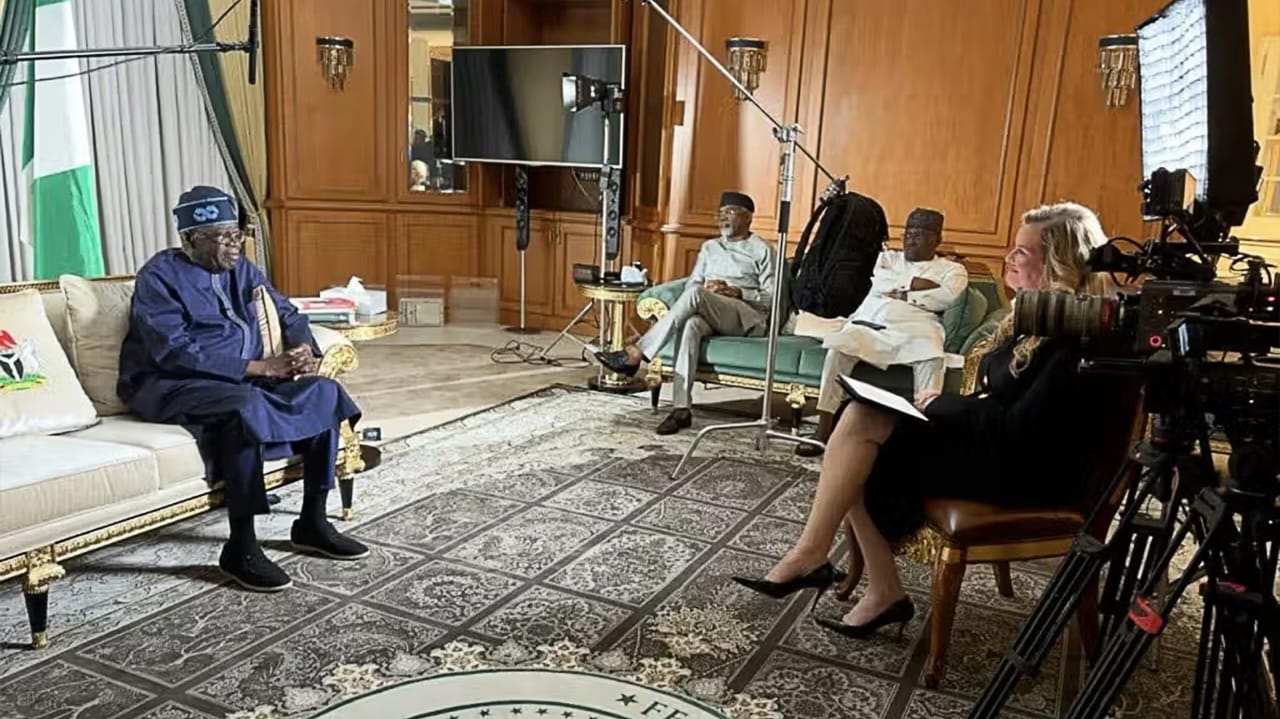
Atiku also questioned why government officials and social media handlers were promoting the interview as a film premiere when the Presidency had released only photographs from the recording.
“Why is the Presidency announcing an interview as ‘coming soon’ and deploying government appointees and social media handlers to promote it like a film premiere? So far, they have released only photographs.
“If Sitting on a Flat Mandate is a movie, where is the trailer? If it is an interview, why the suspense? Nigerians do not need a photo album and a ‘coming soon’ notice to hear their President answer questions,” he said.
He further questioned the circumstances surrounding the recording, particularly the presence of a large screen positioned in the President’s line of sight.
According to him, the arrangement raised concerns about whether the questions were spontaneous and whether Tinubu responded without prepared prompts.
“The Presidency staged a recorded publicity production, advertised it like a home video and called it an interview. It has offered no reason to believe the questions were spontaneous or that Tinubu answered without prepared prompts.
“If it was a genuine interview, let the Presidency release the full, unedited recording, including what appeared on that screen,” Atiku said.
He argued that Nigerian journalists were capable of questioning the President on issues affecting households and the economy, urging the Presidency to arrange a live interview.
Atiku named Rufai Oseni, Ojy Okpe, Seun Okinbaloye and Reuben Abati among journalists he believed could subject the President to rigorous questioning.
He said such an encounter would give Nigerians an opportunity to hear the President address the rising cost of food, transportation challenges, declining purchasing power and the hardship facing households.
“A flattering interview cannot wipe away poverty and hunger,” he added.
The former vice president also called on the Presidency to publish the lobbying agreement, disclose payments and invoices, identify those who authorised the expenditure and clarify whether London’s involvement in the interview formed part of the contracted services.
He questioned the source of the $4.5 million payment, arguing that Nigerians deserved transparency over public expenditure, particularly amid the economic hardship following the removal of the fuel subsidy.
“Who authorised the $4.5 million payment, and from which public account did it come? At a time when Nigerians are told to endure the pain of fuel subsidy removal, they deserve to know whether the money saved is being spent on foreign publicity,” he said.
Atiku, who referenced his Affordable Life campaign, said his priority was making food, fuel and transportation affordable for Nigerians.
He challenged Tinubu to publish the contract, provide the invoices, release the unedited interview and submit himself to questioning by Nigerian journalists.