 Follow Us on Google News



 Follow Us on Google Discover
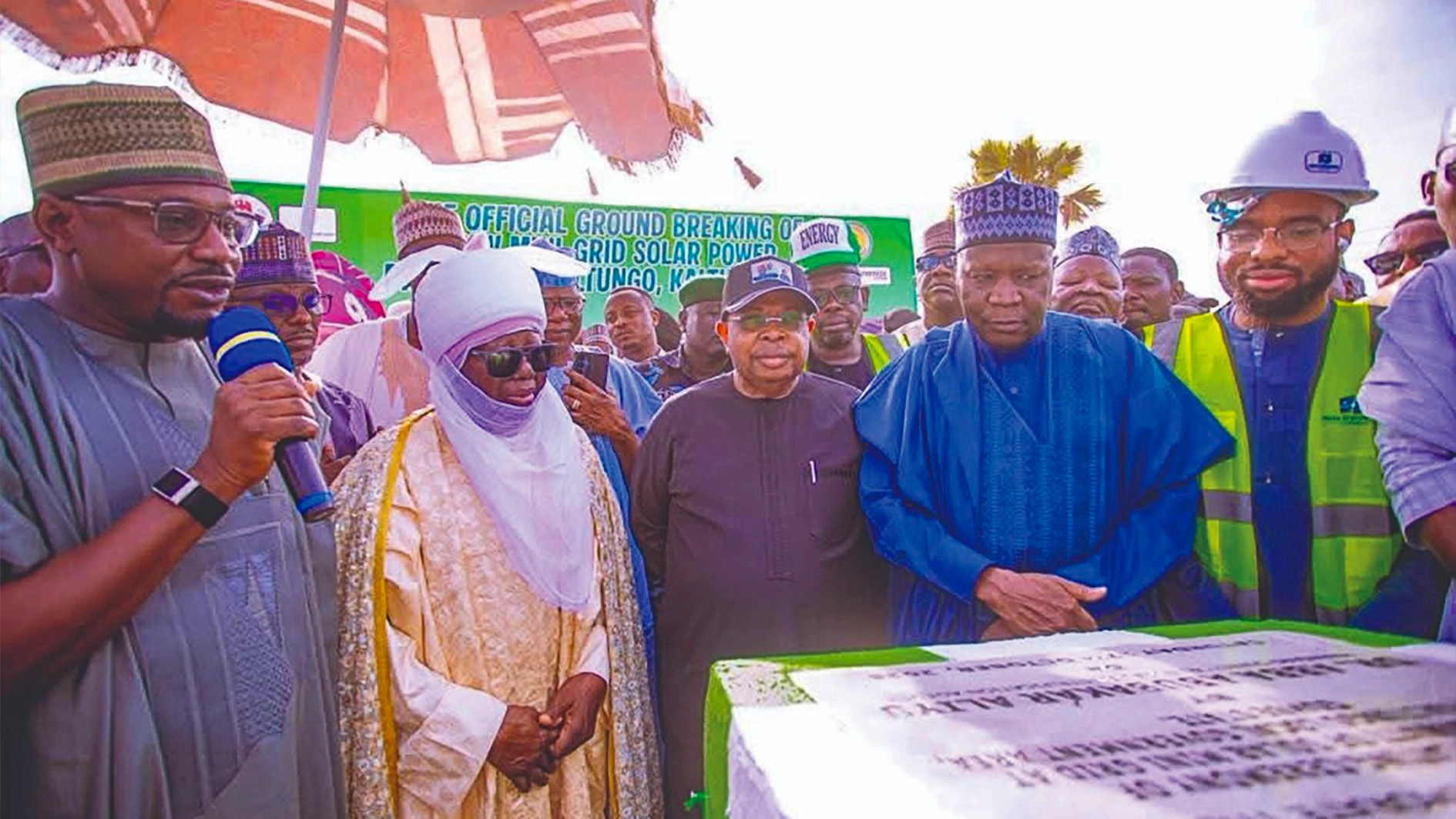
Nigeria’s expanding network of renewable energy projects is beginning to connect electricity supply with agricultural processing, transportation and small businesses. But the real measure of success will be whether communities can afford the power, sustain the businesses it enables and generate enough income to keep the systems running. KINGSLEY JEREMIAH reports.
Nigeria’s electricity crisis is not simply a problem of insufficient generation. It is also a problem of unreliable supply, ageing infrastructure, transmission constraints and financial weaknesses that prevent available electricity from consistently reaching consumers.
The country has more than 13,000 megawatts (MW) of installed generation capacity, but actual output has frequently remained far below that level. Gas supply constraints, infrastructure failures, and transmission bottlenecks have widened the gap between installed capacity and electricity delivered to consumers. Distribution losses, inadequate metering and weak revenue collection further complicate the sector’s ability to provide reliable and financially sustainable electricity.
For rural businesses and agro-processors, these weaknesses translate into higher operating costs, lost production time and limited opportunities to expand. Farmers may have sufficient produce to support local processing industries, but unreliable electricity can make the cost of operating machinery commercially prohibitive.
It is against this background that decentralised renewable energy is gaining importance in Nigeria’s electricity-access strategy. Rather than relying exclusively on improvements to the national grid, the Federal Government is expanding mini-grids and other distributed energy systems to serve communities where conventional electricity supply remains inadequate.
The Rural Electrification Agency (REA), the Federal Government’s implementing agency under the Federal Ministry of Power, is mandated to electrify unserved and underserved communities to catalyse economic growth and improve quality of life. The agency’s establishment is provided for under Section 127 of the Electricity Act 2023, while Sections 128 and 129 outline its objectives and functions, including promoting affordable, sustainable and reliable electricity access.

The agency’s challenge is to demonstrate that expanding electricity access can do more than increase the number of connections. Its recently commissioned 1MW solar mini-grid, equipped with 2.4 megawatt-hours (MWh) of battery storage in Tallasse, Balanga Local Government Area of Gombe State, offers an opportunity to examine the economic proposition.
According to reports on the commissioning and the REA’s project information, the intervention includes electric tricycles, a groundnut oil processing plant, a modular electric rice mill and electric flour-grinding machines. The design links electricity supply to agricultural processing, transportation and small-scale enterprise.
However, the economic significance of these investments will depend on what happens after commissioning. Installed equipment does not automatically translate into higher incomes, new jobs or improved agricultural productivity. Those outcomes depend on affordability, utilisation, market demand and the ability to maintain the infrastructure.
From electricity access to productivity
The Federal Government’s approach, as outlined in the REA’s account of the Balanga project, is to position electricity as an economic resource rather than an end.
Minister of Power, Joseph Olasunkanmi Tegbe, described the intervention as an expression of President Bola Ahmed Tinubu’s approach to infrastructure investment, arguing that power supply should support livelihoods, enterprise and local economic activity.
“President Bola Ahmed Tinubu has been very clear that infrastructure must ultimately improve the lives and livelihoods of Nigerians. What we are commissioning in Balanga reflects that philosophy,” Tegbe said.
He added that the objective extended beyond generating one megawatt of electricity to creating an energy platform for farmers, businesses and transportation operators.
The economic logic is straightforward. A farmer who sells raw groundnuts may capture only part of the value generated along the agricultural supply chain. Local processing could create opportunities to produce groundnut oil and retain more value within the community. Similarly, a rice mill could allow farmers and traders to process paddy closer to production centres, potentially reducing transportation costs and improving access to processed products.
Electric grinding machines could support small businesses serving households and food vendors, while electric tricycles could improve movement between farms, processing facilities and markets.
Tegbe specifically highlighted these productive uses, arguing that electricity should be assessed by its contribution to markets, jobs and prosperity rather than by megawatts alone.
Yet the economic benefits remain conditional. A processing plant cannot improve farmers’ earnings if it operates below capacity, charges unaffordable fees or lacks sufficient raw materials. A rice mill will not necessarily be competitive if existing processors offer lower prices or better services.
The REA must therefore establish whether the equipment is being used regularly, how much produce is processed and whether participating farmers and business operators earn more than they did before the intervention.
Battery storage and the cost of reliability
The inclusion of 2.4MWh of battery storage addresses another major constraint on the economic value of electricity: reliability.
For businesses, interruptions can delay production, increase operating costs and undermine delivery schedules. Battery storage can help balance renewable generation with demand and provide electricity when solar output falls, although its actual contribution depends on system configuration, demand patterns and operating arrangements.
The distinction between generation capacity and storage capacity is important. The mini-grid’s 1MW rating represents power output, while 2.4MWh measures the amount of energy the battery can store. The storage capacity alone does not establish how many hours the community will receive uninterrupted electricity.
According to REA’s Managing Director and Chief Executive Officer Abba Abubakar Aliyu, the agency is increasingly incorporating storage, monitoring technology, productive-use equipment and sustainable operating models into its interventions.
“Access without reliability limits economic impact,” Aliyu said, adding that the agency was seeking to build electricity ecosystems rather than simply install power plants.
His position reflects an important policy consideration: the commercial value of electricity depends not only on whether it is available, but also on whether it is dependable and affordable.
If tariffs are too high, small businesses may be unable to operate profitably. If tariffs fail to cover operating and maintenance costs, mini-grid operators may struggle to sustain supply over time. Batteries degrade, equipment requires servicing and distribution networks need maintenance.
The REA will therefore need to demonstrate that the Balanga system can deliver reliable electricity while remaining financially sustainable for both operators and consumers, especially through initiatives like Renewable Energy Service Company.
A national programme, but different stages of delivery
The Balanga commissioning forms part of a wider pipeline of distributed renewable energy investments across Nigeria. According to the REA’s project information supplied for this report, recent interventions span Lagos, Adamawa, Kebbi, Rivers, Plateau, Yobe, the Federal Capital Territory, Kwara and Oyo states.
In June, the agency commissioned a 505-kilowatt-peak (kWp) interconnected solar mini-grid in Epe, Lagos State, intended to serve five communities and their productive users.
In July, the Federal Government broke ground on 39 mini-grids in Adamawa State, with a reported combined capacity of nearly 27MW. The projects included the 10MW Kofare, 2.6MW Saminaka and 890kW Mbamba interconnected mini-grids. The agency also reported a 3.5MW intervention in Kebbi State.
The programme subsequently included approximately 11.9MWp of renewable energy infrastructure in Rivers State and the groundbreaking of a 1.5MW interconnected mini-grid in Pankshin, Plateau State.
In August, the REA reported the groundbreaking of approximately 13.92MWp of interconnected hybrid solar projects across major residential and commercial load centres in Yobe State.
In September, the Federal Government commissioned a solar-hybrid power plant at Yakubu Gowon University in Abuja and the 581kWp Oke-Oyi interconnected mini-grid in Kwara State. The project information supplied by the agency puts the university plant’s capacity at 3MW.
In October, the REA reported the groundbreaking of a 17.7MW interconnected mini-grid project in Ibadan, Oyo State, designed to improve electricity supply to five communities and support additional commercial and industrial activity.
These developments indicate an expanding distributed-energy programme, but their stages of delivery must be distinguished. Projects under construction are not equivalent to completed facilities, while commissioning alone does not establish sustained performance or economic impact.
The capacities also cover different technologies and customer categories, making direct comparisons difficult without consistent data on customers served, electricity delivered, project costs and utilisation.
Gombe’s partnership and sustainability challenge
Gombe State Governor Muhammadu Inuwa Yahaya described the Balanga project as an outcome of cooperation between the state government and the Federal Government through the REA.
“For us in Gombe State, this project is significant because it connects energy directly to the economic strengths of our people. Balanga is an agricultural community,” Yahaya said.
He argued that combining electricity with rice milling, groundnut processing, flour production and electric mobility could strengthen the local economy rather than merely provide lighting.
The governor also pointed to previous collaboration between the state government and the REA, including the 1MW solar mini-grid at Talasse in Balanga, renewable energy interventions in Filiya and Shongom, and the hybrid renewable-energy project around Balanga Dam.
These initiatives indicate that the state’s approach extends beyond a single project. Nevertheless, the scale of the economic benefits will depend on how well electricity infrastructure is integrated with local business needs.
The availability of power does not automatically resolve constraints such as limited working capital, insufficient storage, weak market access or inadequate transport links. Agricultural processors need dependable supplies of raw materials and buyers for finished products. Entrepreneurs may also require financing, technical training and access to spare parts.
These complementary needs matter because public investment in electricity and machinery can create opportunities, but it cannot substitute for viable business operations.
Aliyu’s emphasis on measuring what happens after electricity arrives is therefore an important starting point. The next step is to translate that principle into a transparent system for tracking outcomes.
For Balanga, useful indicators would include electricity supplied, customer numbers, outage frequency, productive equipment utilisation, processing volumes, operating costs, tariff levels, jobs created and changes in business revenue. Establishing a baseline and publishing periodic results would help determine whether the project is generating benefits that can be sustained and replicated elsewhere.
The real measure of success
The Federal Government’s distributed renewable energy strategy, including the Distributed Access through Renewable Energy Scale-up (DARES) programme and complementary REA interventions, seeks to expand electricity access while encouraging investment in the distributed-energy market.
Mini-grids can play an important role where the national grid is inadequate, but they cannot independently resolve Nigeria’s wider generation, transmission, distribution and financial challenges. Their greatest value will come from complementing improvements to the national power system while providing reliable electricity to underserved communities.
Balanga offers a practical test of whether that approach can translate into measurable economic gains.
If farmers process more produce at competitive costs, businesses operate more reliably and local enterprises generate sustainable incomes, the project could demonstrate the value of linking electricity access to productive use.
If the equipment remains underused, electricity becomes unaffordable or maintenance arrangements prove inadequate, its economic contribution will be more limited than the installed capacity suggests.
For the REA, the task extends beyond commissioning projects across states. It must demonstrate that the infrastructure remains operational, that productive-use equipment creates viable businesses and that the resulting benefits reach the communities the agency is mandated to serve.
Nigeria needs more reliable electricity, but the development case for rural electrification will ultimately rest on what electricity access makes possible.
In Balanga, the decisive question is no longer whether a mini-grid has been commissioned. It is whether the investment can sustain businesses, improve agricultural productivity and raise household incomes long after the commissioning ceremony.

